

Others go south, we look for the south of the north.
Älgbert Elgson

It was that time again – we were embarking on a new adventure. After our stay with the Queen in London a few weeks earlier, we were drawn out into the world again to explore it. Many blank spots on our travel map are just waiting to be discovered by us. The general direction of our travel compass points north again – the southern north.
Our experiences on this trip are described below in the form of a travel diary.
A spontaneous idea
Tuesday, 19.July 2022
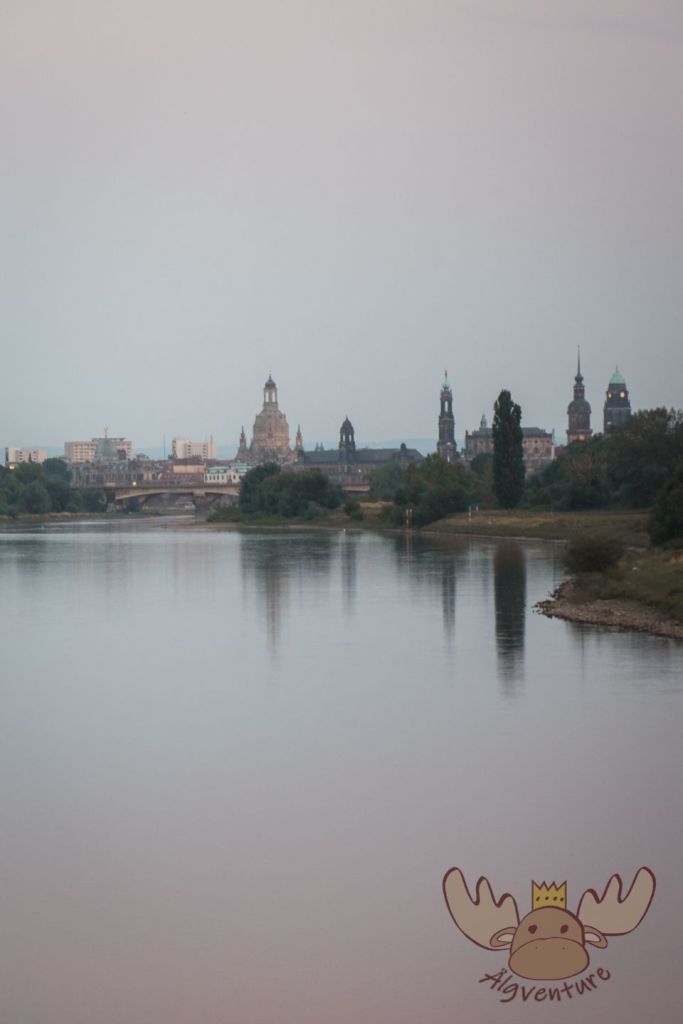
After meticulously planning our route, we decided to throw this well-thought-out plan out the window and spontaneously set off a (half) day earlier, because a good Älg friend was in Dresden at the time of our departure. We would have had to stop somewhere in the middle anyway, because even for an Älg the journey would have been too much in one day, and a short stopover in the Saxon city was a good idea.
After an entertaining and uneventful journey along Czech roads, we arrived just in time for a very tasty Saxon evening meal. The only thing we had to do without beer that evening in order to ensure our ability to drive was to drink. Actually unthinkable in a brewery inn, common sense nevertheless prevailed over desire. However, we will certainly make up for the consumption of brewed beer during the course of the trip.
See the sea
Wednesday, 20.July 2022
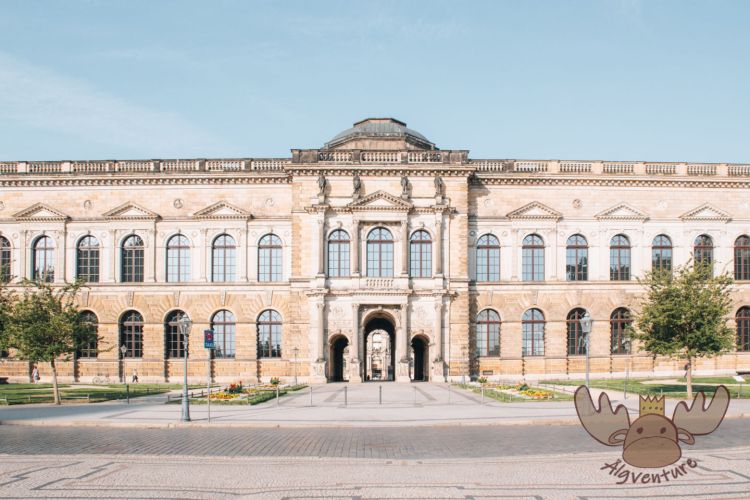
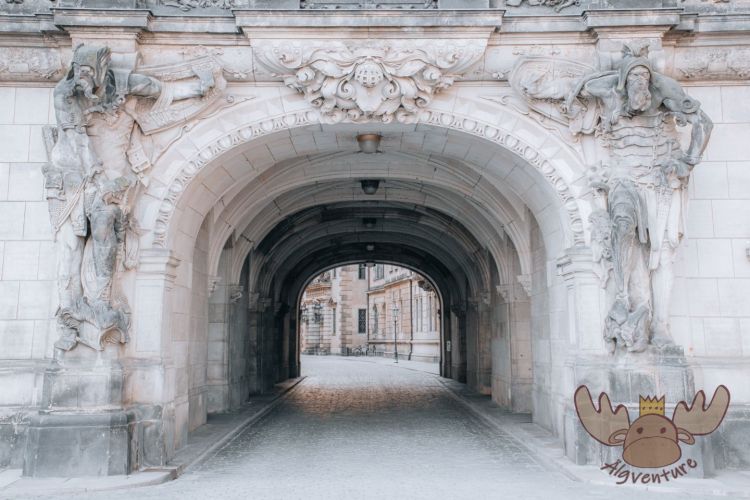
The Saxon evening meal was digested and the well-deserved sleep, albeit a little too short, was made up for. The Älg friend had to say goodbye to us again after breakfast. Even though he would have liked to follow us on our adventure, he still has to go to work and do a few „screws and nuts“, as he always says. But we used the early hours for a quick exploratory walk through Dresden’s old town before we had to spend hours driving on the German motorway again.
Dresden is a beautiful city that is definitely worth a visit. Unfortunately, this year is construction season, as construction fences have been put up in front of all the famous sights, or large machines are going about their daily work. The Zwinger resembled a large construction site, the Semperoper was surrounded by construction fences, and technicians were also working on repairing something at Neumarkt. Well, we’ll just come back another time…
Many uneventful and patience-sapping kilometers followed on the motorway. First we followed the signs to Berlin, then Hamburg, and then turned towards Flensburg. Thanks to some really bad drivers, relaxed driving was out of the question. We constantly had to reduce our speed abruptly due to trucks swerving out of the lane, only to then have to accelerate back up to cruising speed.



This picture changes as soon as you cross the Danish border. Due to the generally lower maximum speed, a speed difference that is too great is not possible. It does take more time, but it makes the journey much more relaxed. When we arrived in Hirtshals and took our place at the campsite, we only wanted one thing: to see the sea.
Our shoes flew off our feet as quickly as possible and we were able to make our way to the salty water. Sun, sea and a cool breeze – now the adventure can begin.

On the Road | Älgbert hört seine Lieblingsmusik von Sofi Tukker bei 39°C Außentemperatur. – Älgbert listens to his favorite music by Sofi Tukker at 39°C outside temperature. 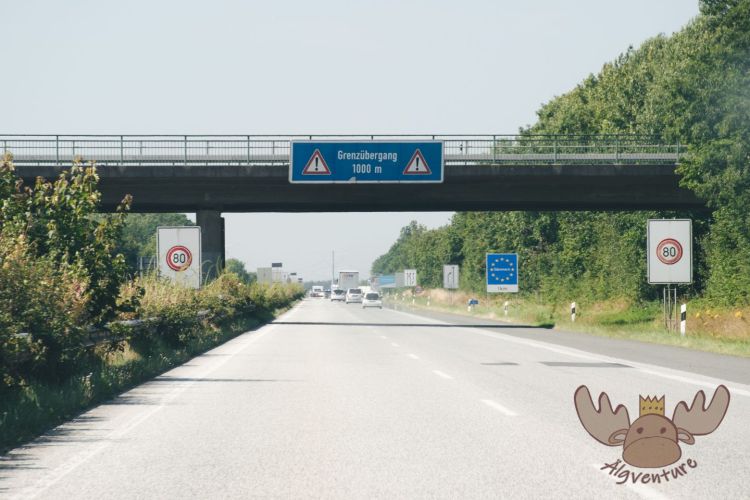
On the Road | Grenze zu Dänemark – Border with Denmark 
Hirtshals | Abendessen nach der langen Reise – Dinner after the long journey 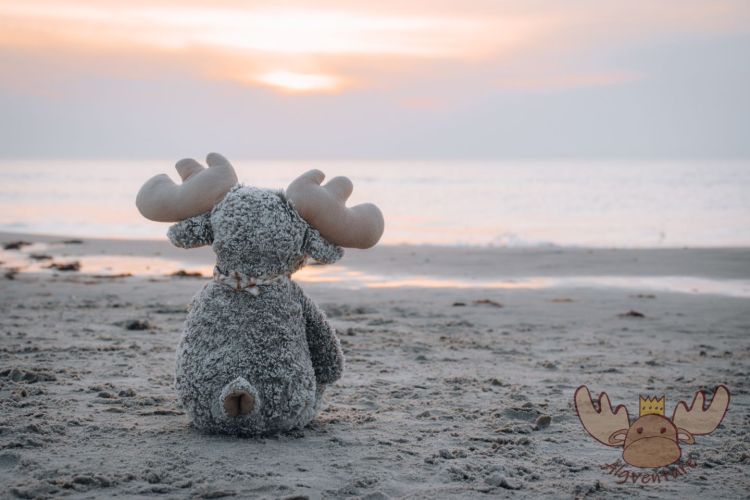
Hirtshals | Älgbert blickt sehnsüchtig hinaus aufs Meer – Älgbert looks longingly out to sea 
Hirtshals | Wunderbarer Sonnenuntergang zum Ausklang des Tages – Wonderful sunset to end the day 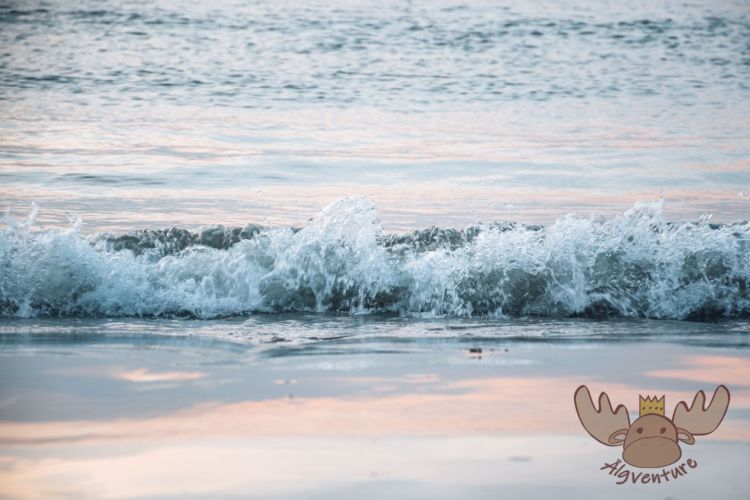
Hirtshals | Meeresrauschen – Calming sound of the sea 
Hirtshals | Flora im abendlichen Wind – Flora in the evening wind
Concrete Cubes
Thursday, 21.July 2022
We spent the first night in our micro camper extremely comfortably. Thanks to our new black-out measures, we are no longer woken up by the sun too early. Another positive side effect is that the interior temperature remains at a bearable level. It was only at 9:00 that we opened our tailgate and rolled out of our vehicle.
Thanks to our spontaneity, we have an extra day at our disposal and we should now make the most of it. Yesterday we explored the beach near the campsite and discovered something special: you can drive there by car!

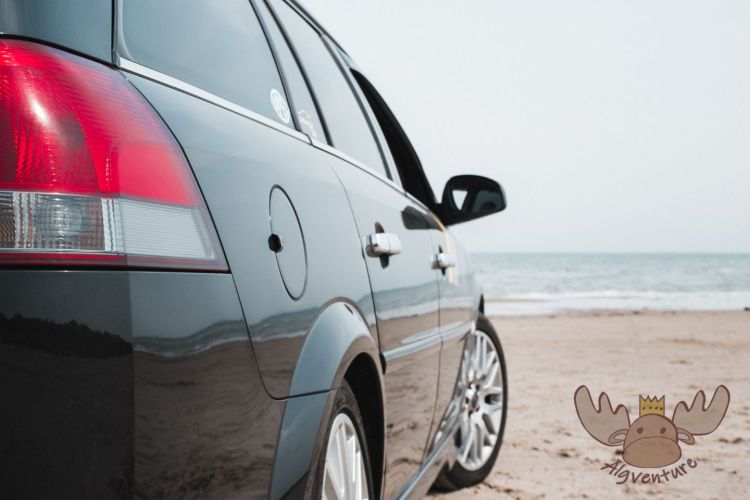

Immediately after the necessary morning hygiene, we experienced it ourselves – it really works! Not only was the suitability of our motorhome for the beach tested, but also one of our new toys. With our new drone, you can take unprecedented and breathtaking pictures and videos. It’s a good thing that our adventure this year is going to Norway and Sweden, because both countries have impressively beautiful landscapes that we can now capture professionally with our new technical equipment. We spent the rest of the day mainly looking for concrete cubes in Hirtshals. On the one hand, the Germans put some of these massive buildings in the dune landscape there in the early 1940s and then forgot to take them back with them, and on the other hand, the city of Hirtshals celebrated its 100th anniversary in 2019 by putting up one hundred concrete cubes, all numbered and weighing one hundred kilos. We already reported on these concrete cubes in honor of the town of Hirtshals when we set off on our first Iceland adventure. But the municipality’s website took the information page offline and we were worried that these cubes might have disappeared. So we had to check whether they were all still there and can report that we didn’t notice that one was missing. But we didn’t look for all of them either, as that would exceed the time frame. The cubes are scattered across the entire municipality. -> there is an overview map in case any of our readers want to find all of the cubes.
The long search for the cubes even made us so tired that we fell asleep for a moment on a brutal architectural legacy of German design from the 1940s. Now we can say that we have slept on a bunker, but we had to hurry so as not to miss the metal ballet and moved with the others into the belly of the ferry MS Stavangerfjord.


Bergen
Friday. 22.July 2022
The sea was on our side and we, the people of a mountain tribe, were able to go back ashore in Bergen unharmed. The Norwegian border policeman greeted us with a smile and good advice in his beautiful homeland, which we were now allowed to visit.
One of his pieces of advice was to make use of the good weather, because such a beautiful sunny day as this one is rare in Bergen.
So once again our spontaneity was called upon and the actual plan for the day was completely thrown out the window. In retrospect, this was a very good decision. We quickly looked for accommodation for our small motorhome and set off for Mount Fløyen, one of the seven mountains that surround Bergen and which is easily accessible from the city center. We originally wanted to hike from Mount Ulriken across the Vidden plateau to Mount Fløyen, but due to our spontaneous change of plan and the fact that we were only spat out of the belly of the ship at midday, we would not have been able to complete this long hike before sunset. Therefore, we decided to take the Fløibanen cable car to the top to save time and to hike from the mountain station towards Ulriken as far as we could in terms of time and fitness.

On the sea | Dänische Flagge im Wind – Danish flag in the wind 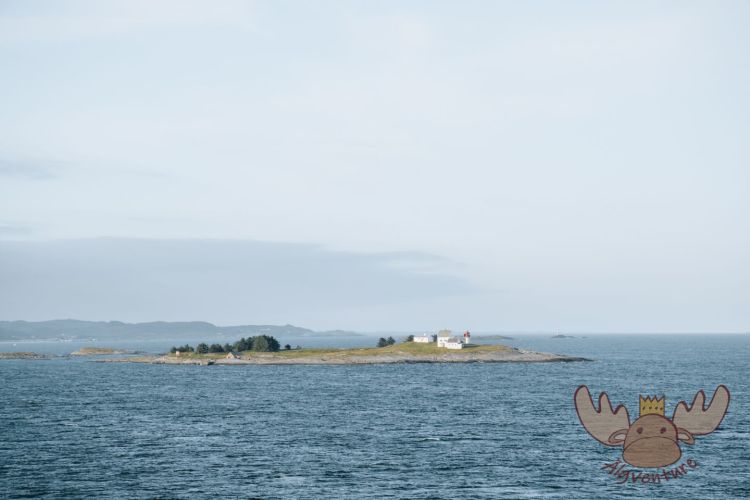
On the Sea | Eine der unzähligen kleinen Inseln vor der norwegischen Küste – One of the countless small islands off the Norwegian coast 
On the Sea | Eine der unzähligen kleinen Inseln vor der norwegischen Küste – One of the countless small islands off the Norwegian coast 
On the Sea | Die Fahrzeuge unter Deck sind dicht gepackt – The vehicles below deck are tightly packed 
Bergen | Bryggen 
Bergen | Blauer Wolkenhimmel – blue cloudy sky 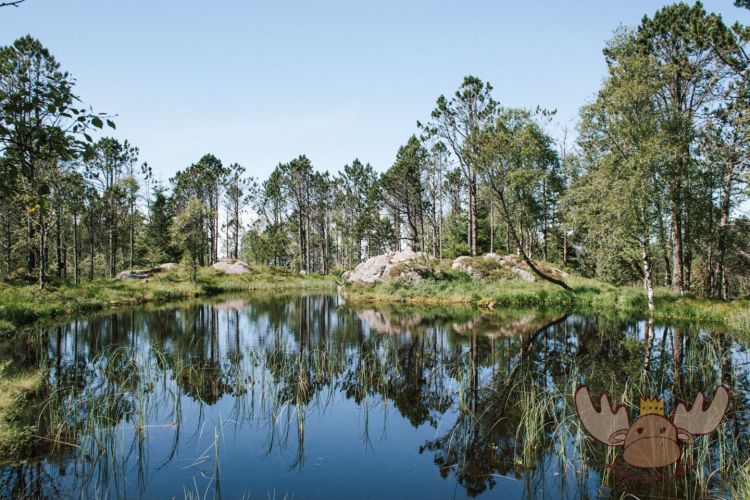
Bergen | Revurtjernet 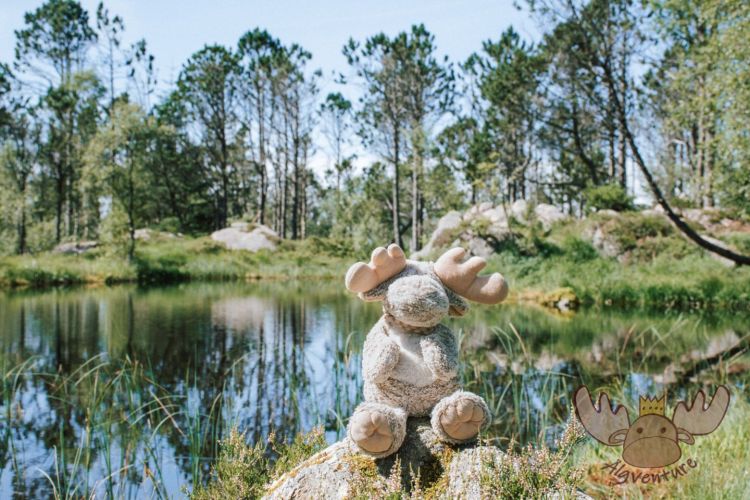
Bergen | Älgbert in seiner natürlichen Umgebung – Älgbert in his natural environment 
Bergen | Breidablikk 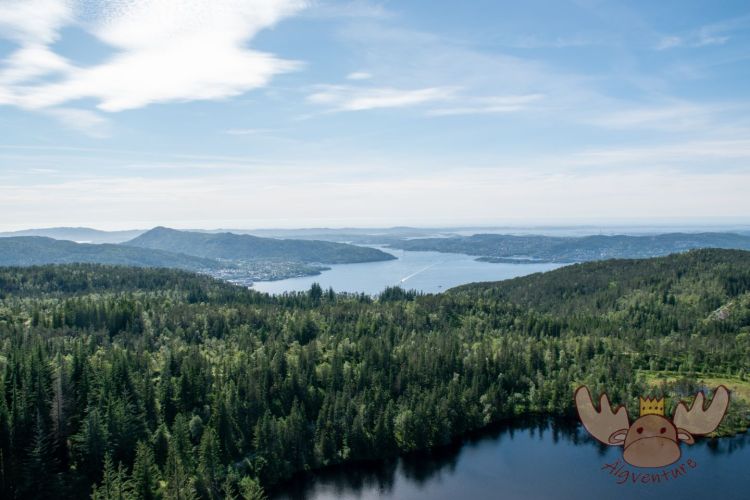
Bergen | Storediket 
Bergen | Blåmanen
After our arrival, it quickly became clear to us why Fløyen is one of the most popular destinations in Bergen for locals and tourists alike. Right next to the mountain station, there are several natural playgrounds and family-friendly, partly asphalted, paths to various lakes or viewpoints. However, we wanted to hike and not just take a walk, so we chose more remote hiking destinations to get to know the beautiful nature away from the main route, a little away from people. The climb was steep and the sun made us sweat quite a bit, but the effort was more than worth it.
Encouraged by the beautiful view, we wanted to keep going to see what might be waiting for us around the next bend, but at some point we had to accept that we had to start the journey back. It was our first hike on this adventure, but it would not be our last.
The fish soup made from local ingredients that we had treated ourselves to to strengthen ourselves in the evening tasted all the better in light of our impressions of the day.
Wooden houses
Saturday, 23. July 2022
The bed was so comfortable that we almost didn’t want to leave it. But the breakfast offered at the hotel prompted us to get our bodies moving. Today we were going to explore the city of Bergen – on land and on water.
So we first strolled through the city on foot before taking a seat on the small historic ferry „Beffen“ to get to the „Den Gamle Bergen“ museum, which is located just outside the city center. It is always wonderful to be able to get to know a city not only from the usual land perspective, but also from the water.



The „Gamle Bergen“ museum, similar to „Den Gamle By“ in Aarhus (DK), arose from the fact that the once typical wooden houses of Bergen were increasingly falling into disrepair and being demolished, and some enthusiasts did not want to stand by and watch this tragedy. On a large vacant lot, the old wooden houses were painstakingly rebuilt, having previously been dismantled and transported there. The show village is „inhabited“ by employees who take on several authentic historical roles and answer visitors‘ questions. Every hour on the hour, small, connected stories are told in the form of dramatic performances that offer a more personal insight into the lives of people at that time.



After the little journey through time in the museum, we took the old ferry back to the city center. The historic district of Bryggen is characteristic of old Bergen with its old wooden houses and offices of the Hanseatic League. The ravages of time have also taken their toll on Bergen’s most important landmark, so that today some of the wooden buildings of the UNESCO World Heritage must be restored. The offices of the Lübeck Hanseatic League were placed under the control of the Hanseatic Day as early as 1365. At its peak, German merchants and craftsmen made up about a quarter of Bergen’s population. In the great fire of 1702, almost all of the buildings, which were mostly made of wood, were destroyed. However, reconstruction followed in the old style. In 1901, part of the southern row of houses was demolished and rebuilt in brick, but with the gables in the old style. After the Second World War, everything „German“ was somewhat unpopular in Norway for understandable reasons and the district was neglected. After a fire in 1955, it was even considered to completely demolish the historic buildings and replace them with modern ones. Fortunately, after years of discussion, it was decided that the entire area should be rebuilt. Since 1979, the Hanseatic quarter of Bryggen with its approximately 60 buildings has been on the UNESCO World Heritage List and is now considered one of the most important historical sights in Bergen.
We decided to have dinner today in this setting and were able to end the day with many new impressions and full stomachs. The following day, the journey continued and we swapped the comfortable hotel beds for our even more comfortable motorhome.

Water falling from top to bottom
Sunday, 24.July 2022
We left Bergen after a hearty breakfast with all kinds of fish, eggs, meatballs and fresh pastries. We wanted to start the new day refreshed, as we had planned to visit several waterfalls, go on a short hike and take a long car ride. If only the weather hadn’t been bad again. As we were leaving, the sky seemed to be filling up with more and more clouds, all of which seemed to be just waiting to pour their wet load over us. Of course, something like that couldn’t easily dissuade us from our plan. Steindalsfossen, just about 75 kilometers from Bergen, was our first destination. The rain had briefly subsided from heavy drizzle to moderate drizzle and, armed with our rain jackets, we set off to explore the waterfall. A special feature of this waterfall is that you can walk behind the water – similar to Seljalandsfoss in Iceland, only smaller. On the way to Vøringsfossen we (intentionally) passed through the small town of Ulvik, as it is known for its good cider producers. Of course, we wanted to check this ourselves to see if it was true, but unfortunately we were prevented from doing so by the fact that we came to Ulvik on a Sunday and Norwegian cider producers don’t want to work on that day. At least for the time being.




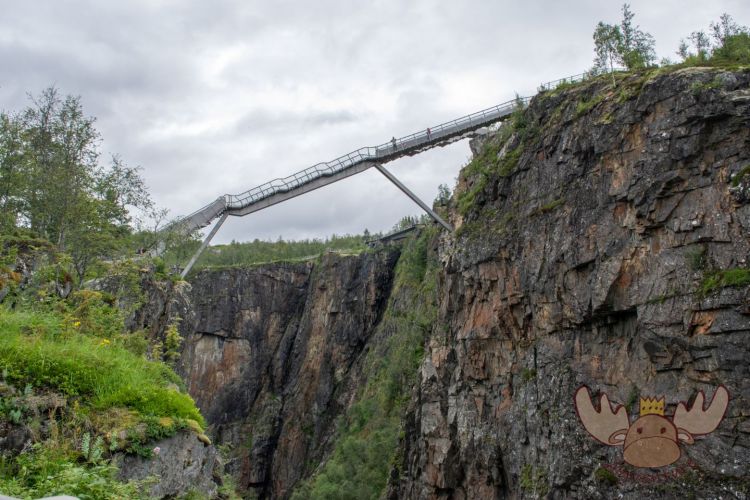
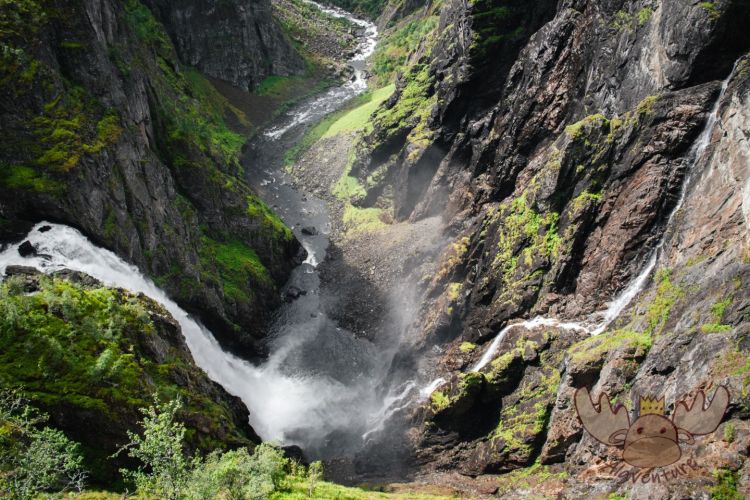
With a drop of 183 meters, the Vøringsfossen is an impressive natural spectacle – but only in summer. The small river Bjoreio that feeds the waterfall is dammed upstream and used to generate electricity. As a result, a large part of the actual water volume is not visible for most of the year. For tourist purposes, however, in summer from June 1st to September 15th, the water volume is increased to around 12 m³ per second, which is roughly the natural flow rate. We had actually planned to go on a hike through the beautiful valley below the waterfall, but due to the masses of water falling from the clouds, this venture was abandoned.
So we had to move on empty-handed. We still had a lot of the day left and wanted to at least use it to drive on to our next destination. There, the weather gods and the fairy luck were kind to us, because the sky cleared up and on the road we were driving along, other fruit (wine) producers were offering their fruit and fruit products. Of course, we didn’t miss the opportunity to take a few bottles with us to taste.
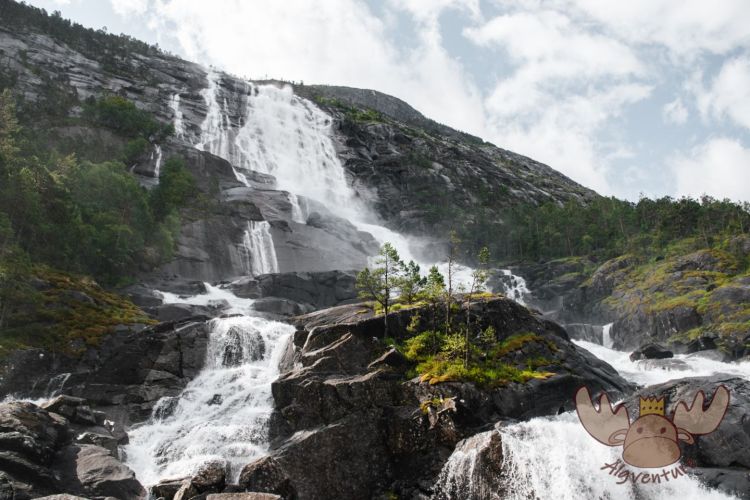
Many other waterfalls lined our path. One was more impressive than the previous one, but one stood out from the sheer mass of impressive waterfalls. The Låtefossen between Odda and Skare, located right next to road 13, overwhelmed us with its might and beauty.

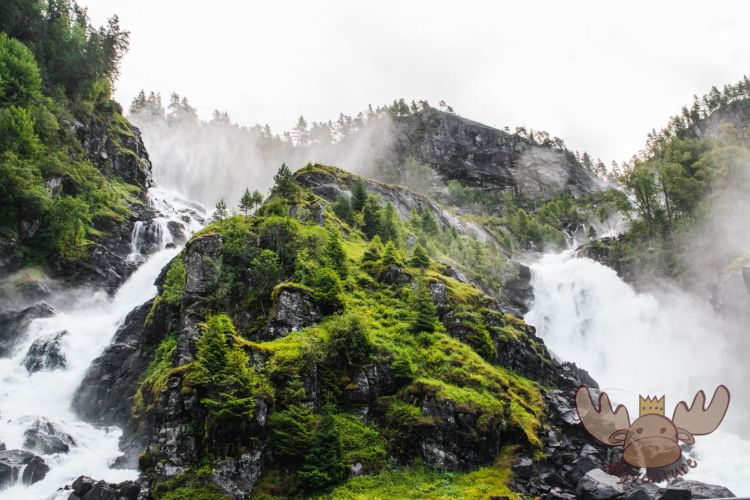
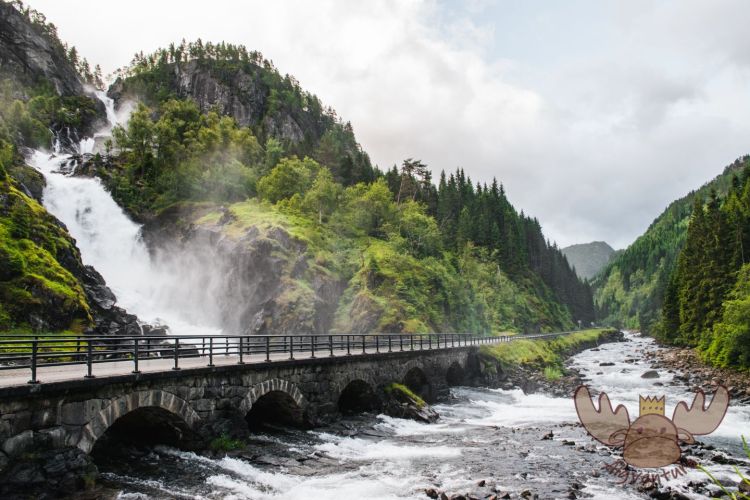

Finding a suitable place to sleep was more difficult than expected in this remote part of Norway. However, our campsite today is very pleasantly located on the shore of a lake with a view of another impressive waterfall. Unfortunately, the weather gods decided to turn the rain on again just as we started cooking. The chili con carne was slightly watered down, but still tasty. We could only hope for sunnier days.
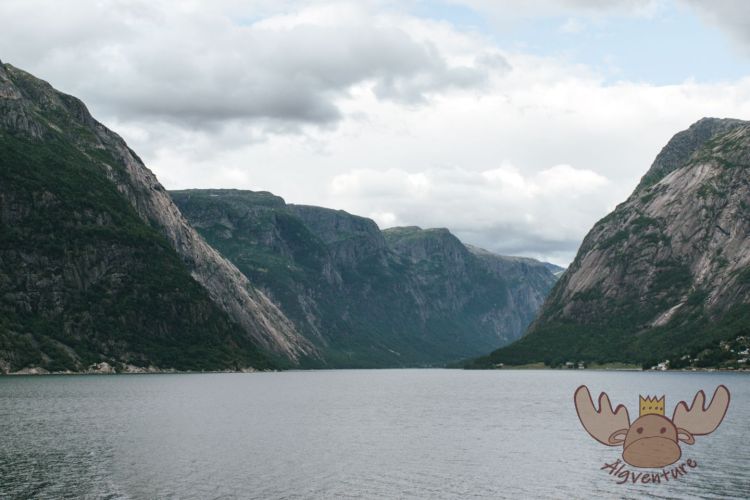


Regnvær – Rainy weather
Monday, 25.July 2022
We woke up and hoped for a sunny morning. Bitter disappointment quickly spread when we looked out the window. It was pouring with rain. So our plan for the day was already void and we had to find an alternative. All of our plans involved some kind of movement that we wanted to accomplish with our feet. Hiking – walking – strolling
Hiking up a mountain was definitely out of the question due to the weather. Such an undertaking would be far too dangerous. Perplexed faces looked into bright mobile phone screens to find answers. We quickly decided to take a small detour via Haugesund in the hope that the weather would be better there. But when we arrived, the same picture awaited us. The sky rained a lot of water on us. Slightly dejected, we continued our exploration of Haugesund.
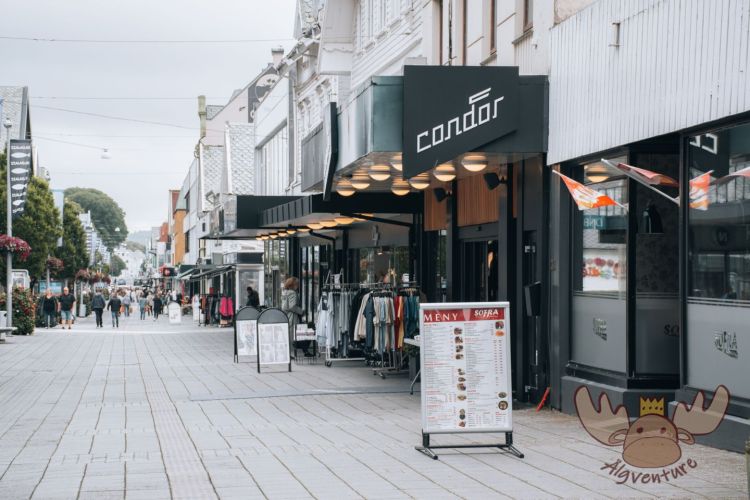
However, we should have had some “blåbærkake” and some “varm sjokolade” in one of the many cafés. Anyone who has never been to Haugesund has certainly not missed much. The film festival “Den norske Filmfestivalen” and the jazz festival “Sildajazz” take place there every summer, but otherwise the city seems as if not much is happening there. Many of the white wooden houses for which Haugesund is famous are either empty or marked as for sale. The rest of the buildings look like all the architectural sins from the 1970s – dreary.
The only thing that cheered up was a visit to the local antique dealers. There you can find all kinds of knick-knacks that you don’t actually need at all, but still want to have. Unfortunately, on this adventure, as in France when we wanted to visit the rich and beautiful, we forgot our trailer at home, otherwise we would have come home with useful things like a skeleton, an old geography map from a Norwegian school or an Art Nouveau chandelier.
As this stay was not satisfactory either, we continued our journey to Stavanger today. We hoped to at least find some peace and quiet at the campsite and to be able to prepare dinner in the evening glow. But here too, the rain clouds gathering over Stavanger had something against it. The weather has not been kind to us at all in the last few days. Just as we had cooked our pasta and added a little salt, the heavens opened again. As if someone up there had something against us mixing pasta from the Mühlviertel in Upper Austria with Italian sugo from Tuscany. Or we angered the pasta god because we overcooked it a bit. In any case, we had to eat our dinner in the pouring rain again – with no way of keeping ourselves and especially the food dry. The campsite lounge was very busy due to the spontaneous outpouring of rain from the heavens and we tried to dry our wet bones a little with the warmth inside. The Norwegian weather service predicts similar conditions for the coming days – well, we’ll see…




Storm
Tuesday, 26.July 2022
The day began as the previous one had ended. It was wet. At the campsite yesterday evening, the owner let in every person who knocked on their gates and so the site filled up until the last free space in the second row was completely full. When we saw our new neighbours for the first time, we were already a little panicked, wondering whether another metal-bending specialist would be among the other drivers. We were very worried that we would have to experience an event similar to that in Iceland two years before. Some had a hard time maneuvering their camper vans in a way that made a somewhat confident impression.
Our original plan was disrupted several times by the prevailing weather. But today we really wanted to see Stavanger.
The city of Stavanger became a bishop’s seat in 1125 and was granted full market rights in 1425. The population stagnated for a long time and apart from many fires, not much happened for almost 400 years. It was not until the early 19th century that there was a revival due to herring fishing and from 1873 onwards there was a renewed economic boom due to the establishment of the first canning factory. Towards the end of the 19th century, more and more industrial companies, including many canning factories, settled in what is now the old town. As a result, the area increasingly degenerated into a slum and consideration was given to completely demolishing the residential buildings and turning them into an industrial area. Fortunately, this plan was abandoned, because this is the only way today it is possible to see and photograph the approximately 200-year-old wooden houses.

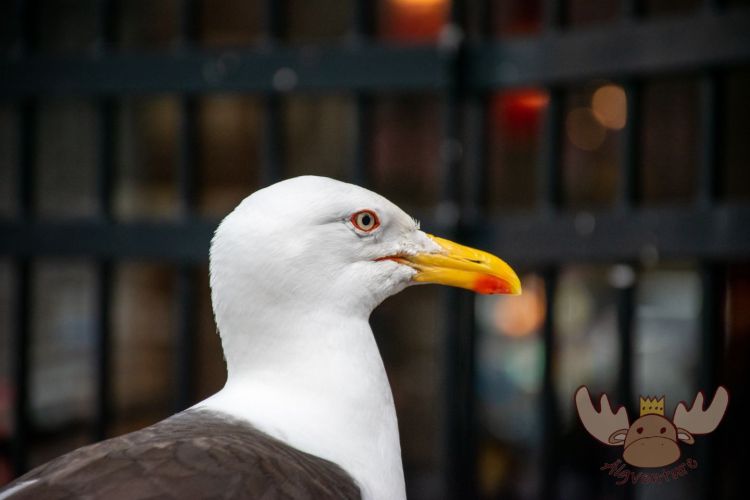
The discovery of large oil deposits also made Stavanger the oil capital of Norway – but more on that later. The coastal town is now the regional centre and is popular with many tourists – unfortunately also with cruise ships. When we arrived, two of these giants were waiting to be allowed to wash their cargo ashore. Crowds of people rushed through the narrow streets of the old town and you were literally pushed past the white wooden houses as if by a stream. Stopping to soak up the moment was not only an option in view of the rain that had started again. There was literally no room to stop for a moment. We quickly fled to the other side of the harbour, only to find that the situation was similar there.
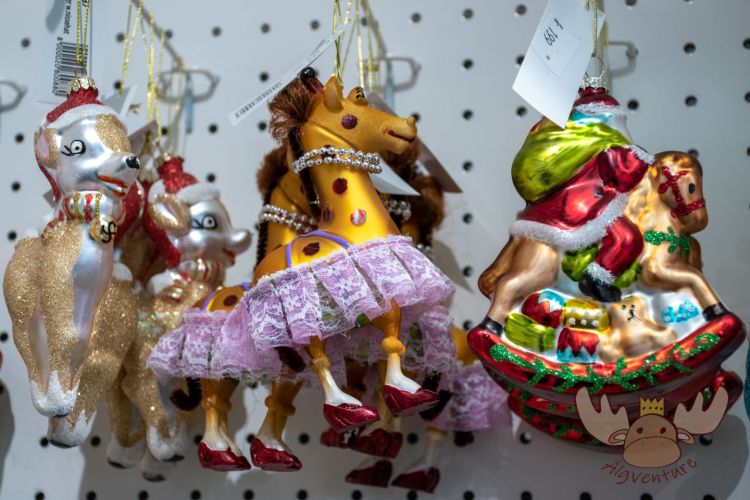
In the city centre, however, they had already prepared for the onslaught of cruise tourists. There were branches of all the usual fast food chains right next to the pier. The souvenir shops were spread out in the city centre in such a way that you always had the feeling that you had one within sight. They sold the usual tourist items – beer glasses in female shapes and with the Norwegian flag, the usual T-shirts with a wolf/bear/elk in front of the northern lights or even giraffe-shaped Christmas tree baubles. All the things you buy as a tourist…
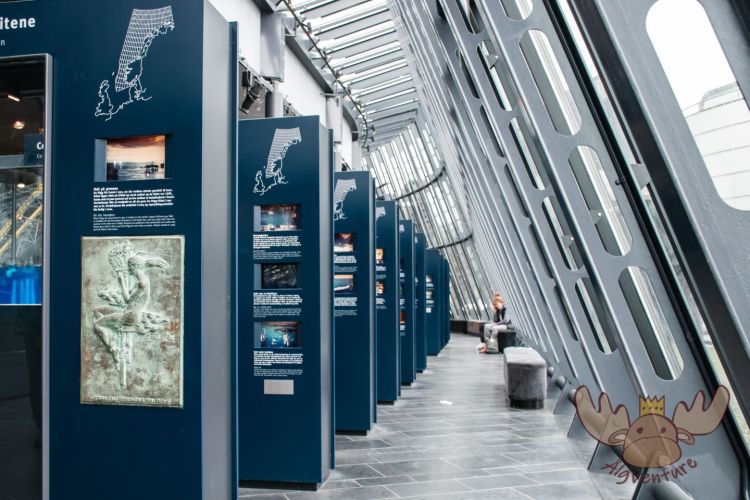
The weather still didn’t want to improve for us. The wind blew through the streets and sometimes we couldn’t distinguish the horizontal rain from the spray of the sea. We resigned ourselves. Luckily, the Norwegian Oil Museum opened its doors for us (for a fee) and we were able to escape the humidity for a moment. After the oil discoveries in the late 1960s, Stavanger changed fundamentally. New authorities developed but also new opportunities for the residents. The oil discovery became a kind of gold rush in Norway, which also attracted many people from other countries and regions. The museum deals with this social change as well as the nature and hard work of the men and women who earned their living on the drilling rigs and the effects of oil on people and nature.
After visiting the museum, it was time for us to move on. Our next stop was to climb Preikestolen the following day. But here too, the bad weather followed us. When we ate our dinner in the dry lounge, we noticed that a large cloud of smoke had risen from the toilet block. The power generator that is supposed to supply the site with electricity had gone out. Well, it never gets boring…




Things are looking up!
Wednesday, 27.July 2022
Finally, things were looking up! Not only the weather and our mood, things were literally looking up for us. When we were tickled by the sun early in the morning and woken up by the noise of the neighbors, we could hardly believe our eyes: sunshine! Well, not really sunshine, but at least no rain and every now and then a strong ray of sunshine even made its way to the ground.
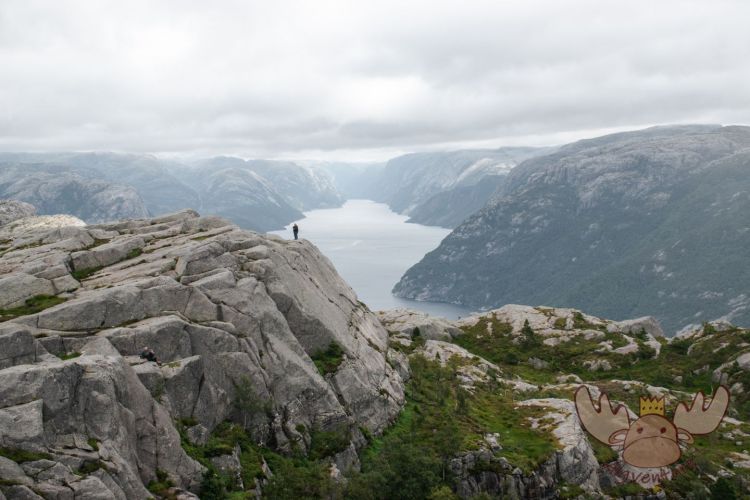
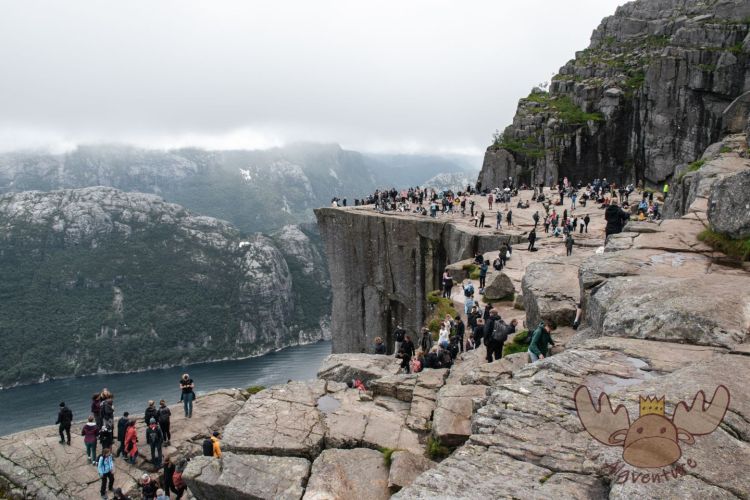
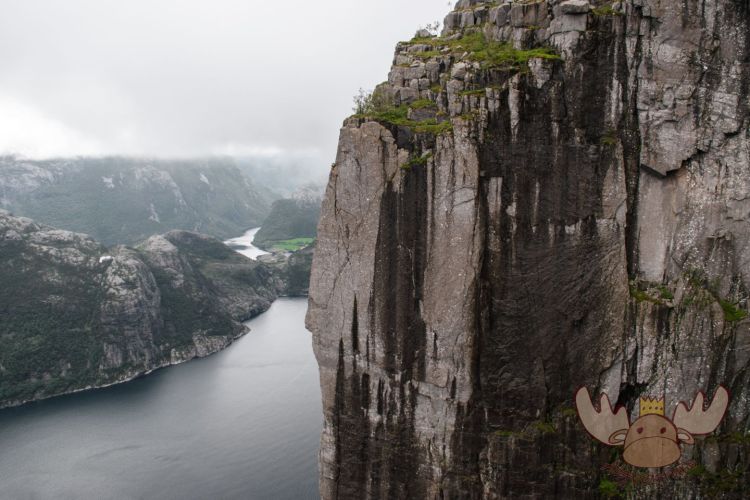
We were already happy if it wasn’t pouring down for once. Inspired by the enthusiasm we got from the lack of rain, we set off to climb the Preikestolen. The granite formation was formed around 10,000 years ago by ice breaking off during the Ice Age. The water froze in the cracks and crevices and blasted off large, angular blocks that the glacier simply took with it on its way out of the country. The Preikestolen is therefore the result of pure chance that this particular part of the rock remained standing.
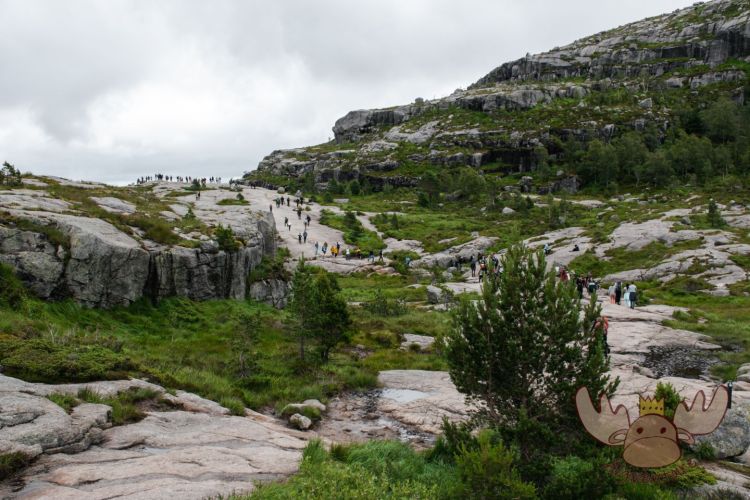
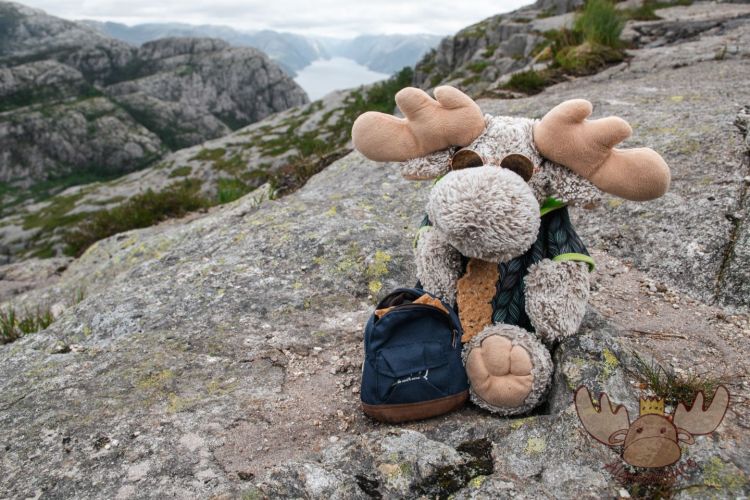
For many visitors to Norway, the Preikestolen is a must-see on their trip. This is also noticeable in the number of visitors, as long queues can form in some sections. For us, this was a completely strange sight that we had never seen before on our hikes. Conservationists also criticize the large rush, as the high number of visitors puts high demands and strains on nature, paths and infrastructure. According to Wikipedia, the daily record on July 17, 2019 was 5,342 visitors. We didn’t count, but the number of visitors was also enormous during our visit. At first we were pretty unlucky, because when we got to the top everything was covered in gray fog. Visibility was only a few meters. There was no sign of the beautiful view over the 40-kilometer-long Lysefjord, which runs about 600 meters below the edge of the cliff. But those who are patient will usually be rewarded and after our summit snack, a beautiful Norwegian mountain panorama opened up.
Apart from the far too many people on the mountain, it is still a beautiful but also strenuous hike of around 3.8 km and 330 meters in altitude. The total time we needed was just over four and a half hours -> two hours up, summit snack, two hours back down. Our feet had become heavy due to the many steep climbs on the way up. We continued our journey to the south of the north and stopped at a small campsite. The lake shimmered golden in the evening sun, our woolly neighbors rang their bells and we could hardly believe that our evening meal today was not diluted by rain this time. That’s how it should be, that’s how it can stay.




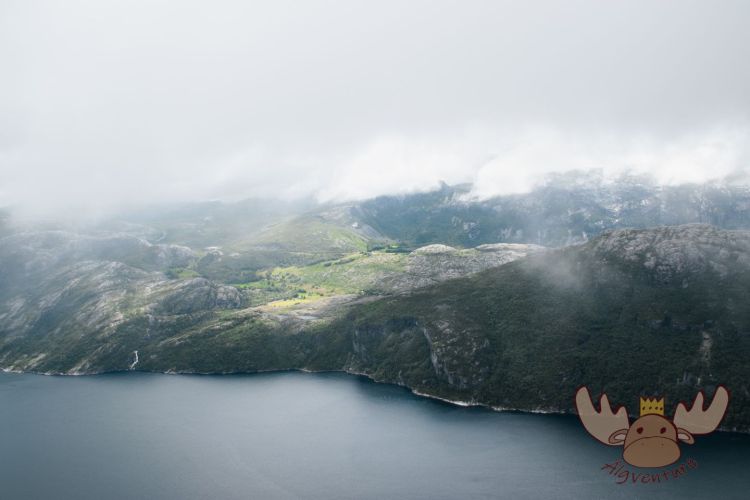
Inner restlessness
Thursay, 28.July 2022
We woke up that morning and it hadn’t rained for the first time on our trip. The sun was shining and the sheep next to us were happily having breakfast in their pasture. The whole group of adventurers had the same thought at the same time: we had happened to stop in a picturesque idyll right next to a lake and didn’t really want to move on yet. But there was still so much to discover and far too little time for it. So we packed up our micro-camper again.
After our previous adventures with our trusty motorhome, we already had everything down. There is a division of labor and everyone knows exactly what to do to ensure a quick departure.
The first stop that day was not far from our campsite, because after just under half an hour’s drive along beautiful back roads we reached the town of Sogndalstrand. The small fishing village is known for its old white wooden houses that gently nestle against the slope on which they are located. In the old harbor basin we watched some fish jumping in the air and bathed in the warm sun. After the successive cold rainy days, this was a very welcome treat. The village is beautiful, but also very small, which meant that we could not extend the time we needed to explore it beyond an hour. The two abandoned wooden houses of Helleren were (almost) on our way and we approached them with high expectations. Unfortunately, the expectations were a little too high. Not that the two wooden houses were not worth seeing, but we should read the directions or description of the desired destination a little more carefully next time. Because instead of a leisurely short hike to the wooden houses, the walk to the destination turned out to be rather marginal. From the car park to the houses it was less than a hundred meters instead of the assumed distance with an assumed walking time of 15 minutes. So after a few snapshots and reading the very informative information boards, this destination was also (unfortunately) quickly ticked off.

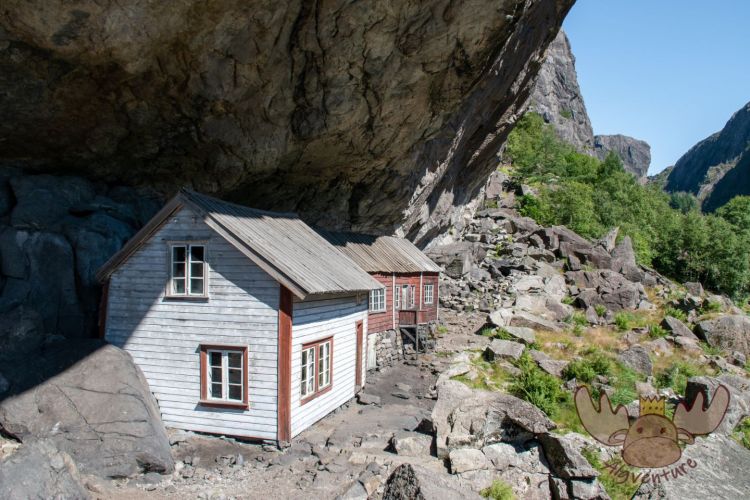
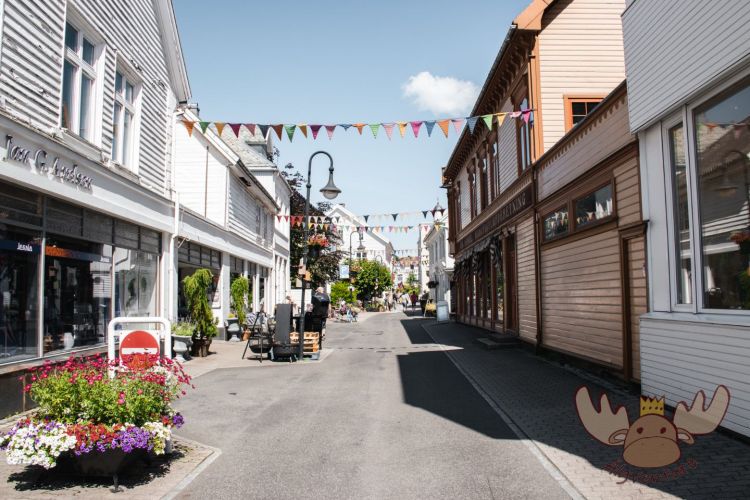

There was some discontent among the travelers, as everyone had actually expected a short hike. This discontent was only alleviated by the taste of large scoops of ice cream wrapped in ice cream cones. The town of Flekkefjord, which we hadn’t originally had on our adventure radar, offered the best opportunity to look for an ice cream vendor. It turned out that this was our lucky find of the day. The small town has a wonderful old town with old white-painted wooden houses. However, they are so lovingly decorated that they can easily keep up with the white wooden houses of Sogndalstrand and Stavanger. So we strolled between the wooden houses with our scoops of ice cream in the ice cream cone and enjoyed the warm Norwegian summer day.
But there was still a certain restlessness in the group of adventurers. We had to hike! We had already saved a few destinations on Google Maps and so only had to choose from our own selection. The Skreliafossen waterfall and a large hiking area are only about 45 minutes from Flekkefjord. At least we thought that the waterfall was only 45 minutes away. The route hardly allows for the description „road“, although we would like to point out that the condition of the road was far better than many roads we have encountered in Iceland. In any case, our journey took a little longer than the time suggested by Google Maps. Nevertheless, the view of the waterfall and the hiking area, which we were only able to explore a little due to time constraints, made up for it. Nevertheless, we advise against driving on the gravel road with large camper vans or overly long trailers.


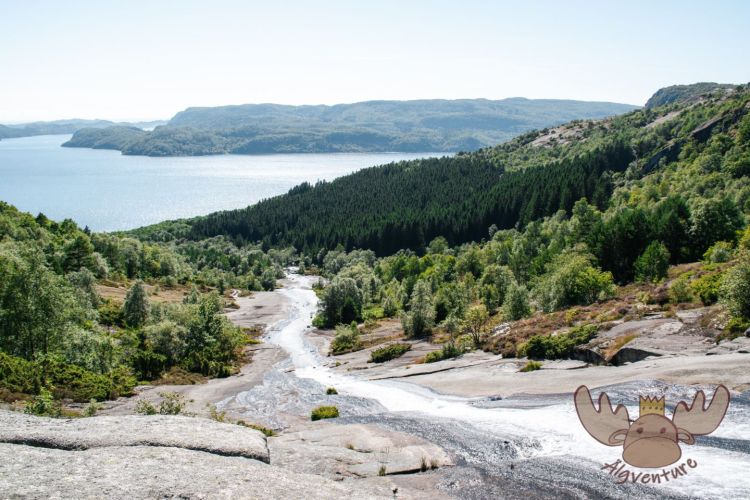


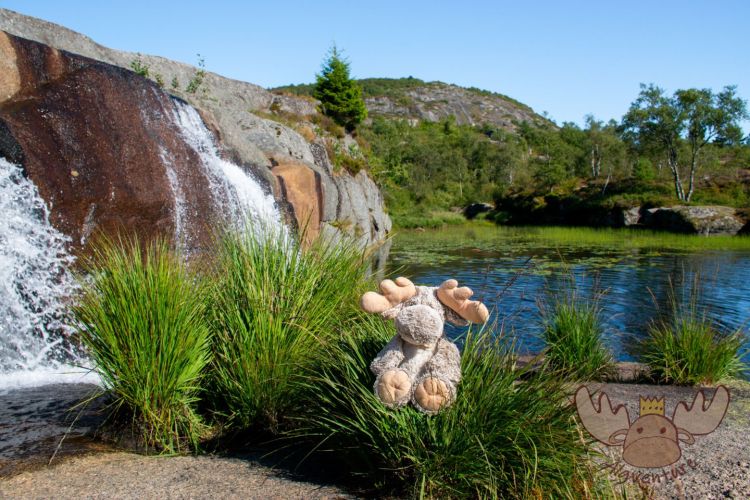

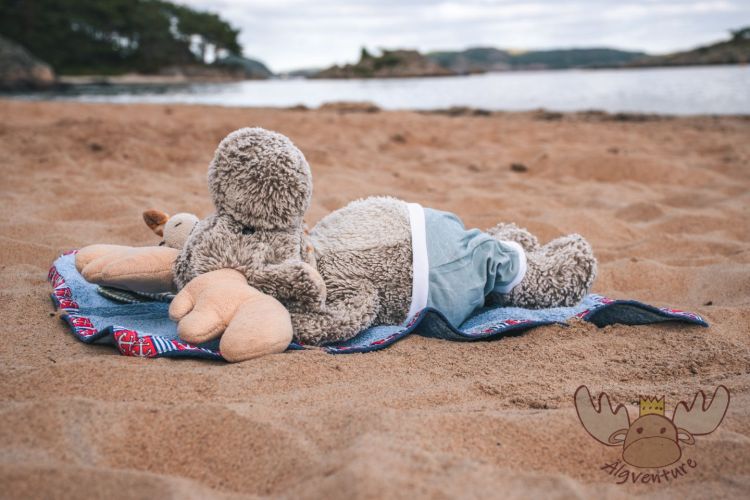
With the micro-camper covered in a thin layer of dust from driving on the gravel road, we set off to drive further to the south of the north. We set up camp for the night not far from the southernmost point of Norway and ended the evening with cool drinks on the Kanelstrand (cinnamon beach). We hope that the weather will be just as sunny tomorrow as it was today and are excited to see what we can explore.


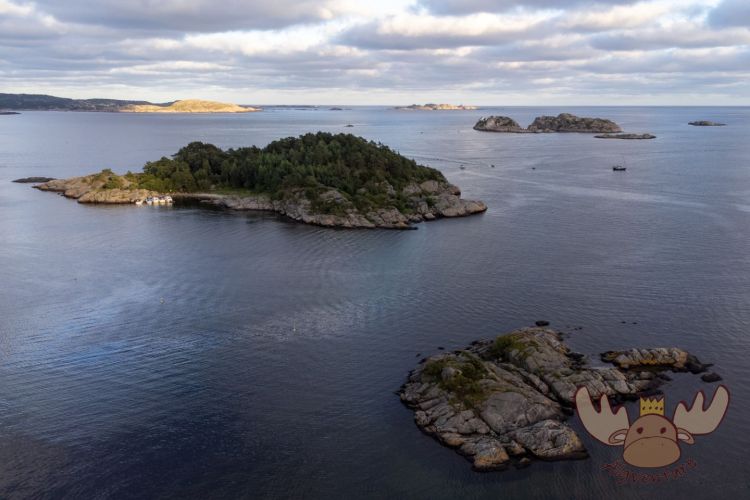
The South of the North – Part 1
Friday, 29.July 2022
We had spent a quiet night in a small pine forest near the coast, but we still had a mission to complete. We wanted to go to the south of the north. We were at least partially successful that day, as we reached the southernmost point of Norway at the Lindesnes lighthouse.
The Lindesnes Lighthouse is Norway’s oldest and southernmost lighthouse. The beacon was lit here for the first time in 1655, but it went out again after a short time due to very poor planning. The materials needed to build and operate the first lighthouse arrived far too late, so the first lighthouse master had to improvise. Instead of building a coal-fired tower (the coal was to be delivered from England), a wooden structure was improvised at the top, with 30 candles burning behind leaded glass. The inadequate lighting naturally quickly led to many complaints, which meant that operations were quickly stopped. It was not until almost 70 years later that another attempt was made to build a lighthouse at the important landmark for sailors – but this time it was done properly. At least they tried to do it right this time, because the new construction only included large fire bowls that burned with coal in the open air. But they built two of them, because a beacon was also lit on a nearby headland. It took almost a hundred years before it was realised that open coal fires were actually quite inefficient. So in 1822 both fires were converted to a closed coal fire and finally in 1844, when someone took another closer look at the coal consumption, the second coal fire on the nearby headland was dismantled. When the coal bill was still far too high, the operators decided to modernise it and in 1854 the tower in Lindesnes was fitted with a wick lamp that ran on paraffin and a lens. In 1915, the lens moved to a newly built cast iron tower and, after the construction of the engine house and fog warning horn in 1920, it took on its current form.

Lindenes Fyr | 
Lindenes Fyr | 
Lindenes Fyr | 
Lindenes Fyr | 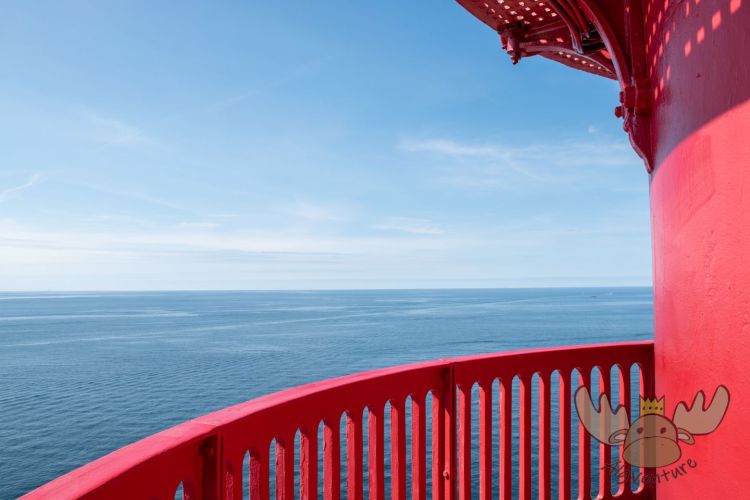
Lindenes Fyr | 
Lindenes Fyr | 
Lindenes Fyr | Im Zweiten Weltkrieg wurden unter dem Leuchtturm Verteidigungsstollen gegraben. heute beherbegen sie eine Kunstaustellung. – During the Second World War, defense tunnels were dug under the lighthouse. Today they house an art exhibition.
The last major remodeling was undertaken by the Germans when they occupied Norway in 1940 and built their defenses along the entire Norwegian coast. The entire rock on which the lighthouse stands was undermined and built with bunkers. Our onward journey that day took us to another brutal construction by the German occupiers in nearby Kristiansand. The city was one of the first to be taken by the German Wehrmacht in the course of Operation Weserübung in World War II. The strategic location and the fact that German soldiers were also occupying the country on the other side in Denmark made Kristiansand a very important position that was heavily fortified by the Todt Organization. It was decided to build a 38cm battery in Møvik and at the shortest distance to Denmark (around 116km) in Hanstholm. The entire complex was to be made of several large cannon positions made of concrete on the mountain ridge. According to the museum operators, this is the second largest cannon in the world, weighing 337 tons. The dimensions of the individual bunkers are enormous and around 600 soldiers were needed to operate the battery. If only half as much energy were put into more important things than mutual destruction in a war…


Ta det med ro – Take it easy
Saturday, 30.July 2022
Last night, our ears were listening intently to the surroundings. This time, our campsite was a little off the beaten track, next to a small pond with a small stream flowing past. While we were writing yesterday’s lines in the dark, we suddenly heard a loud noise, as if something heavy had fallen into the water. The nighttime noises behind our micro-camper made us search for our headlamps and flashlights – but there was nothing to be seen. All we heard was a light splashing here and there, as if something had moved in the water. And chewing noises, we definitely heard loud chewing noises. That couldn’t have been a moose, could it?
When we climbed out of our motorhome at daybreak, around ten o’clock, and rubbed the sand from our eyes, we couldn’t find any trace that would have indicated the nighttime visitor. We made ourselves comfortable on our camping chairs behind the motorhome and thought about how we could best use the new day of adventure. One of the fixed points of our trip would be the ascent of Gaustatoppen, but the weather has to be good for that. A look at the weather report didn’t exactly brighten our mood. On the very day we had planned for the first ascent of Gaustatoppen by an adventurer, the weather was miserable again. So all we could do was throw our carefully thought-out plan out the window and improvise.
First of all, we had to replenish our water supply, as it was continually emptied over the course of our trip. The stock of drinks also had to be adjusted to a target level. One of the tour group discovered a strange orange can that brought back familiar memories: APPELSÍN. It is an orange-flavored sugary drink from Iceland that we grew fond of on our adventure there. We are completely amazed to find this drink here in Norway.
After we had stocked up on supplies, we wanted to pay a visit to the small town of Lillesand, in the vicinity of which we were staying overnight. The town center with its old white wooden houses invites you to linger, which we did over lunch. The fish or rather the fish soup that we ate tasted better right by the sea. Half the day was already over and we still had no adequate improvisation at hand. The nighttime visit hadn’t left us alone either. Could it really have been a moose? Now we knew what we wanted to do with the rest of the day: we wanted to see a moose! But where should we start looking? The Internet came to our aid here, and when we asked where moose lived in Norway, it answered: Everywhere – just not in densely built-up areas. Well, you can work with the information. So we drove north, because there wasn’t much Norway left in the south. We found what we were looking for at Viltgården near Iveland. In a forest not far from the small gravel road, it stood in all its glory and was just waiting to be captured by our camera lens. How lucky we were, we almost walked past it. However, the day had already progressed a long way due to the search for moose. The time hardly allowed for a hike, so we decided to move on and look for a place to spend the night. So in the evening we sat not far from a lake, typed a few lines for our blog on Polarsteps and enjoyed the orange-flavored drink we had bought from Iceland. The weather forecast for the next day did not predict good weather. We’ll see…
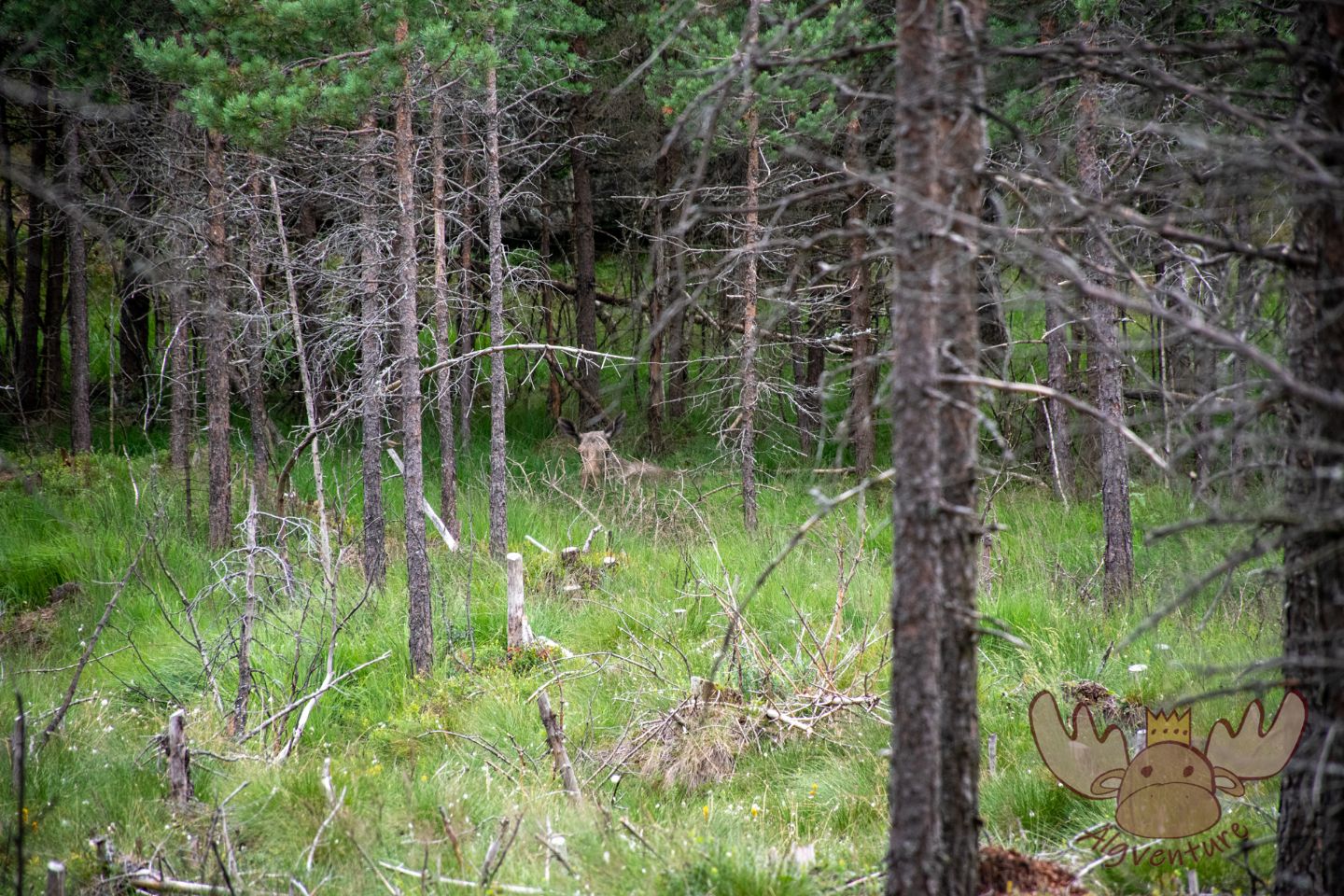
Norwegen | Gut versteckt, sieht man nur die Ohren des Elches – Well hidden, you can only see the ears of the moose 
Norwegen | Doch mit viel Geduld kann man Elche in der Natur Norwegens entdecken. – But with a lot of patience you can discover moose in Norway’s nature. 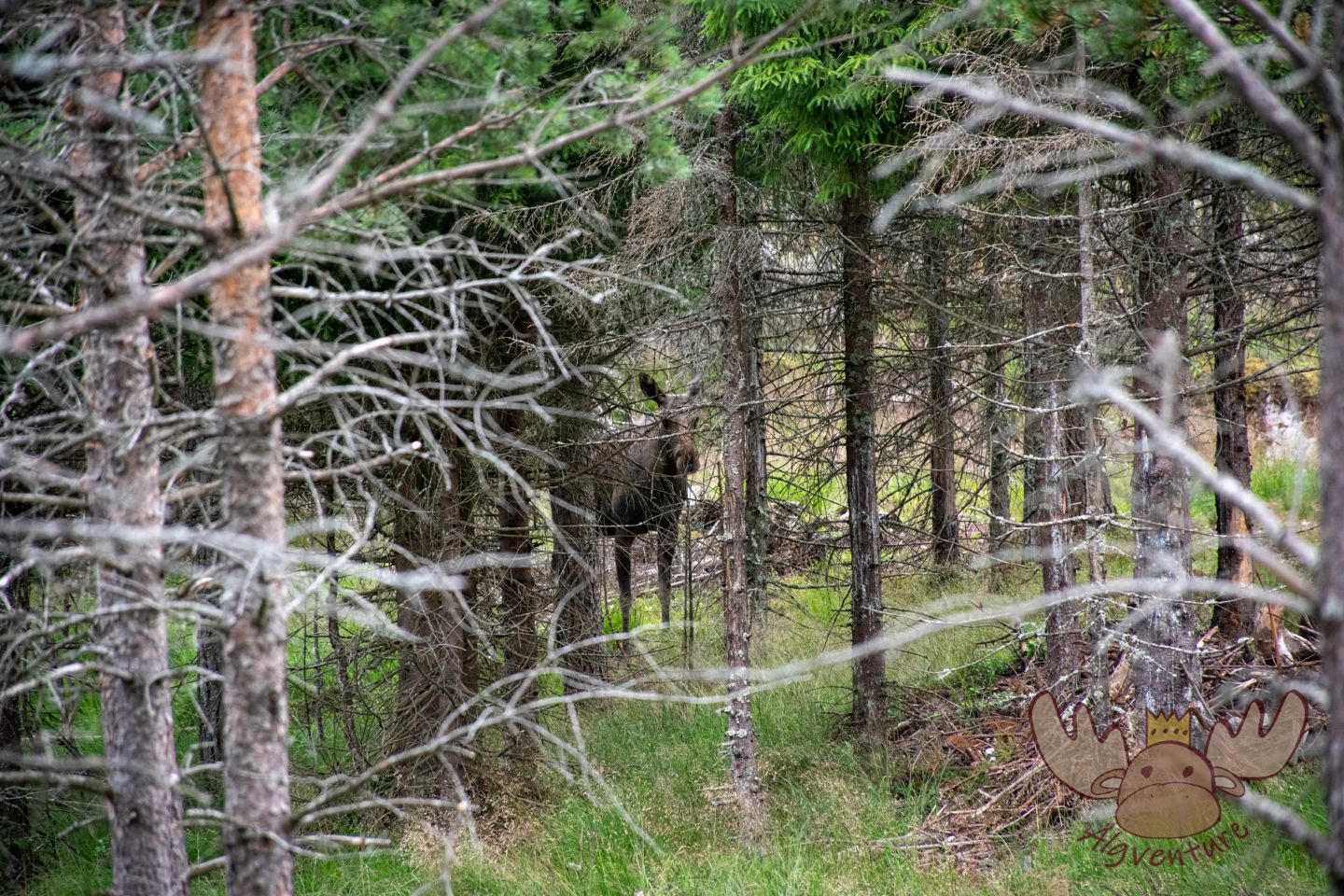
Norwegen | Elche sind wahre Versteckkünstler. – Moose are true masters in hiding. 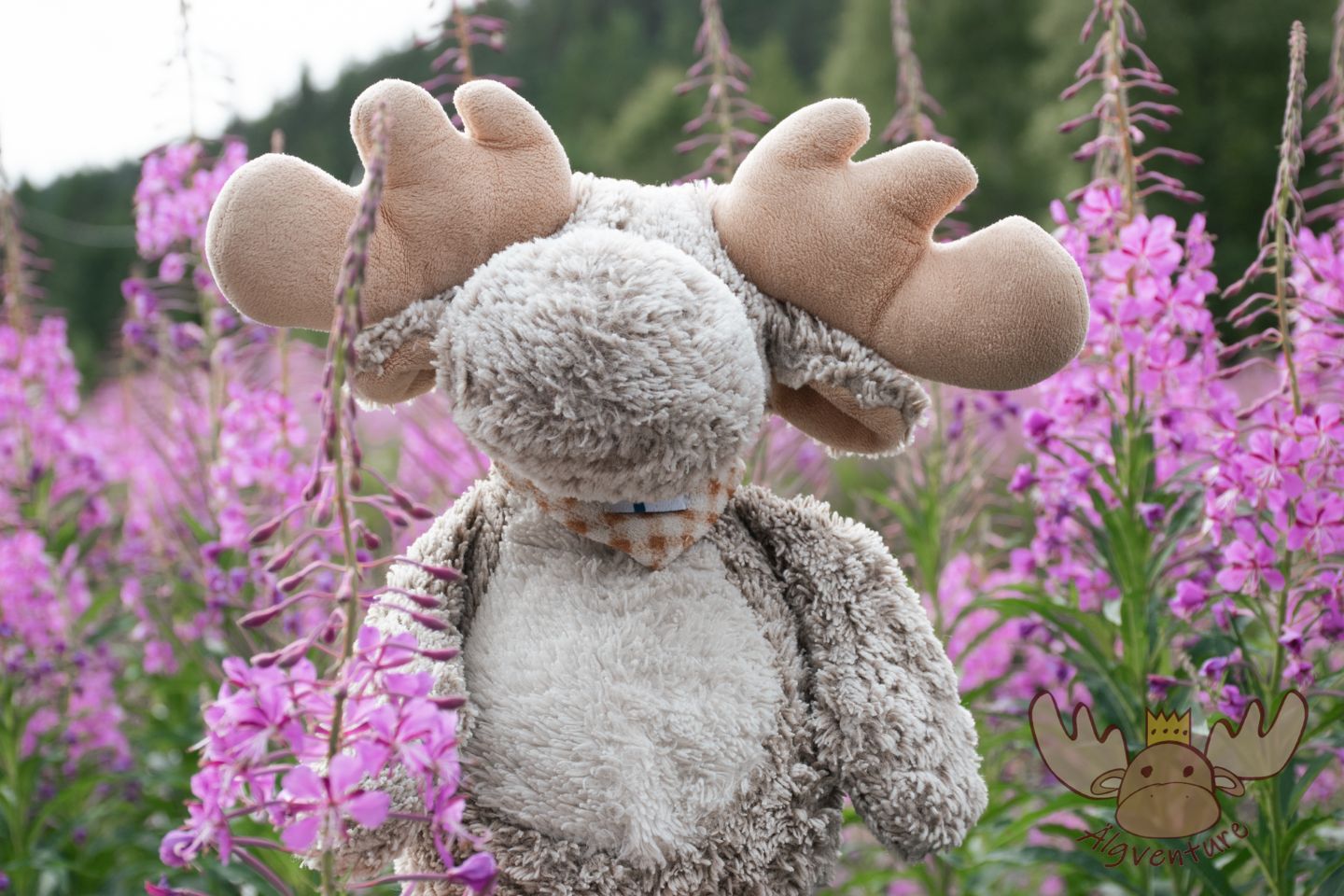
Norwegen | Älgbert versteckt sich am liebsten in den vielen lila Blumen. – Älgbert likes to hide in the many purple flowers.
Iron
Sunday, 31.July 2022
The weather forecast had actually predicted that it would rain since the morning, but to our surprise we woke up to bright sunshine again. Our spontaneous change of plans meant that we didn’t have to get up too early that day, because based on the weather forecast we planned to visit a museum, and in Norway these generally open a little later. Our destination was the former ironworks and today’s Næs Jernverksmuseum. Mining and the production of metals has a history of over 1000 years in Scandinavia. Even the Vikings were able to make excellent objects out of metal. The typical red color of the houses, called Falun red, is made from pigments from the waste from a copper mine, for example. Since the beginning of the 17th century, the distinctive color has been produced as a by-product from the lean copper ore that accrued as waste from the copper mine in Falun (SWE) by burning it and adding rye flour, for example. Initially popular mainly because of its low cost, the colour spread throughout Scandinavia from the 19th century onwards to all levels of society and is still the predominant colour for wooden buildings, especially in rural areas. However, as the name suggests, the Næs Ironworks Museum processed iron ore and did so continuously from 1665 until 1959, when a flood destroyed the dam that supplied the works with hydroelectric power and reconstruction was unprofitable. Most of the industrial buildings, including machinery and equipment, and some of the workers‘ houses have been preserved or have been reconstructed for the museum’s use. Today, the old ironworks is a unique museum, as nowhere else has the old tools been used for so long and therefore no other place as authentic as this exists. Some workplaces look as if the workers would be back at work tomorrow, even more than 60 years after work stopped. The machine hall is filled with original tools and you can feel the early industrial importance for the region with every step through the old buildings. The NæsVerk’s product range extended from simple trestles for further processing, to semi-finished products (round bars, profiles, etc.), fences and cast iron ovens, to complex processing steps such as gears, worm gears or cannon barrels. It is astonishing what people were able to produce with such high precision without CNC control.
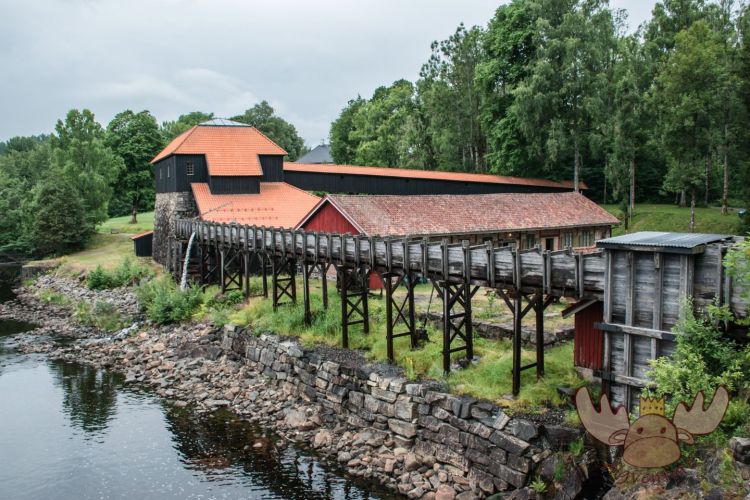
Næs Jernverksmuseum | Die Gebäude wurden viele Jahre zur Eisenverarbeitung genutzt. – The buildings were used for iron processing for many years. 
Næs Jernverksmuseum | Zu den Erzeugnissen zählten auch kunstvolle Gusseisenöfen. – The products also included artistic cast iron stoves. 
Næs Jernverksmuseum | Die meisten ausgestellten Werkzeuge und Maschinen sind Originale aus vergangener Zeit. – Most of the tools and machines on display are originals from bygone times. 
Næs Jernverksmuseum | Manche Werkstätten wirken so, als ob die Arbeiter nur kurz Mittagspause machen würden. – Some workshops look as if the workers are only taking a short lunch break. 
Solberg gruve | Das Gestein enthält so viel Eisen, dass der Magnet einfach daran haften bleibt. – The rock contains so much iron that the magnet simply sticks to it.
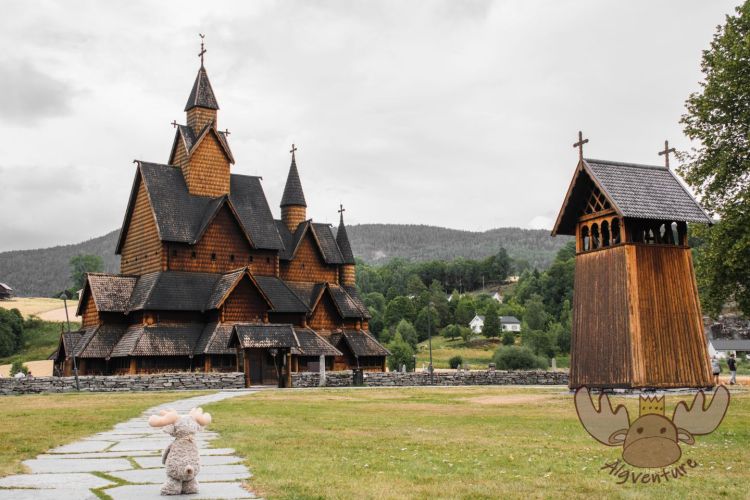
Just a few kilometers away is the Solberg gruve, an old mine that supplied the ironworks with the iron ore it needed. We decided to continue our exploration of the south of the north underground. There we were told that the mine was opened at about the same time as the ironworks, around 300 years ago, and was in operation until the 1860s, supplying plenty of iron ore. The raw material was extracted from the mountain from a depth of up to 180 meters using muscle power and gunpowder. In order not to waste expensive gunpowder, the miners used a simple trick by lighting a fire at the desired location, which made the material brittle due to the thermal expansion of the stone at that point. This ensured an advance of around 1-3 meters per month. We had to continue our journey, because the unplanned change of plans meant we had to cover a long distance today. The largest stave church in Norway in Heddal, which was on our way, was unfortunately already closed. Therefore, we only had the opportunity to admire the exterior of the impressive wooden building from the 13th century. We parked our micro-camper on the shore of Lake Tinnsjå for the night so that we could climb the nearby Gaustatoppen the next day. The weather forecast for the following day was kind to us. But, as could be expected, it had started to rain just as we were about to sit down for our evening meal.
Gaustatoppen
Monday, 1.August 2022
The view through our windows this morning was filled with excitement. We absolutely needed good weather to be able to reach today’s goal. Sunshine! We saw sunshine! The weather god heard our plea to at least keep it from raining that day. So our exploration of the mountain could begin.
The Gaustatoppen, at 1883 meters high, is the highest mountain in the Telemark region. Its formation and special shape are due to the glacier migration during the Ice Age and the material it is made of. The Gaustatoppen rose several hundred meters out of the ice landscape as a „nunatak“ (= isolated rock) during the last Ice Age. Over thousands of years, the glacier and meltwater worked the mountain and a mass of loose stones piled up on the mountain. Solid quartzite, one of the hardest rocks, remained and today forms the summit of the Gaustatoppen. In the sea of rocks that has formed on the mountain, you can often find rocks that are reminiscent of sandy beaches. In fact, these are 1200 million year old sand deposits that have been fossilized over time. However, this does not mean that Gaustatoppen was once washed by the sea. Rather, these fossilized beaches have survived mountain formation and ice ages and can now be admired at around 1700 meters above sea level.
The easiest way to Gaustatoppen starts at the Stavsro car park, which of course we did not take. The much steeper climb we chose started at the valley station of Gaustabanen, which was built for the military in 1959. The summit was used as a radar and radio station during the Cold War due to its height and strategic location. At the beginning the path was rocky and difficult, but after the first climb and a short flat section the path became very steep for us. The loose stones required more and more concentration from us. Our calves burned with every step, but the view made up for our efforts. A small patch of snow, the piled-up stone signposts and dogs that overtook us encouraged us to keep going until the summit. When we got to the top, the largest mountain panorama in Norway awaited us. At the top of Gaustatoppen, in good weather, you can see about a sixth of the country – to the south as far as the sea and to the east as far as Sweden, or so we were told. We couldn’t see either with our eyes. Perhaps we would have needed suitable binoculars for that. We wanted to get down to the valley a little faster than on the way up, so we chose Gaustabanen. According to the plan, we should have been back in the valley in about 30 minutes, but due to the sheer number of Sunday trippers (even though it was actually Monday), who all seemed to have taken the train up, they also wanted to use it to get back down. However, the waiting time for the limited capacity of the train was so long that we would probably have been back down faster on foot. We were not able to continue our journey until about 5.32 p.m. Much too late, because we actually wanted to cross the Swedish border so that we could arrive at our next stop on our journey of discovery pretty soon tomorrow.
The weather gods must not have been happy with our performance, because we had barely settled into our place for the night when it started to rain heavily again. Well, we’re used to it by now…

Gaustatoppen | Schon bei der Anfahrt merkt man wie beeindruckend der Berg in der Landschaft steht. – As you approach, you notice how impressive the mountain is in the landscape. 
Gaustatoppen | Auf ungefähr der Hälfte des Weges verschwindet die Vegetation völlig und man wandert durch eine Geröllwüste. – About halfway along the trail, the vegetation disappears completely and you walk through a scree desert. 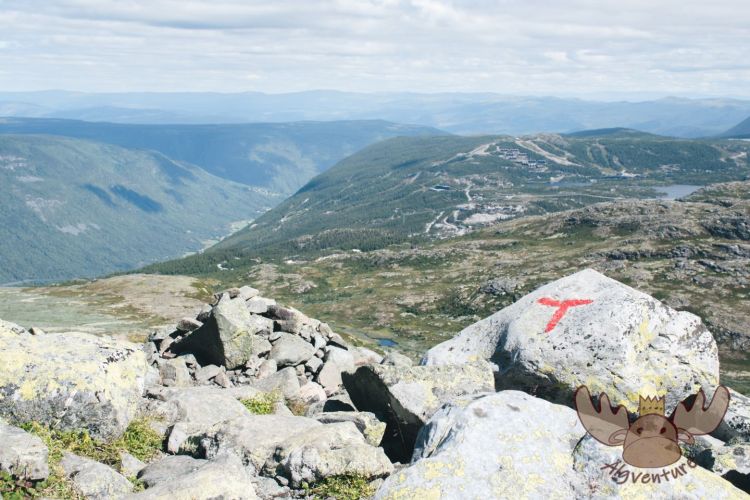
Gaustatoppen | Der Blick ins Tal belohnt jedoch jeden mühsam erkämpften Höhenmeter. – However, the view into the valley rewards every hard-won meter of altitude. 
Gaustatoppen | Nach so einem anstrengenden Aufstieg ist es umso belohnender sich in die Sonne legen zu können. – After such a strenuous climb, it is all the more rewarding to be able to lie in the sun. 
Gaustatoppen | Am Gipfel des Berges wurde eine Säule aus allen in Norwegen auffindbaren Gesteinsarten gebaut. – At the top of the mountain, a pillar was built from all types of rock found in Norway. 
Gaustatoppen | Die Geröllfelder bestehen aus einem versteinerten Sandstrand. – The scree fields consist of a petrified sandy beach. 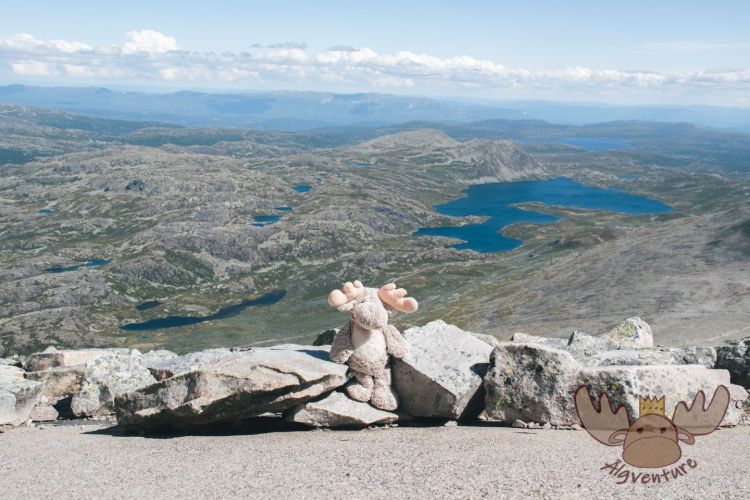
Gaustatoppen | Von der Spitze des Gaustatoppen kann man bei gutem Wetter fast ein Drittel Norwegens sehen. – From the top of Gaustatoppen you can see almost a third of Norway in good weather. 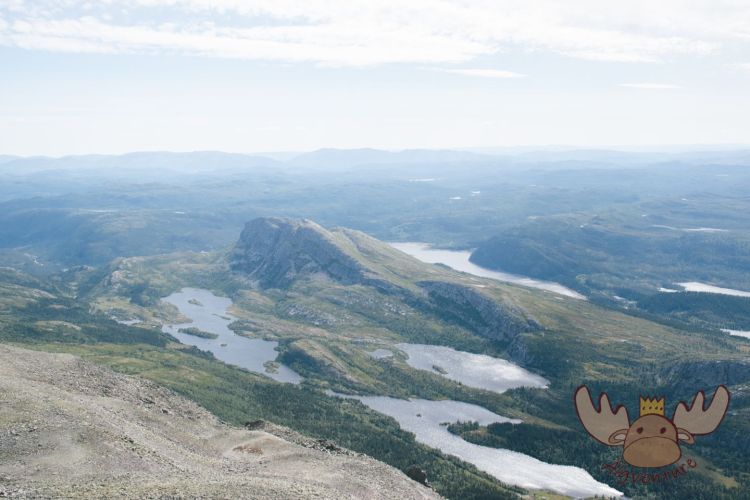
Gaustatoppen | Von der Spitze des Gaustatoppen kann man bei gutem Wetter fast ein Drittel Norwegens sehen. – From the top of Gaustatoppen you can see almost a third of Norway in good weather. 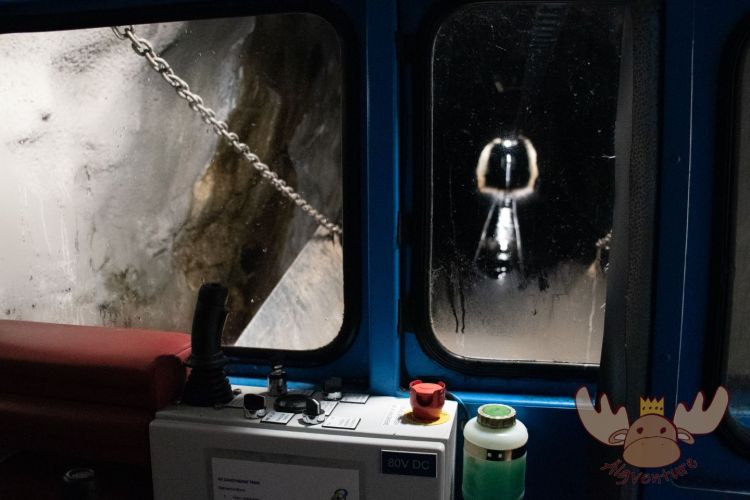
Gaustatoppen | Das Militär baute im Kalten Krieg eine Bahn in den Berg um leicht Material und Personen zur Radaranlage am Gipfel zu bringen. Wer nicht wandern möchte, kann diese Bahn ebenfalls benutzen. – During the Cold War, the military built a railway into the mountain to easily transport material and people to the radar station at the summit. Anyone who doesn’t want to hike can also use this train. 
Norwegen | Spektakulärer Sonnenuntergang auf unserem Campingplatz in Svelvik – Spectacular sunset at our campsite in Svelvik
Välkommen till Sverige – Welcome to Sweden
Tuesday, 2.August 2022
We had been able to experience a lot in Norway over the past few days. When we arrived, we were greeted by a friendly border guard, ate fish soup in old office buildings, saw a Norwegian moose, flew around a lighthouse, photographed lots of white wooden houses and fantastic waterfalls, climbed a few mountains and went deep into a mine. All of that was condensed into just over a week. We had seen and experienced so much, and yet we only got to see a small part of it in that time. There was much more to see, but there was simply not enough time. This is a clear sign that we must come back to continue our exploration of southern Norway. But the time had come for us to move on.
We left Norway for the neighboring country of Sweden, but not without packing plenty of provisions first. On all our trips and adventures, we not only explore the landscape and sights, but also the markets and the goods that are on offer there. In order to be able to treat ourselves to holiday moments later, when we are back home and back to everyday life, we had packed our motorhome full of all kinds of baked goods, sweets and drinks from Norway that we had come to know and love on this and previous adventures.
The border to Sweden was crossed relatively unspectacularly. Only a small sign showed us that we had changed countries. After a few long kilometers of driving, the female Älg companion spotted a small black sign on the side of the road: Älgpark 3km
Our buttocks and nerves had already been strained enough, so we decided to take a short detour to stretch our legs a bit and see more of these Nordic forest dwellers. When we arrived at the „Moose af Anneröd“ park, we were immediately given a basket of freshly cut apples to lure the moose and, if possible, feed them. The park is rather small, but according to the extremely friendly and dedicated employee, there are ten moose on the grounds. Even with our searching eyes and a lot of patience, we were only able to spot five of the animals. The apples that were given to us were of little interest to the moose. Too many visitors must have walked past them with apples. After about an hour of exploring the circular path in the Älgpark, we continued on to our next overnight spot near Gothenburg. This time, however, we were not staying in our micro-camper, but in a real hotel. After more than a week in which it had rained almost every day, we wanted to enjoy the luxury of a hot shower and a soft bed again. As a reward, we also treated ourselves to a 4-course meal in the hotel restaurant. Of course, as could be expected, it had started to rain when we arrived. But this night, for once, we don’t care much about this. Tomorrow will be an exciting day for the male Älg companion. We (almost all) are very excited about what awaits us.
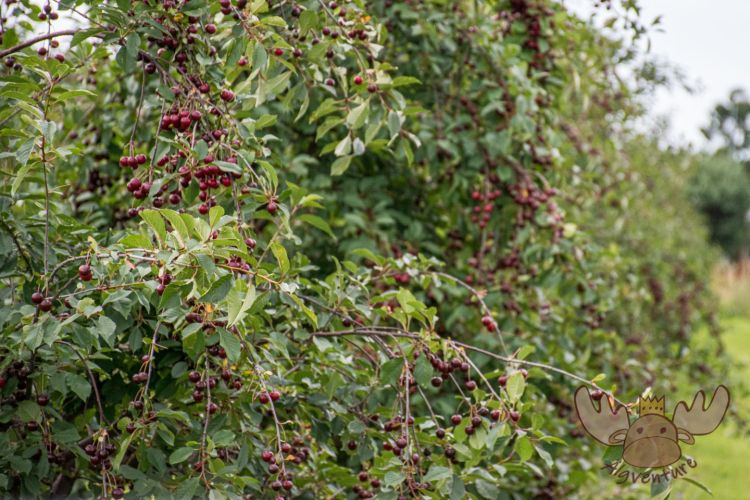
Norwegen | In Südnorwegen wachsen erstaunlich viele Obstbäume. – A surprising number of fruit trees grow in southern Norway. 
Norwegen | Grenze zu Schweden – Border with Sweden 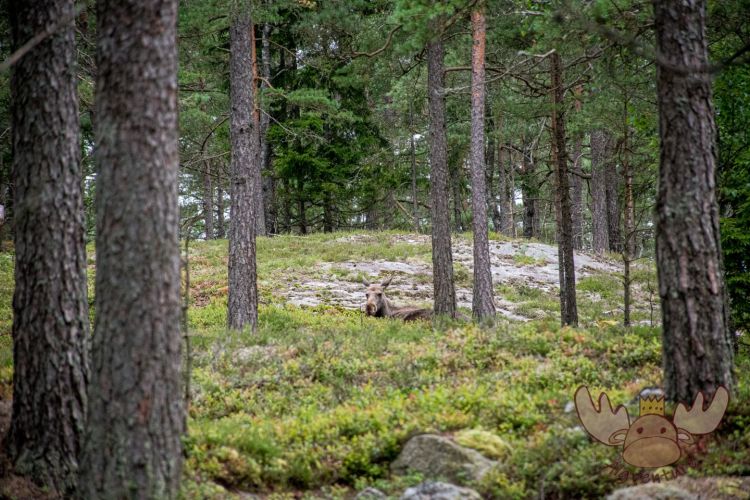
Moose af Anneröd | Diese Elchdame liegt entspannt im weichen Bodenbewuchs des Waldes. – This female moose lies relaxed in the soft ground cover of the forest. 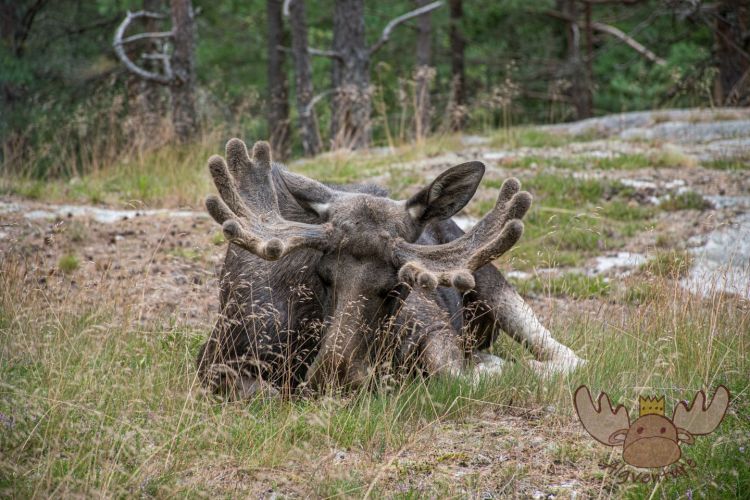
Moose af Anneröd | Ein Elchbulle kann bis zu 600kg wiegen. – A bull moose can weigh up to 600kg. (approx. 1320 pounds) 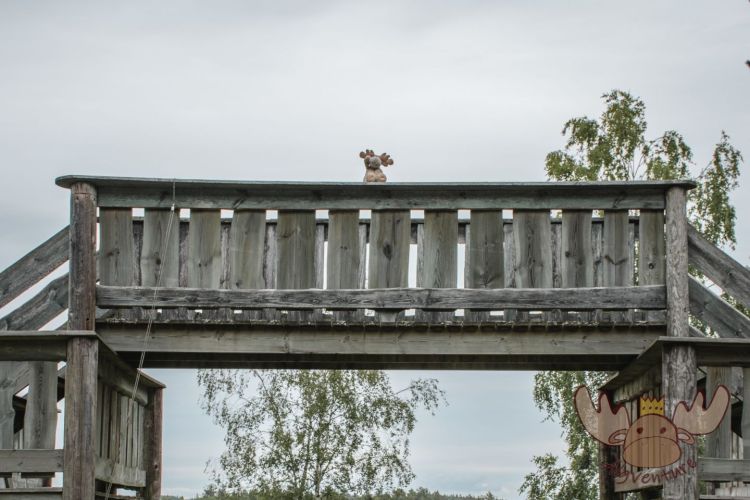
Moose af Anneröd | Ein freundlicher kleiner Elch grüßt von einer Brücke im Elchpark. – A friendly little moose greets you from a bridge in the moose park. 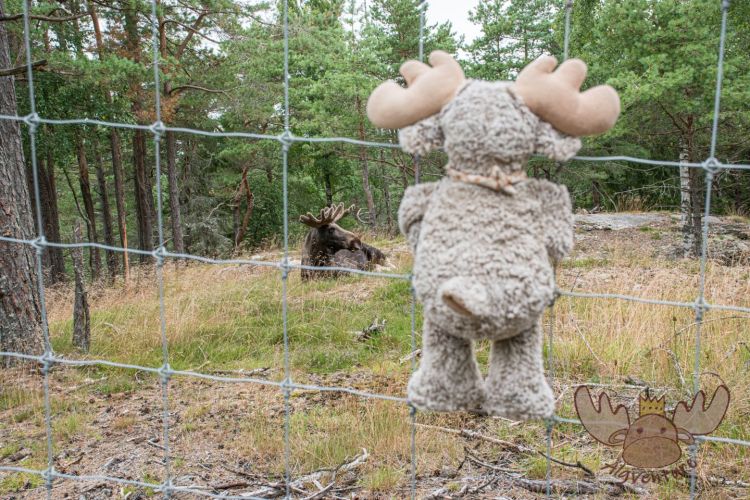
Moose af Anneröd | Älgbert mag Elche. – Älgbert likes moose.
I roll!
Wednesday, 3.August 2022
Today the day has finally arrived that the male Älg companion has been waiting for for so long. Our accommodation was only about half an hour’s drive west of Gothenburg. There is a lot to see in Sweden’s second largest city, mainly a large ferry dock and a large oil refinery. In the city center there are also the remains of a fortress, an opera, beautiful houses, less beautiful houses and the largest sailing ship ever built in Scandinavia. But Gothenburg is not really known for that. Although there is a coffee scene similar to that in Vienna, there is a saying that in Gothenburg they don’t write poems, they write bills. This saying is not without reason, as the city used to be very important for Sweden due to maritime trade. Due to its proximity to Denmark-Norway (the border ran not far from the city at the time), it was also developed into the most fortified city in Sweden. The Swedish East India Company had its headquarters here, as did the main transshipment point for Swedish goods with Great Britain when Napoleon prevented Great Britain from trading with it by imposing a naval blockade. After Napoleon’s fall in 1815, the trade blockade was also lifted and the port of Gothenburg lost importance. The Swedish East India Company recorded far less trade volume and many companies had to file for bankruptcy. It was only the construction of the Göta Canal that brought economic impetus. This connects Gothenburg with the Baltic Sea via the freshwater lakes Vänern and Vättern and has to compensate for a height difference of around 100 meters via many locks. A shipyard industry also developed in the middle of the 19th century, and other export-oriented industries were added at the beginning of the 20th century. A large textile factory probably made the greatest contribution to this development. The clayey soil caused the building to sink and the ball bearings of the looms wore out on one side due to this tilt. This problem required a quick and imaginative solution, which a young engineer found with the idea of the self-aligning ball bearing, which he immediately patented. In 1906, a separate company was founded to manufacture it, AB Svenska Kullagerfabriken (SKF). The self-aligning ball bearing quickly became a Swedish export hit, but during the financial crisis of the 1920s, demand for rolling bearings also collapsed drastically, so a new field of activity had to be found.

World of Volvo | Der wichtigste Schreibtisch in der Volvo-Geschichte, der des Gründers der Firma. – The most important desk in Volvo history, that of the company’s founder. 
World of Volvo | Ein früher Volvo-Bus (Volvo LV45, 1928) der im Liniendienst eingesetzt wurde. – An early Volvo bus (Volvo LV45, 1928) that was used in regular service. 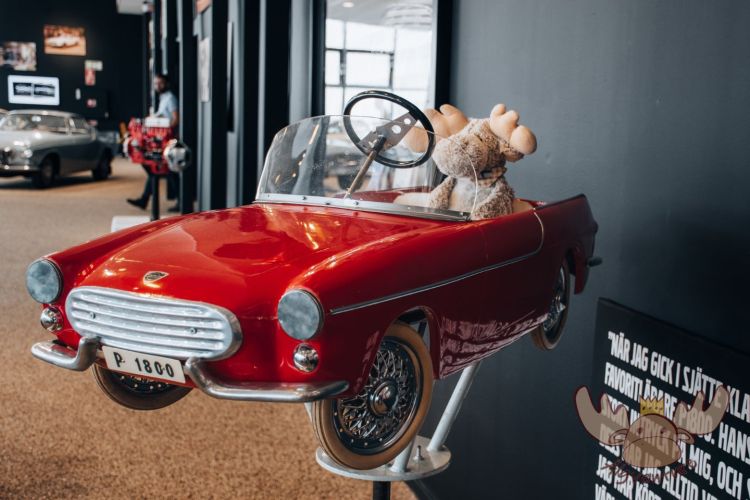
World of Volvo | Älgbert sitzt in einem Volvo P1800 in seiner Größe. – Älgbert sits in a Volvo P1800 his size. 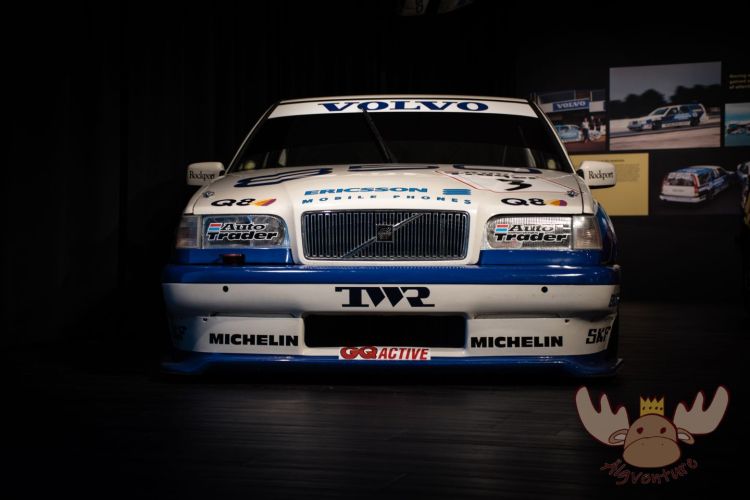
World of Volvo | Volvo fuhr als einziger Hersteller mit einem Kombi (Volvo 850 Estate BTCC, 1994) in der Britischen Tourenwagenmeisterschaft. – Volvo was the only manufacturer to enter an estate car (Volvo 850 Estate BTCC, 1994) in the British Touring Car Championship. 
World of Volvo | Volvo 142 POLAR – Volvo Cup 1973
In 1924, the two SKF engineers Assar Gabrielson and Gustaf Larson ate a fish together and after a long conversation about the weather, the focus of the conversation soon shifted to a shared passion: they wanted to build the first automobile in Sweden together. Construction began in the autumn of 1924 and the first test vehicles were built in 1926. The Swedish car brand „Volvo“ was thus born. Today, to the delight and chagrin of some of our Älg companions, we were in the Volvo Museum. The museum opens at ten o’clock on weekdays and closes at five o’clock. We needed (almost) the entire opening time to study all of the exhibits in the interesting exhibition. As in Malta or in the Peugeot Museum, to name just two examples, our adventurous traveling Älg had to examine every vehicle from all sides. As many drivers, especially in Scandinavia, have probably already noticed, Älgs are very interested in cars. Mostly, however, it is much to the chagrin of drivers when a 600 kg moose suddenly appears on the road because it wants to take a close look at the passing car. In the museum, however, this is not a problem, as the exhibits mostly stand still and can be viewed from every imaginable direction and angle without danger to the non-existent driver, moose or car. There is a lot of this to see in the Volvo Museum, as the company has manufactured many different cars, trucks, buses and construction machinery between 1927 and the present. These are arranged in chronological order with lots of interesting information for visitors to take photos of. For those accompanying Älgs who are not quite so interested, there are seating areas in every exhibition room and educationally valuable try-out stations (for children) which quickly make any boredom that may arise disappear. When the last truck had been inspected from all sides by our travel group (actually it was only the male Älg companion who took so long with everything) we left the museum via the absolutely essential shop. It was clearly difficult for him not to make a monetary transaction and to take an aesthetically pleasing mural of a Volvo 740 GLE home with him. The missus said no…
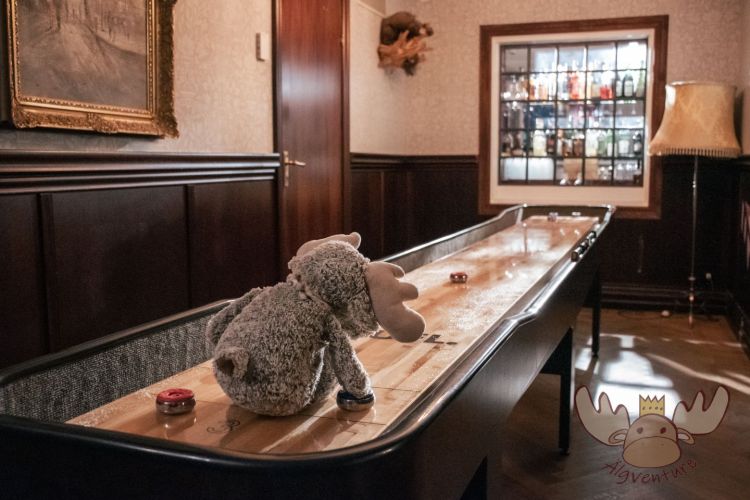
We ended the evening in the hotel, which was rather untypical for us, after having an excellent meal in the hotel’s own restaurant and drinking a glass or two while playing a game of billiards and shuffle board. The next day we will do more typical activities again – promise!
To the South!
Thursday, 4.August 2022
Last night we tried our way through the drinks menu. Only by doing this were we able to filter out the most pleasant drink and to find out that it was made within sight of the hotel. Since we had to travel on again today, we made our first stop at the small Rådanäs brewery after less than ten minutes of driving. The actual goal was to take a few of the wholesome products home in bottled containers for our own use. However, due to the current holiday season and the resulting lack of productivity at the brewery, the warehouse was already so depleted that unfortunately none of the hop drinks could be taken home. Instead, the two remaining employees spontaneously offered us a tour of their production and an explanation of the individual necessary steps. When we asked whether they would also ship their products, we were unfortunately told that this was not currently offered and that we would have to go to them on site. After a very friendly conversation, we were suggested to visit the local Systembolaget, as they should definitely still have bottles available there. We said goodbye and thanked them for this spontaneous hospitality and drove off, because we really wanted to take a few bottles with us for later holiday memories.
Our visit always makes the employees of Systembolaget, whom we have visited during our adventures, smile. We sneak randomly through the aisles and take everything that comes from the respective country and has a nice label. We usually leave the shop with a whole shopping bag full of beer, cider, sometimes a few juices and a big grin on our faces. Once all the purchases had been properly stowed away, the onward journey with the actual stops could begin. The journey took us along characterless expressways and motorways. It was only shortly before our stopover that we were able to turn onto country roads and look at the beautiful Swedish landscape of the southernmost region of Skåne through our windshield. The large fields shone golden in the sunshine and you could see hard-working farmers harvesting them everywhere. With the typical red farm buildings in the background, this was the typical picture when we think of Sweden in summer. We reached our stopover after just under two hours‘ drive from Gothenburg. The Älgsafari in Markaryd is not a first for us, as we had already passed by here once in 2018. We crossed the approximately three-kilometer-long path with our motorhome more than once, because with a little patience, which unfortunately not all visitors had, the moose living there could be spotted in the dense forest. Some were hiding in the shade, others were bathing in the small pond, and others were just lazing next to the road. There is hardly any other place where you can get so close to moose.
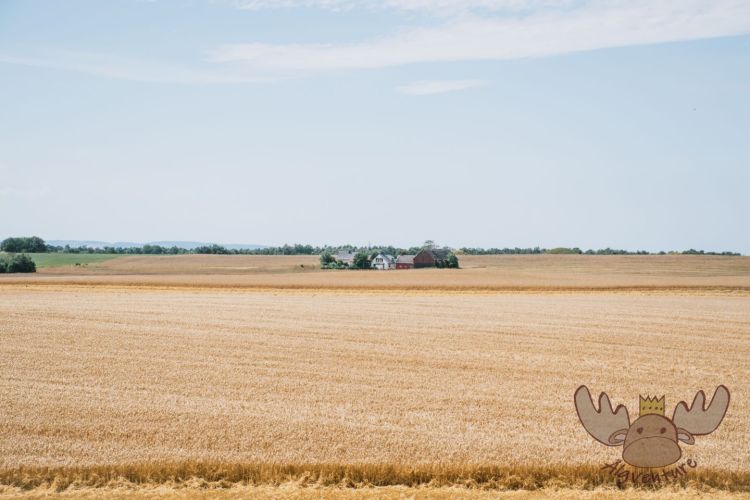
Schweden | Typischer Bauernhof in der Region Skåne – Typical Swedish farm in the region of Skåne 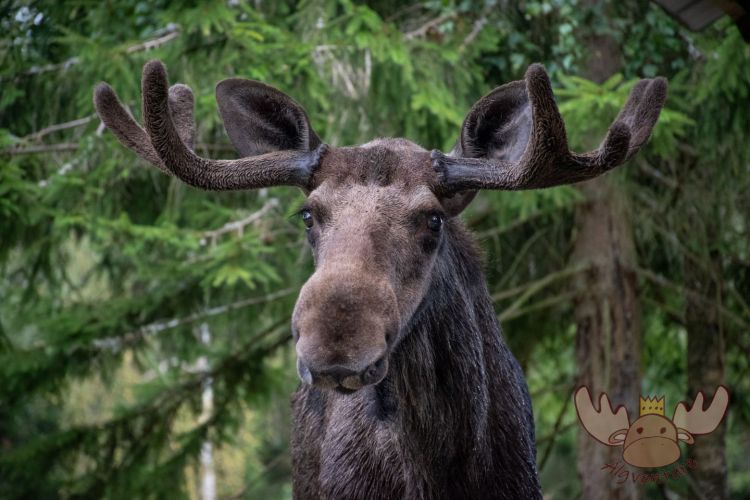
Smålandet Elchsafari | Man darf sich von diesem treuherzigen Blick nicht täuschen lassen, denn Elche können ziemlich gefährlich sein. – Don’t be fooled by this trusting look, because moose can be quite dangerous. 
Smålandet Elchsafari | Der Nachwuchs im Älgpark erkundet neugierig seine Umgebung. – The young ones in the Älgpark curiously explore their surroundings. 
Smålandet Elchsafari | In der freien Natur ist es kaum möglich den Tieren so nah zu kommen. – In the wild it is hardly possible to get so close to the animals. 
Smålandet Elchsafari | Es gibt aber auch noch andere Bewohner im Älgpark. – But there are also other residents in Älgpark.
This time we had set up camp for the night in a meadow, not far from Ales stenar in Kåseberga near Ystad. Sweden’s largest stone setting in the shape of a ship is around 1400 years old and it is suspected that it could be a solar calendar. However, neither of these things has yet been determined with certainty. We had our evening meal on the steep coast in front of the stones (this time without rain) and were able to watch the sunset.
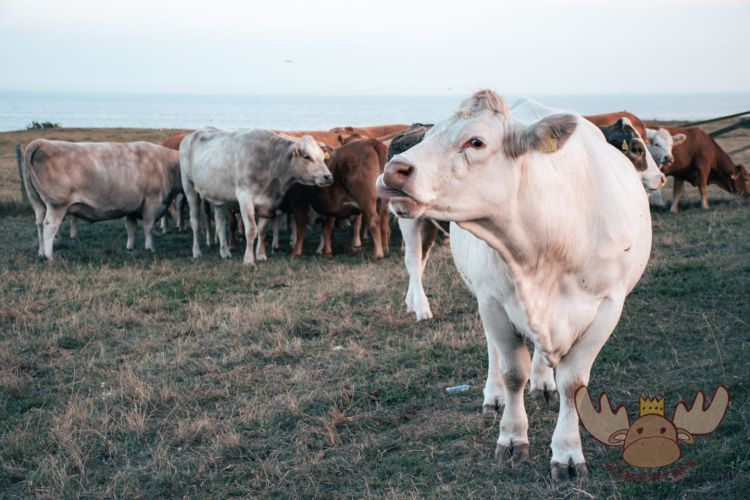
Schweden | Schwedische Küstenbewohner und unsere Kurzzeitnachbarn. – Swedish coastal residents and our short-term neighbors. 
Ales Stenar | Ales stenar ist mit 67 Metern Länge und 19 Metern Breite eine der größten erhaltenen Schiffssetzungen in Skandinavien. – At 67 metres long and 19 metres wide, Ales stenar is one of the largest preserved ship settings in Scandinavia.
The South of the North – Part 2
Friday, 5.August 2022
Our adventure was coming to an end this day. It had rained again the previous night, of course, but this time we were already relatively dry and comfortably warm in our sleeping bags in our micro-camper. In the morning we had briefly opened our outdoor bathroom for the necessary hygiene measures so that we could continue our exploration as quickly as possible.
The first stop, immediately after a necessary pit stop at a gas station, because our motorhome also wants something to drink sometimes, was to lead to one of our main goals of this trip. After all, you should always save the best for last. So we drove to Smygehuk, the southernmost point of Sweden. The small village does not exactly resemble a vibrant city, but that is precisely what makes it so attractive. In the past, people here lived mainly from fishing and burning lime. The south coast of Sweden consists of chalk cliffs that are up to 40 meters high and were burned in large lime kilns by alternating layers of lime and wood or coal. The kiln was bricked up after the material had been stacked and the fire lit inside had to burn evenly for 40 hours. Only after a day of cooling could it be opened again and the burnt lime removed. This was used not only as building material but also for fertilizing fields. Lime was burned in this way at this location until the 1950s, when it finally became uneconomical and the activity was abandoned. Today the place lives primarily from tourism and the fact that there is no place further south in Sweden. The main attraction is a cube with the coordinates of the southernmost point of Sweden engraved on it, which we visited relatively quickly. The breakfast that followed in the southernmost café in Sweden tasted all the better because it had started to rain again. But we were used to that by now. In the nearby former merchant’s office, regional handicrafts were sold, which had such a great magical attraction for the female Älg companion that she bought one of the items and took it with her. From that point on, she was the proud owner of moose-shaped earrings.
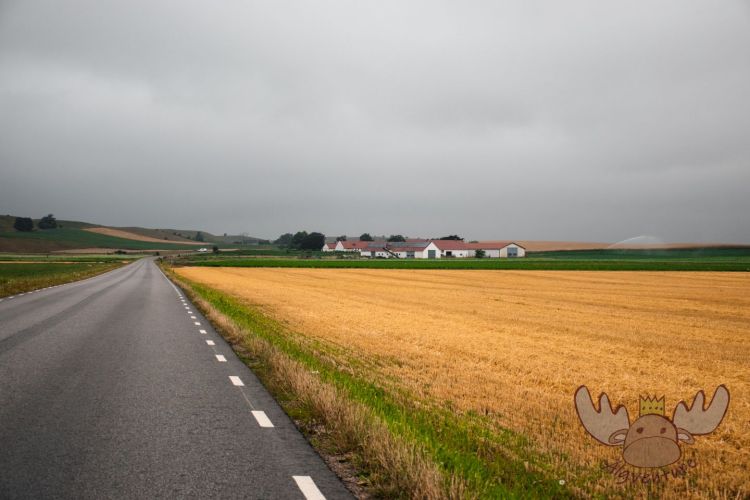
Schweden | Abgeerntete Felder vor schwarzem Himmel – Harvested fields against a black sky 
Schweden | Wegweiser zum südlichsten Punkt Schwedens – Signpost to the southernmost point of Sweden 
Schweden | Ein Kubus markiert symbolisch den südlichsten Punkt Schwedens. – A cube symbolically marks the southernmost point of Sweden. 
Schweden | Dieses Segelschiff lässt sich vom schlechten Wetter nicht aufhalten. – This sailing ship is not deterred by bad weather. 
Schweden | Typischer Kalkbrennöfen wie er an vielen Orten an der schwedischen Südküste gefunden werden kann. – Typical lime kiln as can be found in many places on the Swedish south coast.
The day’s schedule was very light, as we wanted to spend one last relaxing day in Sweden, but the weather was convinced that it had to give us a Swedish rain shower on the way. So, as on our first visit to Ystad, we wandered through the old streets with wet heads. The old town center of the city invites you to take a relaxed stroll and the many cafés and restaurants invite you to linger. However, visiting the city in heavy rain is not much fun. We took refuge in a few shops and antique stores to browse around, only to visit the Ystad Monastery after much deliberation and a visit to another state-run liquor store. We could have saved ourselves this, however. Although we were able to escape the rain for a short time, we would have been better off spending the equivalent of €10 entrance fee on high-proof alcohol at Systembolaget. The monastery museum covers all topics, but none that had anything to do with the monastery. In the first room, 80-year-old people were asked about their sex lives and the answers were presented on large screens, and in another room, how plastic pollutes our seas. In the former dormitory, a play area for children was set up, which can only be used by prior arrangement, and the monastery church had the charm of a warehouse. At least we were protected from the rain inside…
After further walks in light drizzle, we found a nice restaurant where we made ourselves comfortable with food and drink. Shortly before 8 p.m. we had to return to the ferry port so that we could take part in the car ballet later. The ferry left at 10:30 p.m. and we, members of a mountain tribe, crossed the sea again. We hoped for the best.
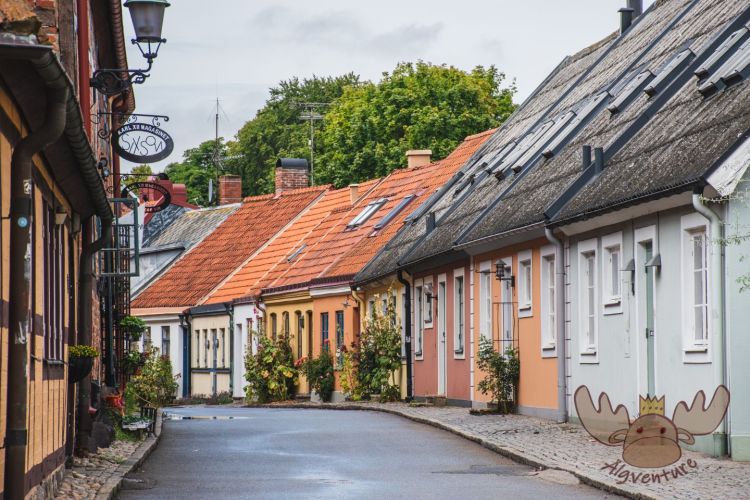
Ystad | Charakteristische kleine Häuschen säumen die Straßen in der Altstadt von Ystad. – Characteristic little houses line the streets in the old town of Ystad. 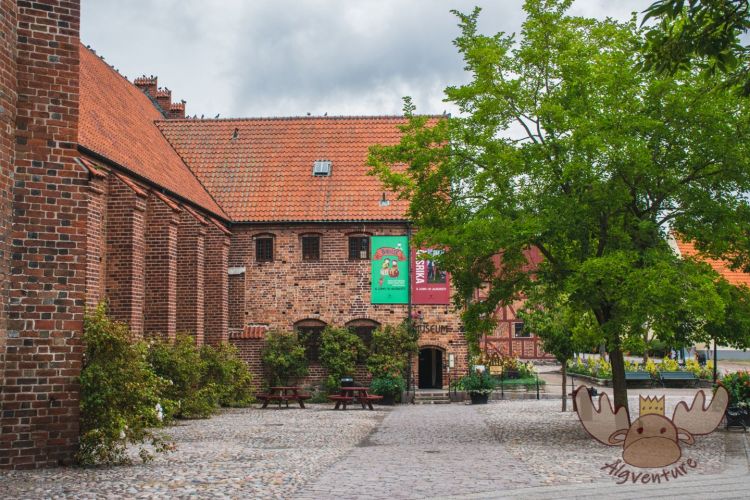
Ystad | Die Klosteranlage stammt aus dem 13.Jhd und beherbergt heute ein lokalgeschichtliches Museum und einen Kunstgewerbeladen. – The monastery complex dates back to the 13th century and today houses a local history museum and an arts and crafts shop. 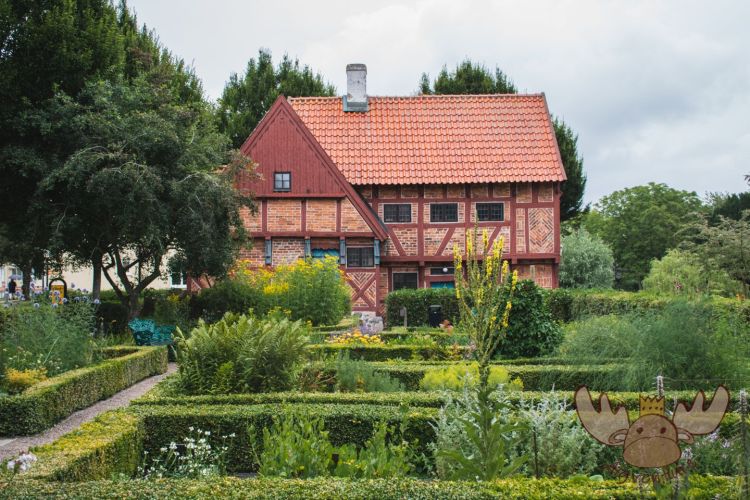
Ystad | Fachwerkhaus in der Hospitalsgatan – half-timbered house on Hospitalsgatan 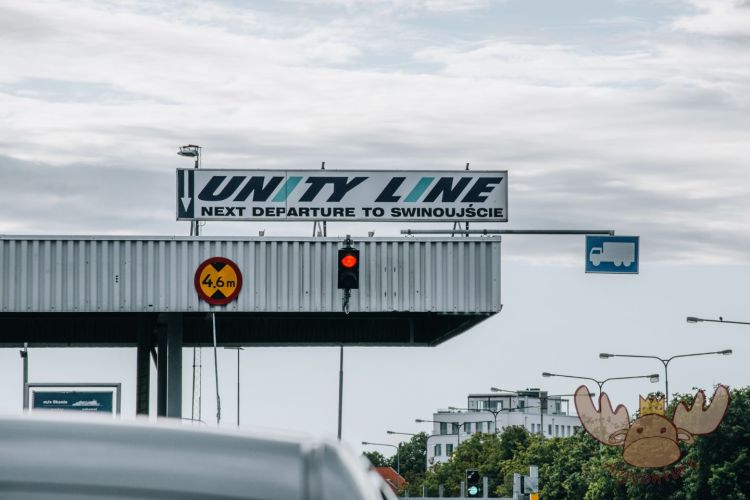
Ystad | Einfahrt in den Fährhafen nach Swinemünde – Entrance to the ferry port to Swinoujscie 
Ystad | In der Abenddämmerung ist es Zeit für uns von Schweden Abschied zu nehmen. – At dusk it is time for us to say goodbye to Sweden.
Ferry ride home
Saturday, 6.August 2022
The trip was quiet. A quiet roar of the ship’s diesel engine was the only thing we heard that night. When we looked out of the window for the first time that morning, land was already in sight. Just under an hour later, we were already in Poland and could begin our long journey home. We had enough time during the trip to reflect on what we had experienced. The seemingly endless beach in Denmark where we spent our first night on this adventure, the wonderful hike and the old wooden offices in Bergen, many impressive waterfalls on the way to Preikestolen near Stavanger, ferry trips across beautiful fjords, lots of rain and picturesque landscapes are what we got to know in Norway. In the short time that we were able to explore Sweden on this adventure, we were spontaneously given a tour of a small brewery, got to know the industrial pioneering spirit of Gothenburg and got up close and personal with moose. The title of the trip this time was „The South of the North“. What may sound contradictory at first glance was achieved by us at Lindesnes in Norway and Smygehuk in Sweden, as these are the southernmost points of each country. Only the southernmost point of mainland Finland (located in Tulliniemi) could not be explored due to time constraints. We will try to make up for this omission in the future. Or maybe our next exploration will lead to the northernmost points of Scandinavia? We will see…

Polen | Einfahrt der Fähre in Swinemünde – Ferry entering Swinoujscie 
Polen | Typischer Wald entlang der Straßen – Typical forest along the roads 
Österreich | Die österreichisch-tschechische Grenze bedeutet, dass wir wieder fast zu Hause sind. – The Austrian-Czech border means that we are almost home again.


Sunset on the Dachstein – Dinner in the Austrian Alps
The Dachstein: The jewel of the Alps attracts nature lovers and adventure seekers alike. Experience the breathtaking beauty of the Alpine landscape, from rugged rock faces to glittering glaciers. Whether you are an experienced mountaineer or a leisurely hiker – the Dachstein has something for everyone. Via ferratas, summit tours or leisurely hikes: everyone will…

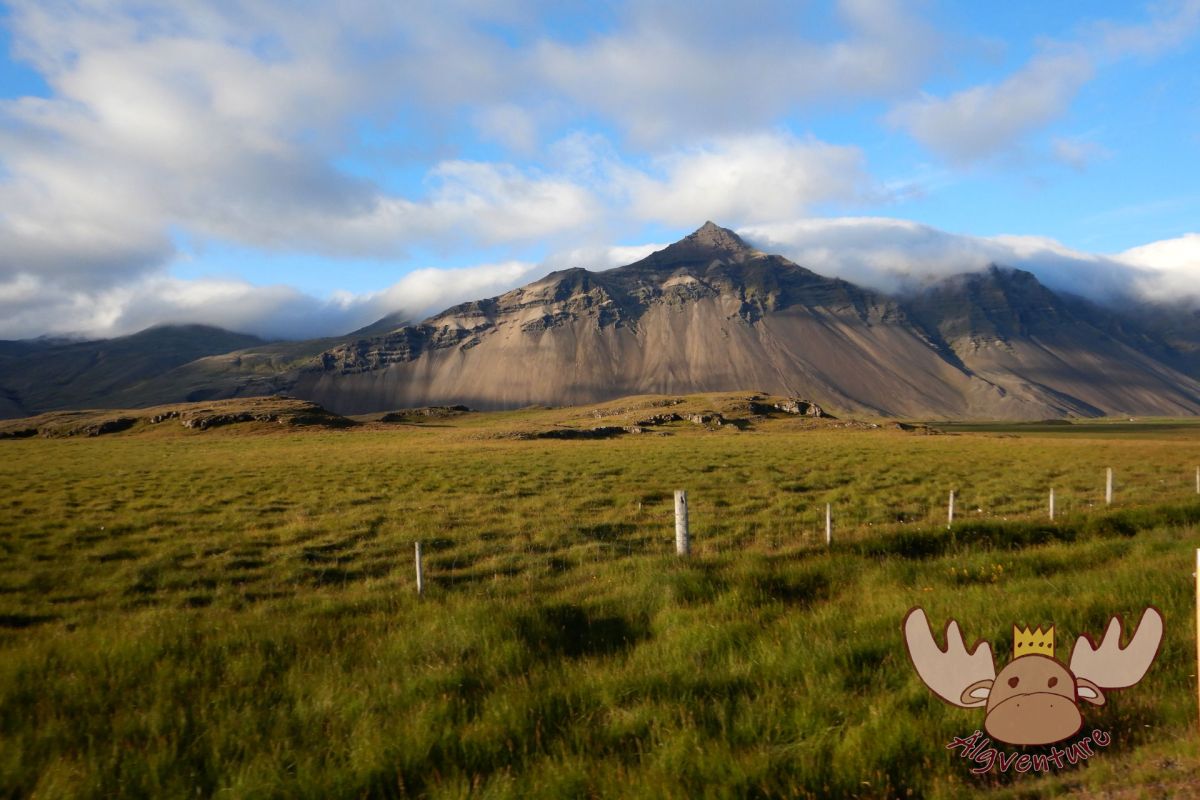
In search of elves and banana plantations – A trip to Iceland
Imagine standing on the edge of a gurgling geyser while steam fogs up your glasses. Or hiking through a lunar landscape of black sand, framed by snow-capped peaks. Sound like an adventure? Iceland is just that and much more!
Join me on my adventure to Denmark, Iceland and the Faroe Islands.
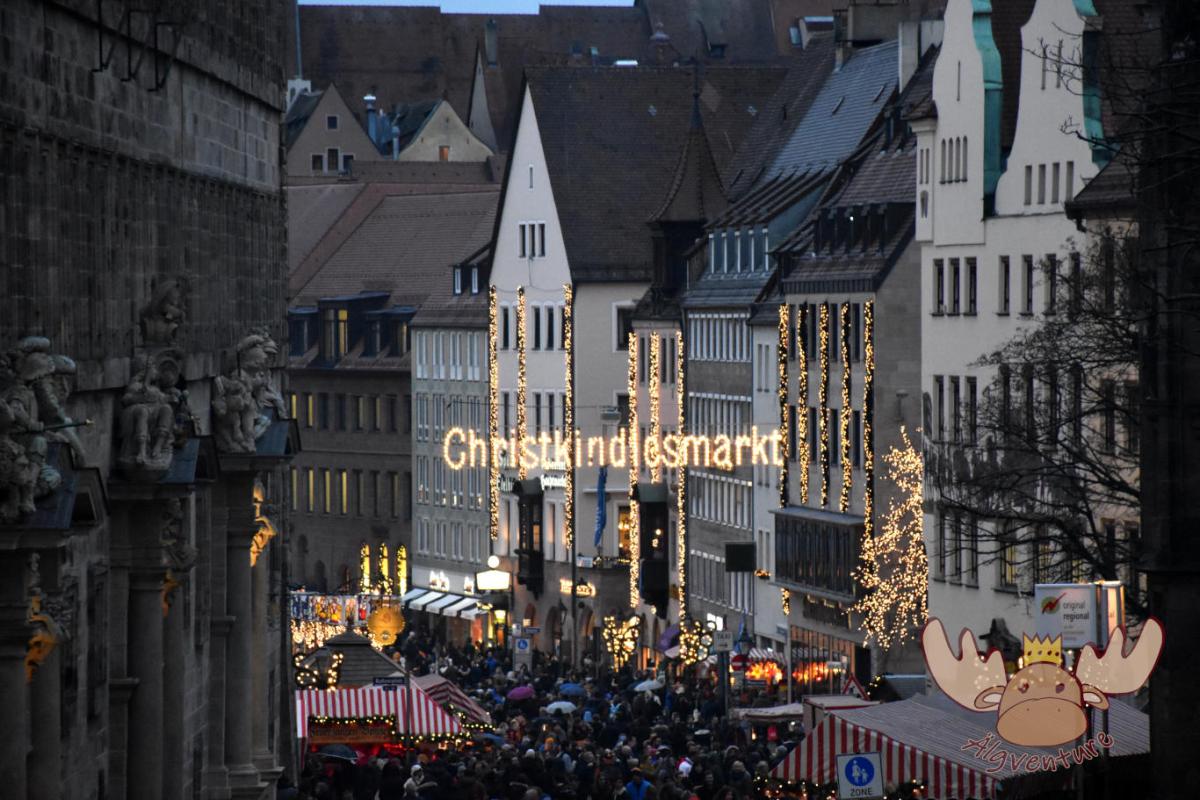
Christkindlesmarkt Nuremberg
Almost everyone has heard of him and many have seen him too. The Nuremberg Christmas market is one of the largest in Germany and we tell you about our visit.
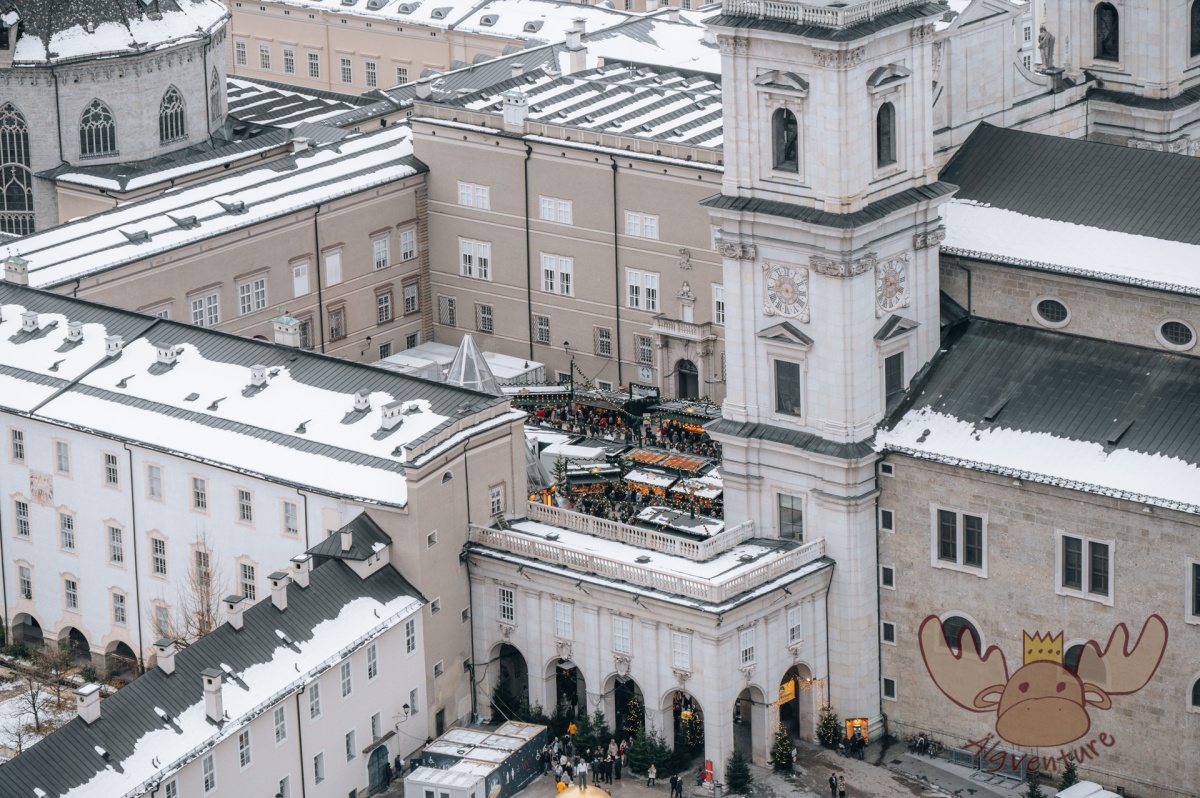
One weekend, four different Christmas markets – an exploration tour through the Austrian Christmas market tradition
The Christmas season is just around the corner and the various Advent markets want to get visitors into the Christmas spirit with their offerings. We’ll take you on our exploration tour to the most diverse representatives of Austrian Christmas market culture.
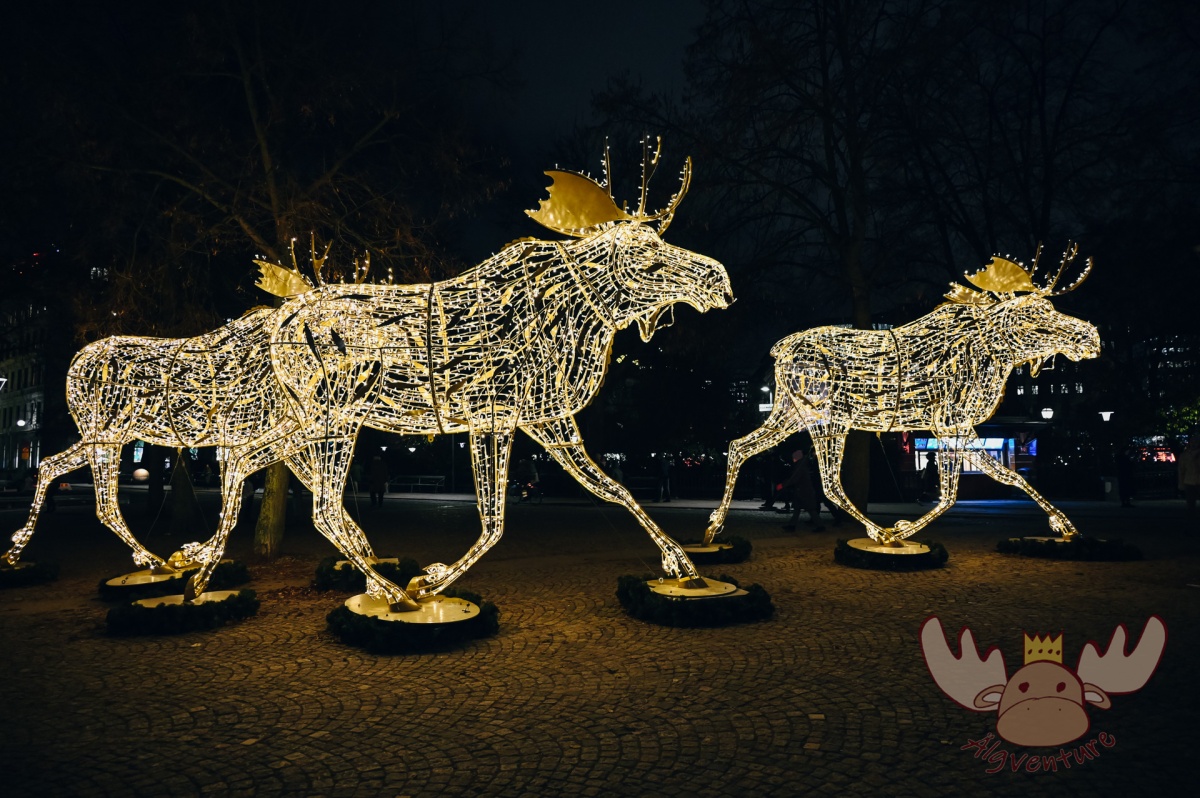
Stockholm – The search for good Glögg
We decided to travel to Stockholm for the Lucia Festival. During our adventure we admired many lights, tasted our way through Sweden’s cuisine and watched people dance around a tree.
Here you can read what else we experienced and how we fared.
Etwas ist schiefgegangen. Bitte aktualisiere die Seite und/oder versuche es erneut.
 Älgventure