Iceland’s extraordinary landscape united in one national park.
Älgbert Elgson

Dieser Artikel ist auch in Deutsch verfügbar.
Snæfellsjökull National Park is located on the Snæfellsnes peninsula and is one of three national parks in Iceland.
About 1.5 hours‘ drive from Iceland’s capital Reykjavik, you enter a world of natural wonders. Because of this richness and diversity of nature there, the peninsula is often referred to as „Iceland in miniature“.
The trail of history
The Snæfellsnes peninsula was settled as early as the time of the land grab, as the first settlers quickly realised that there were very rich fishing grounds around the coast. In the 18th century, the area was one of the most densely populated in Iceland for this reason, and during the fishing season the population of the individual villages could even double. With the decline of coastal fishing, the area at the western point is now almost uninhabited.
The national park was established in 2001 to protect the natural resources and remains of human settlements and to make them accessible to visitors by creating hiking trails.

Useful Information
The peninsula is home to Snæfellsjökull National Park, with a 1,446-metre volcano towering over the landscape at its centre. This peninsula has waterfalls, rock formations, beautiful beaches, historic villages and interesting folklore.
The peninsula stretches for about 90 kilometres between the Reykjanes Peninsula with the Icelandic capital Reykjavik in the south and the Westfjords in the north. A mountain range runs along the peninsula, consisting of both active and inactive volcanoes, topped by the majestic, ice-covered volcano Snæfellsjökull. Coming from Reykjavik, visitors will find the year-round seal colony at Ytri Tunga beach on the peninsula’s south coast. The best time to see the seals is at low tide, when the animals relax and sunbathe on the rocks. But even without seals, Ytri Tunga is a beautiful place to stay and the beach is one of the few golden sandy beaches on the island.

Snæfellsjökull | Der Strand von Ytri Tunga ist ein schöner Ort, um Robben zu beobachten. – Ytri Tunga beach is a beautiful place to watch seals. 
Snæfellsjökull | Der Strand von Ytri Tunga ist ein schöner Ort, um Robben zu beobachten. – Ytri Tunga beach is a beautiful place to watch seals. 
Snæfellsjökull | Kleine Muscheln am ruhigen Strand von Ytri Tunga auf der Halbinsel Snæfellsnes. – Small shells on the quiet beach of Ytri Tunga on the Snæfellsnes peninsula.
Rauðfeldsgjá Gorge is a narrow cleft in a huge rock face that you can climb into. A river formed this deep crevice over many years, so adventurers who want to explore its secrets will definitely get wet. However, those with decent clothing, sturdy footwear and a decent level of fitness will be able to get deep into the crevice. The strenuous climb is worth it and for brave travellers, the further ascent leads to a rope on which you can pull yourself up a small waterfall to reach even deeper into the crevice. A very narrow path with rock walls on all sides and a view high into the open. Those who take on this challenge may feel the ghosts of the brothers Rauðfeldur and Sölvi, who met their fate in this place some twelve hundred years ago, as documented in a true story of Icelandic sagas.

Snæfellsjökull | Ausblick von der Schlucht Rauðfeldsgjá im Berg Botnsfjall auf der Halbinsel Snæfellsnes. – View from the Rauðfeldsgjá gorge in Mount Botnsfjall on the Snæfellsnes peninsula. 
Snæfellsjökull | Rauðfeldsgjá ist eine in der Sommerzeit begehbare hohe und schmale Schlucht im Berg Botnsfjall auf der Halbinsel Snæfellsnes. – Rauðfeldsgjá is a high and narrow gorge in the Botnsfjall mountain on the Snæfellsnes peninsula that is accessible during the summer season. 
Snæfellsjökull | Ausblick von der Schlucht Rauðfeldsgjá im Berg Botnsfjall auf der Halbinsel Snæfellsnes. – View from the Rauðfeldsgjá gorge in Mount Botnsfjall on the Snæfellsnes peninsula. 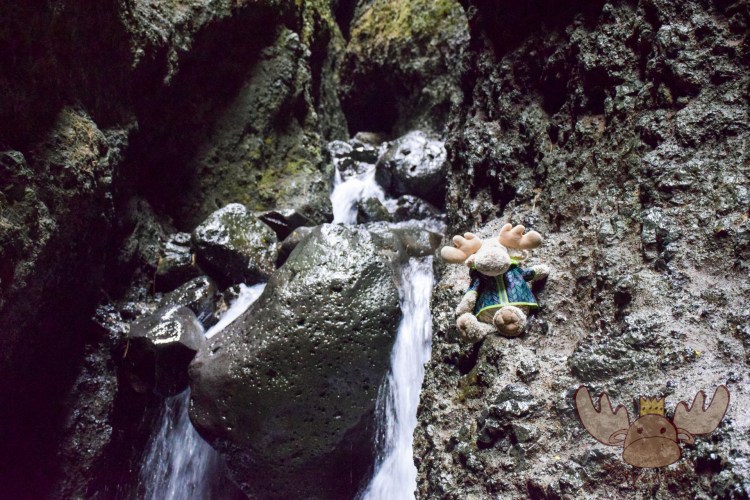
Snæfellsjökull | Älgbert klettert in die Schlucht Rauðfeldsgjá im Berg Botnsfjall auf der Halbinsel Snæfellsnes. – Älgbert climbs into the Rauðfeldsgjá gorge in Mount Botnsfjall on the Snæfellsnes peninsula. 
Snæfellsjökull | Regen in der Schlucht Rauðfeldsgjá im Berg Botnsfjall auf der Halbinsel Snæfellsnes. – Rain in the Rauðfeldsgjá gorge in Mount Botnsfjall on the Snæfellsnes peninsula. 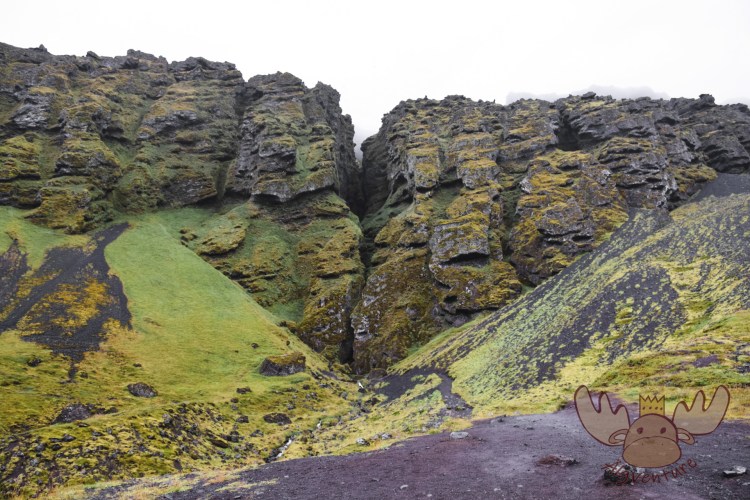
Snæfellsjökull | Wanderweg zur begehbaren Schlucht Rauðfeldsgjá im Berg Botnsfjall auf der Halbinsel Snæfellsnes. – Hiking trail to the accessible gorge Rauðfeldsgjá in Mount Botnsfjall on the Snæfellsnes peninsula.
The mighty basalt columns of Lóndrangar are all that remain of what was once a massive volcanic crater and are impressive not only for their size, but are also home to thousands of seabirds that nest there.
Djúpalónssandur beach is made of black volcanic sand and is best known for the four lift stones that still lie on the beach from times gone by. Fishermen used these stones to prove their strength and to have their suitability for working on the dangerous waves assessed.

Snæfellsjökull | Zwei natürliche Felstürme aus vulkanischem Basaltgestein – die Lóndrangar – am Ende der Straße. – Two natural rock towers of volcanic basalt – the Lóndrangar – at the end of the road. 
Snæfellsjökull | Die Küste aus vulkanischem Basaltgestein an der Halbinsel Snæfellsnes ist Brutplatz vieler einheimische Vögel. – The coast of volcanic basalt rock on the Snæfellsnes peninsula is a breeding ground for many local birds. Snæfellsjökull | Zwei natürliche Felstürme aus vulkanischem Basaltgestein – die Lóndrangar – an der westlichen Südküste der Halbinsel Snæfellsnes. – Two natural rock towers made of volcanic basalt rock – the Lóndrangar – on the western south coast of the Snæfellsnes peninsula.
There are also two lava caves within the national park that can be entered in summer. Sönghellir is known for the musical quality of its echoes, while Vatnshellir is preferred for tours because of its easy access and beautiful colouring. There is an entrance fee to Vatnshellir and it is not possible to enter without a guide.
The highlight of the area, however, is undoubtedly Snæfellsjökull itself. It is located at the western end of the peninsula and marks the turning point of the exploration tour. Not because there is nothing else to see, but you have to drastically change the direction of travel here, as Iceland simply does not go any further west. At the westernmost point of the Snaefellsnes peninsula is Svörtuloft. To visit the orange lighthouse, however, you have to leave the main road and drive along a narrow and bumpy gravel road. From a viewing platform, there is a great view of a long cliff where seabirds nest in summer. On the way to the lighthouse is also one of Iceland’s few white sandy beaches at Skarðsvík . If you want to explore Iceland even further west, you have to include the Westfjords to the north in your exploration adventure.
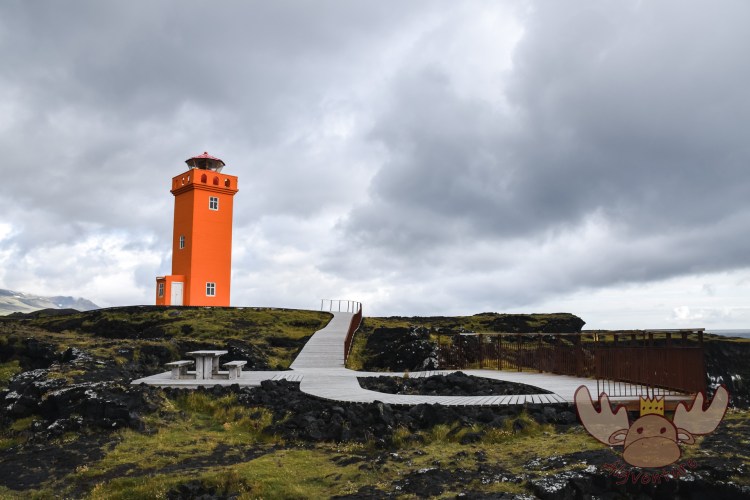
Snæfellsjökull | Am Westende der Halbinsel Snæfellsjökull erhebt sich der orange Leuchtturm Svörtuloft am Rande der rauen Klippen. – At the western end of the Snæfellsjökull peninsula, the orange Svörtuloft lighthouse rises from the edge of the rugged cliffs. 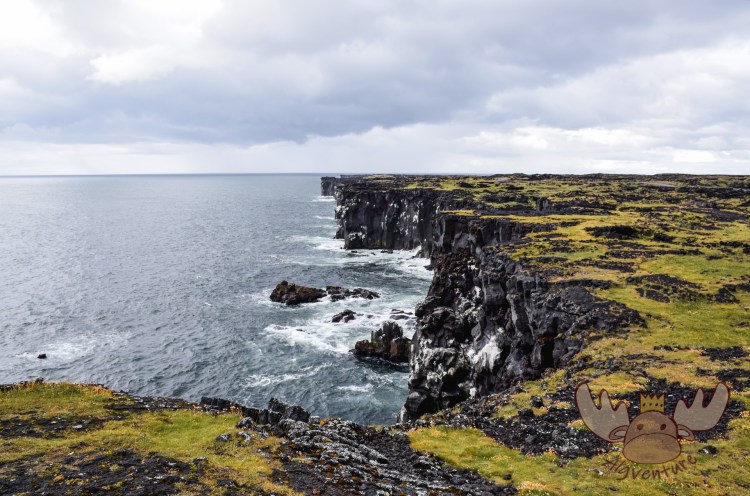
Snæfellsjökull | Am Westende der Halbinsel Snæfellsjökull beeindruckt die Steilküsten mit ihren Vogelkolonien. – At the western end of the Snæfellsjökull peninsula, the cliffs with their bird colonies are impressive. 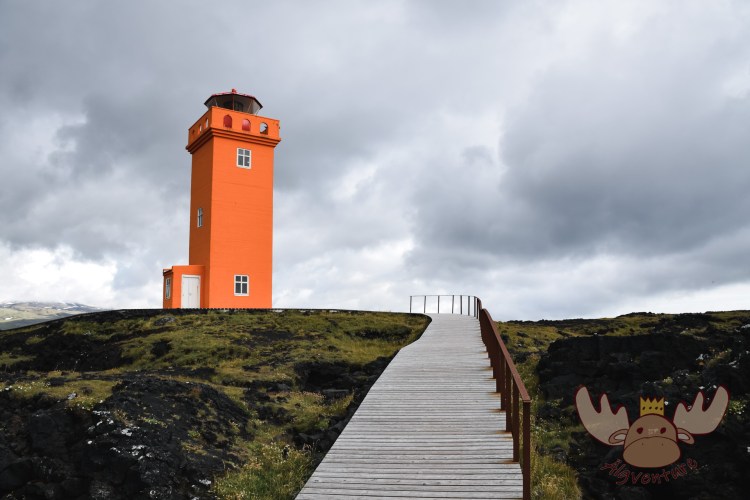
Snæfellsjökull | Am Westende der Halbinsel Snæfellsjökull erhebt sich der orange Leuchtturm Svörtuloft am Rande der rauen Klippen. – At the western end of the Snæfellsjökull peninsula, the orange Svörtuloft lighthouse rises from the edge of the rugged cliffs. 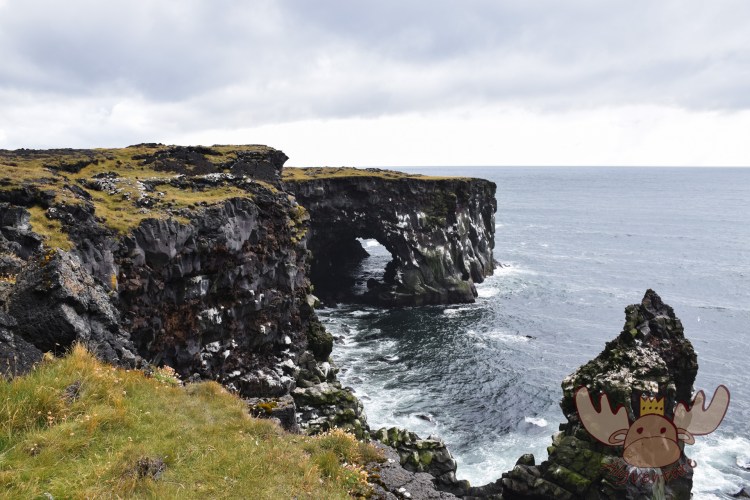
Snæfellsjökull | Am Westende der Halbinsel Snæfellsjökull beeindruckt die Steilküsten mit ihren Vogelkolonien. – At the western end of the Snæfellsjökull peninsula, the cliffs with their bird colonies are impressive. 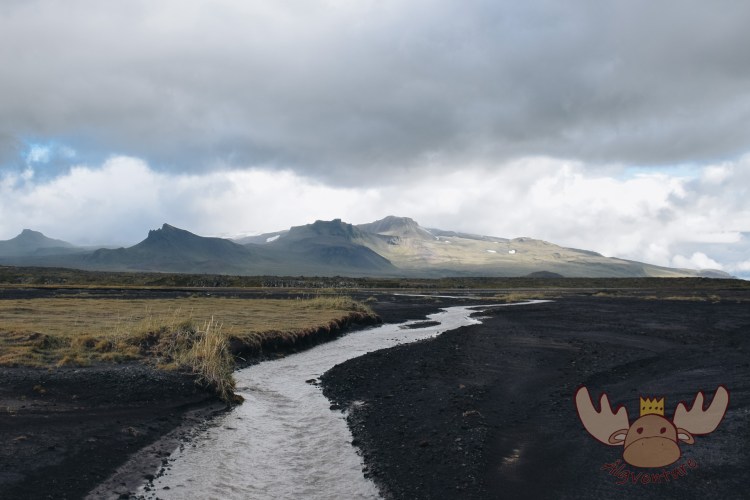
Snæfellsjökull | Islands beeindruckende Landschaft entlang des Útnesvegur. – Iceland’s stunning landscape along the Útnesvegur. 
Snæfellsjökull | Die Straße zur Westspitze der Snæfellsnes Halbinsel mit dem Leuchtturm Svörtuloft ist nicht für jedes Fahrzeug geeignet. – The road to the western tip of the Snæfellsnes peninsula with the Svörtuloft lighthouse is not suitable for every vehicle.
On the north side of the peninsula, near the town of Bjarnarhöfn, is the mystical-looking lava field of Berserkjahraun. The lava field was formed about 4,000 years ago when four volcanoes erupted at short intervals. The lava flowed from the mountain slopes of Bjarnarhafnarfjall into the sea at Hraunsfjörður and Hraunsvík, leaving behind this rugged landscape.
Scattered throughout the peninsula are picturesque little fishing villages. The most notable are Arnarstapi, Hellnar, Búðir, Hellissandur, Ólafsvík, Grundarfjörður and Stykkishólmur.
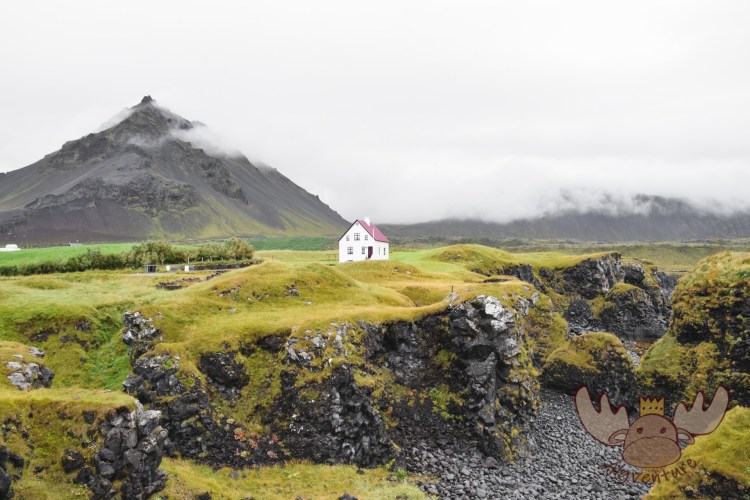
Snæfellsjökull | Ausblick vom kleinen Hafen im Fischerort Arnarstapa auf das am Hügel gelegene „einsame Haus“. – View from the small harbour in the fishing village of Arnarstapa to the „lonely house“ situated on the hillside. 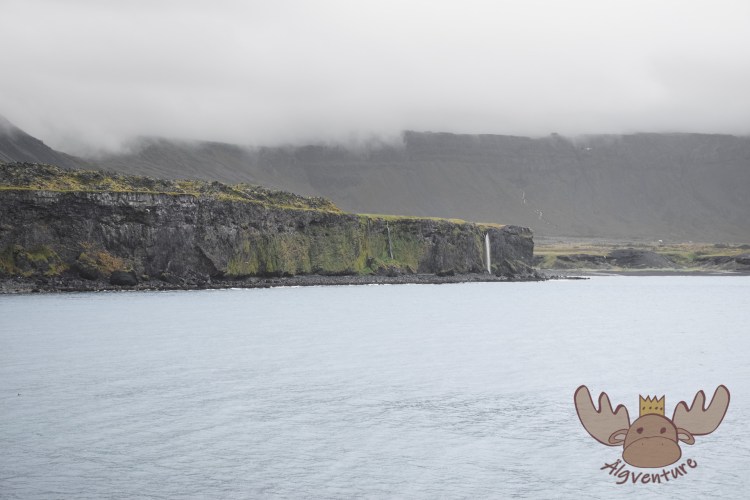
Snæfellsjökull | Ausblick vom kleinen Hafen im Fischerort Arnarstapa auf die umliegende Landschaft. – View of the surrounding landscape from the small harbour in the fishing village of Arnarstapa. 
Snæfellsjökull | Eine kleine Insel vor dem Fischerort Arnarstapa mit in Island einheimischen Vögeln. – A small island off the fishing village of Arnarstapa with birds native to Iceland. 
Snæfellsjökull | Arnarstapa verdankt seinen Namen dem kegelförmigen Berg Stapafell, auf dem die Seeadler Nester bauen. – Arnarstapa owes its name to the cone-shaped mountain Stapafell, where the sea eagles build their nests. 
Snæfellsjökull | Hinter der Ingjaldshólskirkja steht ein Denkmal von Bildhauer Páll Guðmundsson für Eggert Ólafsson und seine Frau Ingibjörg Guðmundsdóttir, die 1768 vor der Küste ertranken. – Behind Ingjaldshólskirkja is a monument by sculptor Páll Guðmundsson to Eggert Ólafsson and his wife Ingibjörg Guðmundsdóttir, who drowned off the coast in 1768. 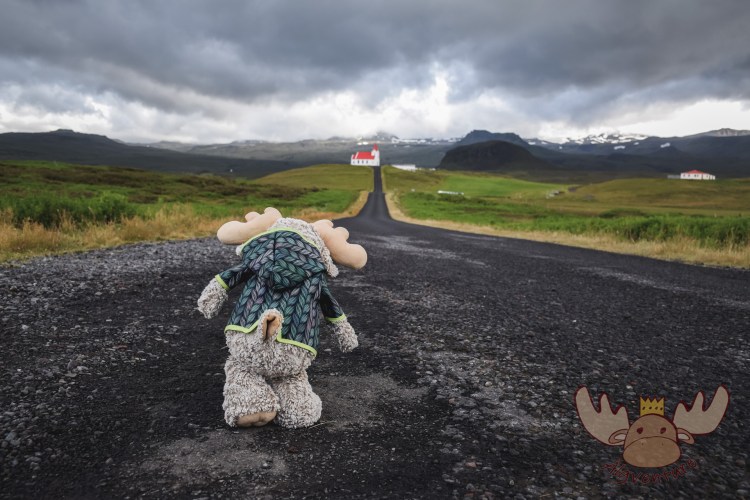
Snæfellsjökull | Älgbert auf dem Weg zur Ingjaldshólskirkja, der ältesten Steinkirche des Landes. – Älgbert on the way to Ingjaldshólskirkja, the oldest stone church in the country.
The latter town is popular with travellers, as it has a volcano museum and a ferry that takes you across the fascinating Breiðafjörður Bay to the southern border of the Westfjords, with a stopover on the remote island of Flatey.
Mount Kirkjufell and the country’s oldest stone church Ingjaldshólskirkja are also worth a visit, as they are probably among the most photographed places in Iceland.
How to get there?
The Snæfellsnes peninsula is about a two-hour drive from Reykjavik. The distance to the Icelandic capital varies depending on which of the many interesting places you want to explore, but after three hours of pure driving time or just over 200 kilometres at the latest, you will have to change direction, as you will then have reached the end of the peninsula.
The journey leads along various roads with different characteristics. Some of the roads, especially in the capital region, resemble well-maintained Central European motorways, but you will also come across narrow and winding gravel roads if you want to leave the well-trodden tourist routes and unlock all the secrets of the landscape.
Here, care must be taken to always respect nature and leave it as you found it. This also includes not leaving the hiking trails and not cutting your own tracks into the landscape with an off-road vehicle.
Conclusion
The Snæfellsnes Peninsula is rightly called Iceland in miniature. Especially those who do not have much time to explore the entire country should at least spend one or better two days with a rental car exploring the beautiful landscape. The journey from Reykjavik can be done in one day, but we recommend stopping overnight in one of the many small fishing villages to have more time for hiking through this unique landscape.


The South of the North – A travel report
It was that time again – we were embarking on a new adventure. After our stay with the Queen in London a few weeks earlier, we were drawn out into the world again to explore it. Many blank spots on our travel map are just waiting to be discovered by us. The general direction of…


Sunset on the Dachstein – Dinner in the Austrian Alps
The Dachstein: The jewel of the Alps attracts nature lovers and adventure seekers alike. Experience the breathtaking beauty of the Alpine landscape, from rugged rock faces to glittering glaciers. Whether you are an experienced mountaineer or a leisurely hiker – the Dachstein has something for everyone. Via ferratas, summit tours or leisurely hikes: everyone will…
In search of elves and banana plantations – A trip to Iceland
Imagine standing on the edge of a gurgling geyser while steam fogs up your glasses. Or hiking through a lunar landscape of black sand, framed by snow-capped peaks. Sound like an adventure? Iceland is just that and much more!
Join me on my adventure to Denmark, Iceland and the Faroe Islands.
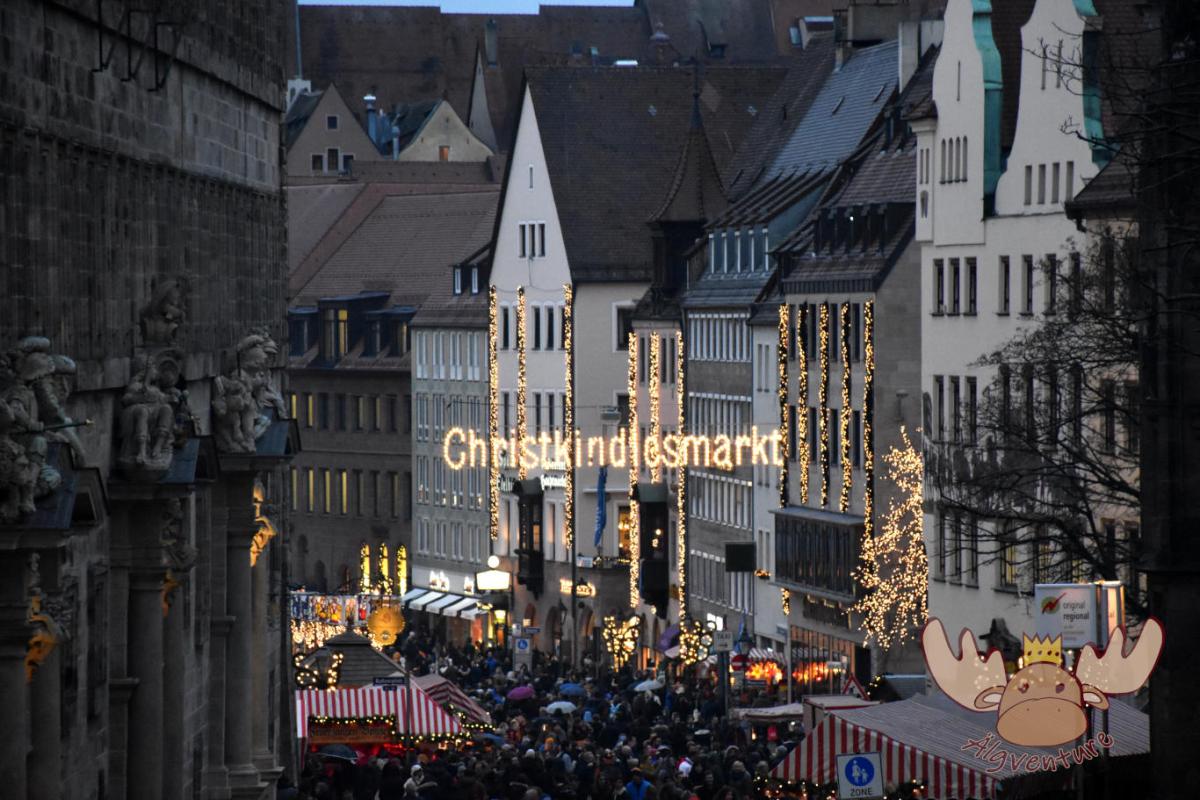
Christkindlesmarkt Nuremberg
Almost everyone has heard of him and many have seen him too. The Nuremberg Christmas market is one of the largest in Germany and we tell you about our visit.
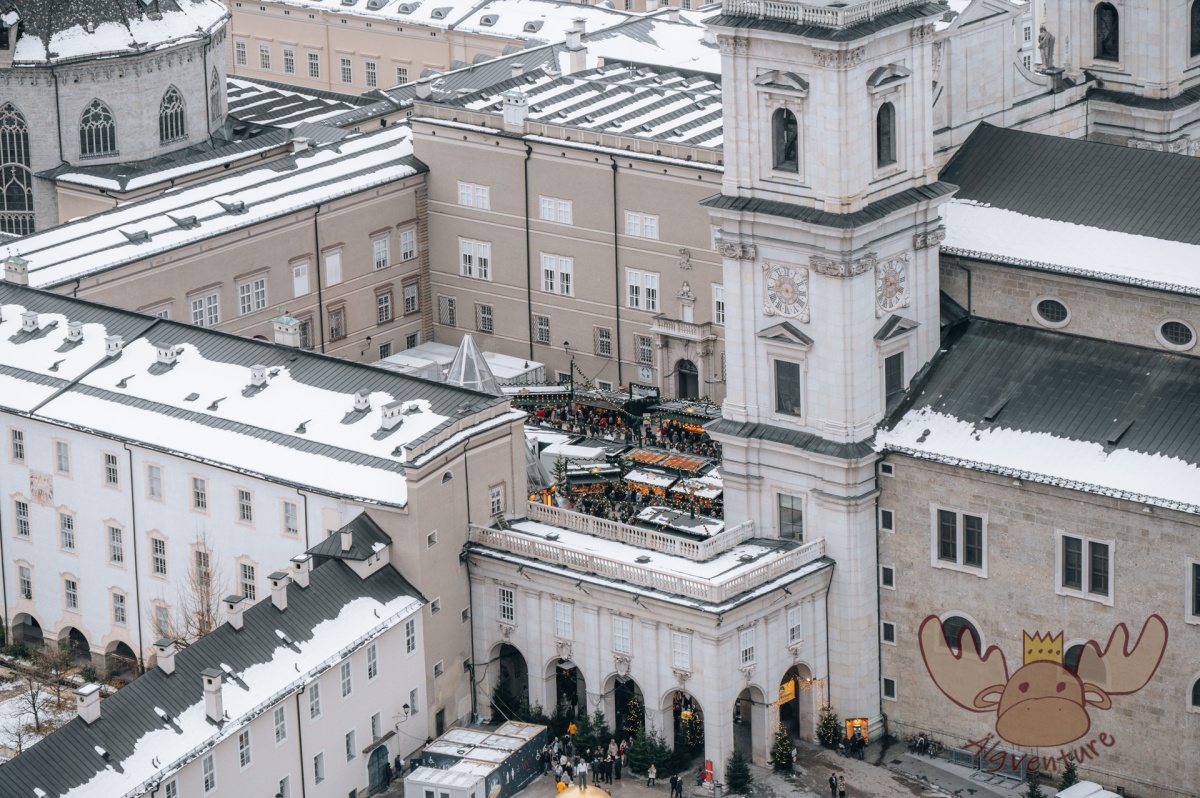
One weekend, four different Christmas markets – an exploration tour through the Austrian Christmas market tradition
The Christmas season is just around the corner and the various Advent markets want to get visitors into the Christmas spirit with their offerings. We’ll take you on our exploration tour to the most diverse representatives of Austrian Christmas market culture.
Etwas ist schiefgegangen. Bitte aktualisiere die Seite und/oder versuche es erneut.
 Älgventure