
This museum provides insights into times long past.
Älgbert Elgson
Dieser Artikel ist auch in Deutsch verfügbar.
The Skógar Museum was opened in 1949 and was originally housed in the town’s old school building. The museum was founded on the initiative of Þórður Tómasson, who continually expanded the museum so that it can now be divided into three large areas. The Byggðasafnið að Skógum is a collection of cultural assets with more than 15,000 regional folk craft artifacts, the open-air museum area, which retells the history of Iceland with its many original buildings, and the Technical Museum in Skógar, which opened in a new exhibition hall in 2002 and tells the history and development of Transport, communication and technologies in Iceland in the 19th and 20th centuries, from the age of the workhorse to digital communication today.
The trail of history
Born in southern Iceland in 1921, Þórður Tómasson developed an interest in Iceland’s cultural heritage at a young age, collecting ancient artifacts from his surroundings that were often viewed by his contemporaries as outdated and worthless.
Many of the objects he collected formed the basis of the museum that opened on December 1, 1949 in the old school building. He was the museum’s first curator and in this role expanded the scope of the exhibitions throughout his life. For his efforts, he was awarded an honorary doctorate by the University of Iceland in 1997 for his contribution to research in the public interest.
In the main building of the museum, visitors can gain an insight into Iceland’s social life over the past centuries through around 15,000 objects. In several thematically sorted rooms, everyday objects and works of art are exhibited and the natural history department contains a variety of stuffed birds and animals, as well as plants, to bring the diversity of Icelandic flora and fauna closer to visitors.
Fishing has been an important employment sector ever since. Fishing in this region was unusual in that Iceland’s sandy southern coast has no real harbors. The boats had to be launched from beaches open to the waves of the North Atlantic.
The heart of the section is the fishing boat Pétursey, built in 1855 and in use until 1946. If you want to find out more about fishing in Iceland and its importance for the country, you should definitely pay a visit to Síldarminjasafn Íslands – The Herring Museum.
Other rooms contain agricultural tools and utensils used on farms in earlier times, such as riding equipment, haymaking tools, dairy, wool and iron processing equipment. In a subsistence economy typical of Iceland, farming households had to provide themselves with everything they needed and make and repair their own tools.
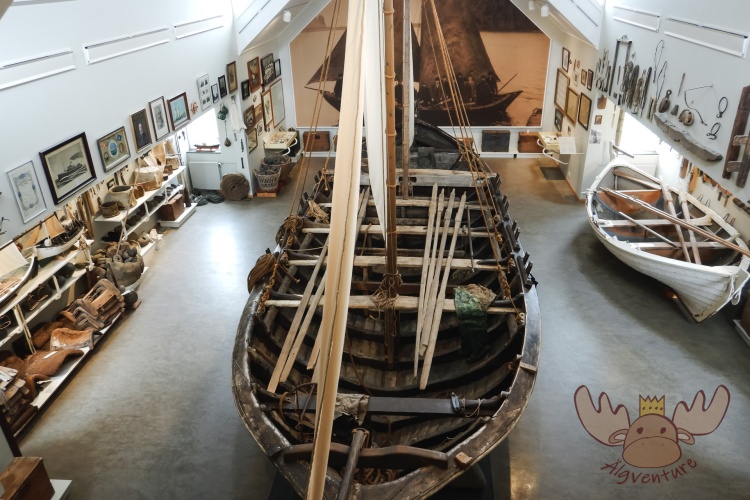
Skógar Museum | Das 1855 gebaute Segelschiff Pétursey bildet das Herzstück der Ausstellung. – The sailing ship Pétursey, built in 1855, is the centerpiece of the exhibition. 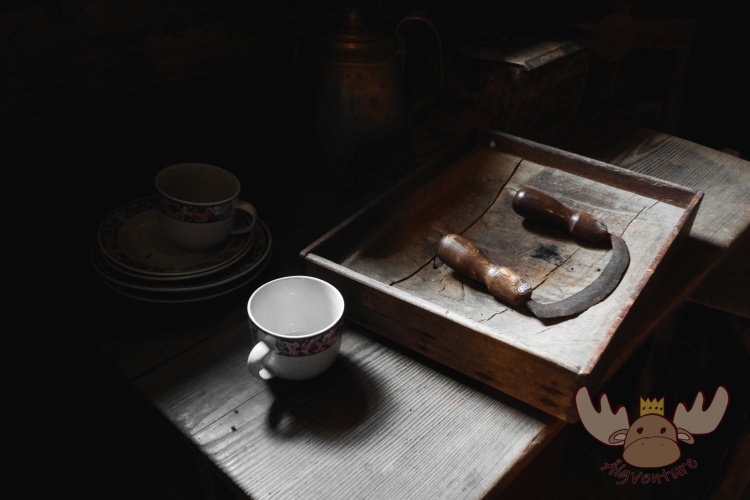
Skógar Museum | Das Museum umfasst über 15.000 Gegenstände aus dem täglichen Leben der Isländer. – The museum contains over 15,000 objects from everyday Icelandic life. 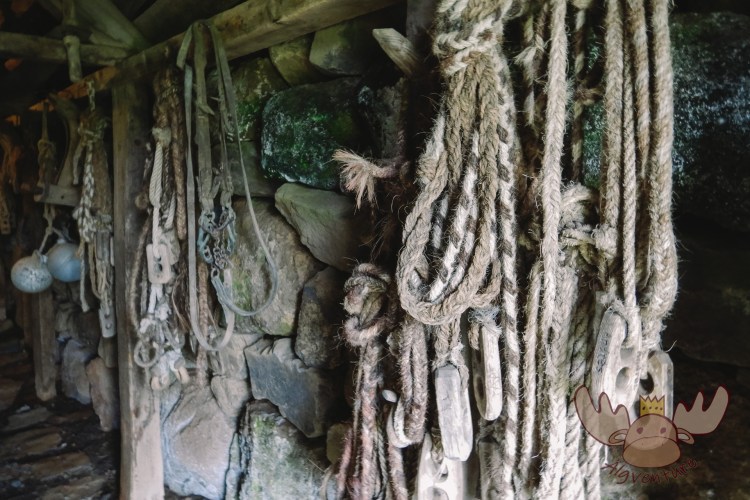
Skógar Museum | Alles was auf den Bauernhöfen benötigt wurde, musste selbst hergestellt werden. – Everything that was needed on the farms had to be produced in-house.
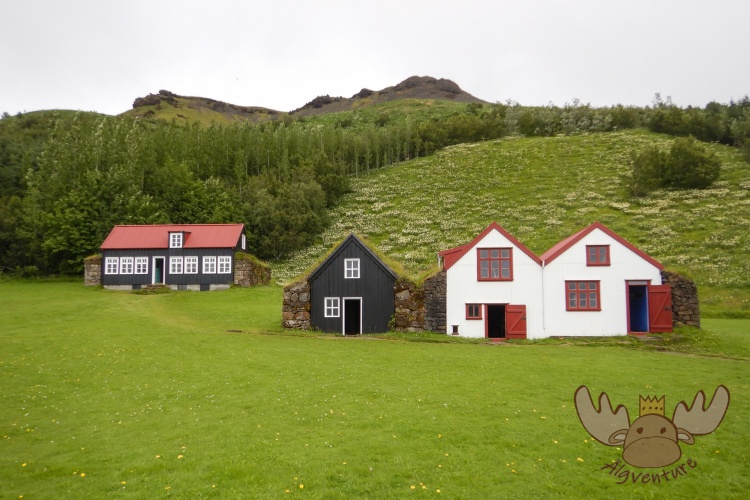
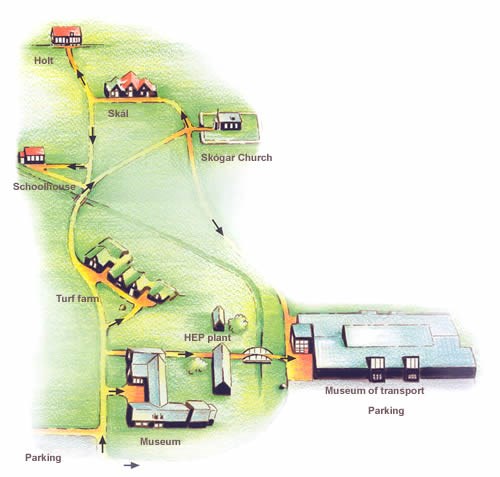
The museum’s large outdoor area contains examples from many eras of Icelandic architectural history.
Right next to the museum building is a good example of typical Icelandic subsistence farming, with a traditional peat farmhouse, including a so-called baðstofa (a common room where everyone in the household slept, ate and worked), a kitchen with an open fireplace, a pantry and a cattle shed . These farms were numerous throughout the country and were the center of the lives of many Icelanders for a very long time.
The northern part of the site includes a schoolhouse typical of Icelandic rural schools in the early 20th century, a church and a baðstofa, built over a cattle shed to benefit from the warmth of the animals, and a warehouse. At the highest point of the site is a wooden house, built entirely from driftwood in Holt in 1898. The wall panels in the west saloon come from the French hospital ship St. Paul, which ran aground off Meðalland in 1899. Many of the exhibits in the museum tell a similarly tragic story and how pragmatically the Icelanders reused the washed-up items.
Anyone who continues their tour to the Technical Museum will discover a small hydroelectric power station from 1929 next to the peat farmhouse, which is intended to commemorate the inventive pioneers who were the first to use hydropower to generate electricity.
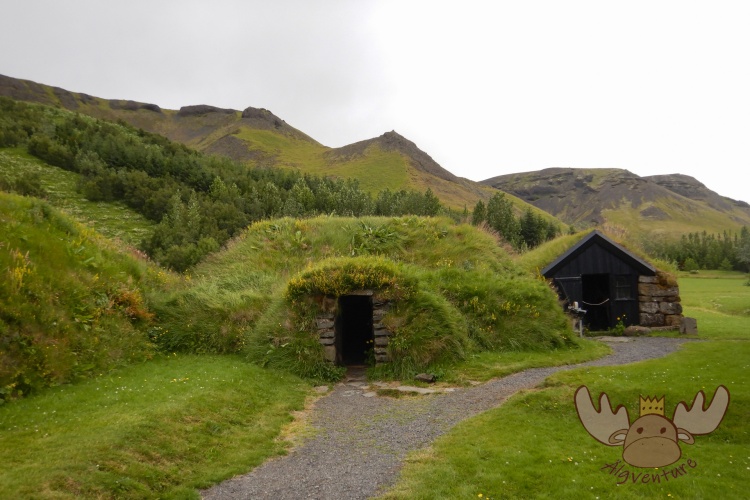
Skógar Museum | Ein Beispiel eines typischen Torfbæir (dt. Torfhof) der lange Zeit das soziale und kulturelle Zentrum vieler ländlichen Regionen in Island bildete. – An example of a typical Torfbæir that has long been the social and cultural center of many rural areas in Iceland. 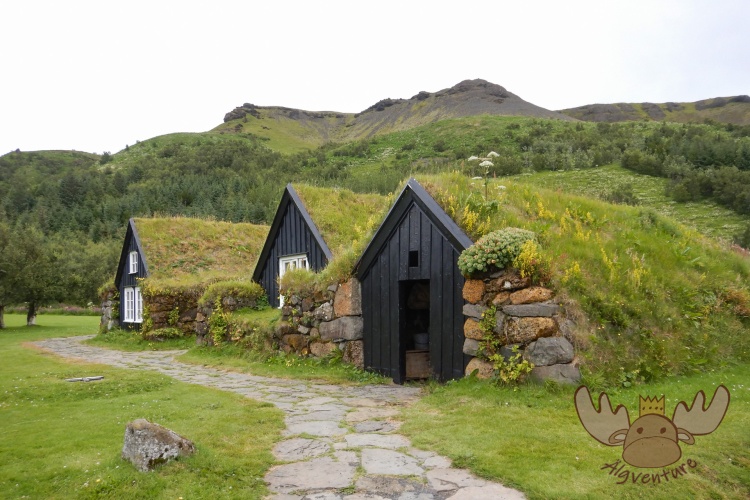
Skógar Museum | Viele solcher Torfbæir waren über ganz Island verstreut und wurden als Selbstversorgerhöfe betrieben. – Many such Torfbæir were scattered all over Iceland and operated as self-sufficient farms. 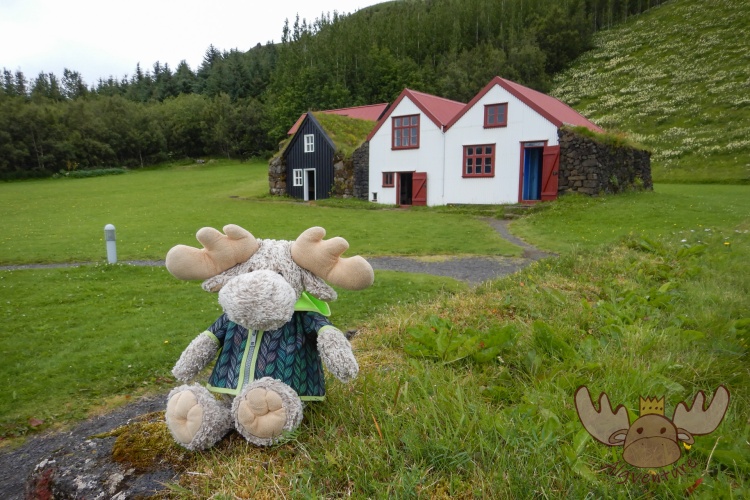
Skógar Museum | Älgbert erkundet das Freilichtmuseum – Älgbert explores the open-air museum 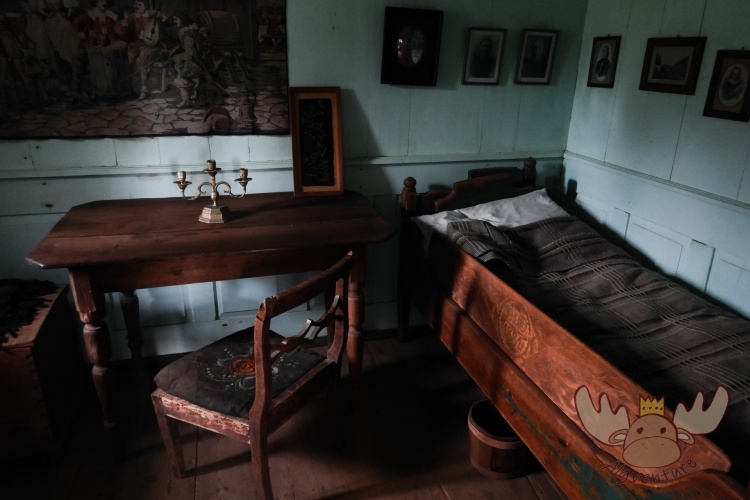
Skógar Museum | Die Häuser des Außenbereichs sind alle gemäß den Epochen aus denen sie stammen eingerichtet. – The houses outside are all furnished according to the periods from which they come. 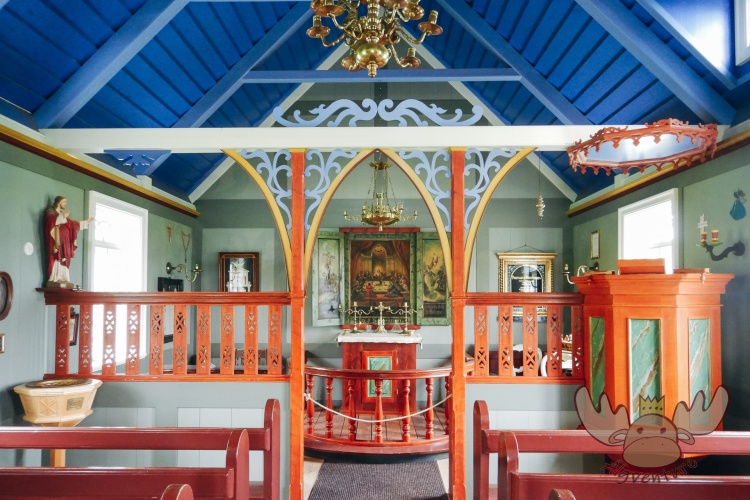
Skógar Museum | Die bunte Innenausstattung der Kirche stammt aus mehreren Kirchen in der Umgebung. – The colorful interior of the church comes from several churches in the area.
The Technical Museum in Skógar covers the history and development of transport, communication and technologies in Iceland in the 19th and 20th centuries. The exhibition ranges from the age of the workhorse through the beginnings of industrialization to today’s digital communication. The aim of the museum is to collect, preserve and exhibit technical objects in order to bring their history and importance to Iceland closer to visitors.
Many of the vehicles and items on display were donated by their most recent users and are in their original condition.
The exhibition hall also houses the souvenir shop and the museum’s own Skógakaffi café.
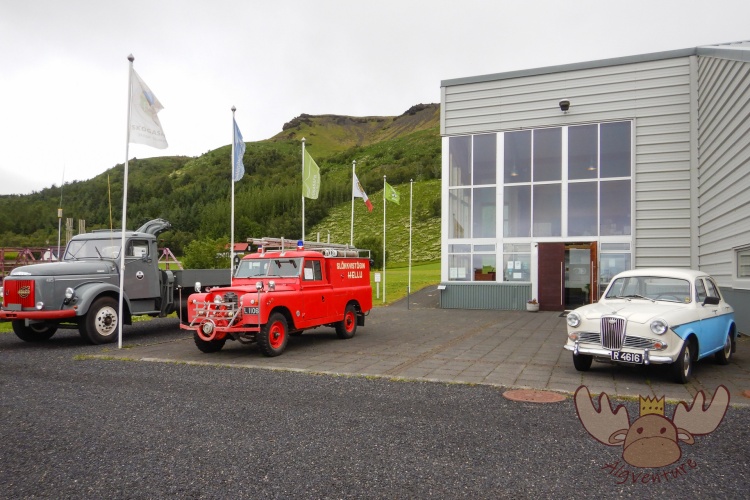
Skógar Museum | Das Technische Museum von Skógar beinhaltet viele abwechslungsreichen Exponate. – The Technical Museum of Skógar contains many varied exhibits. 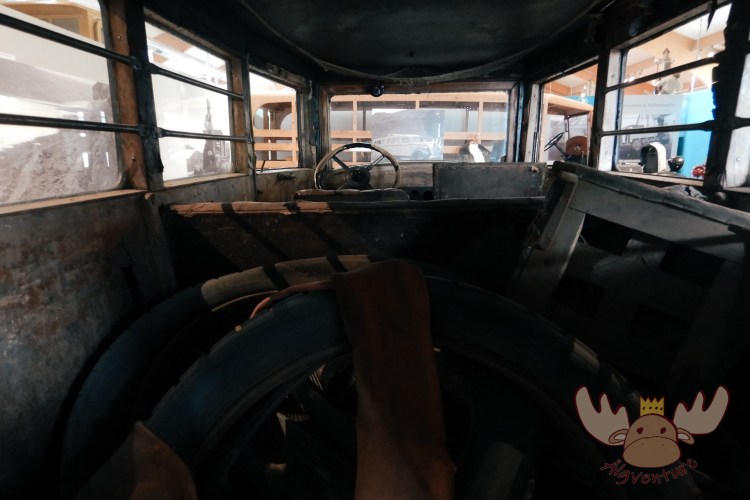
Skógar Museum | Die meisten Fahrzeuge befinden sich im Originalzustand und wurden dem Museum von den Besitzern zur Verfügung gestellt. – Most of the vehicles are in their original condition and were made available to the museum by the owners. 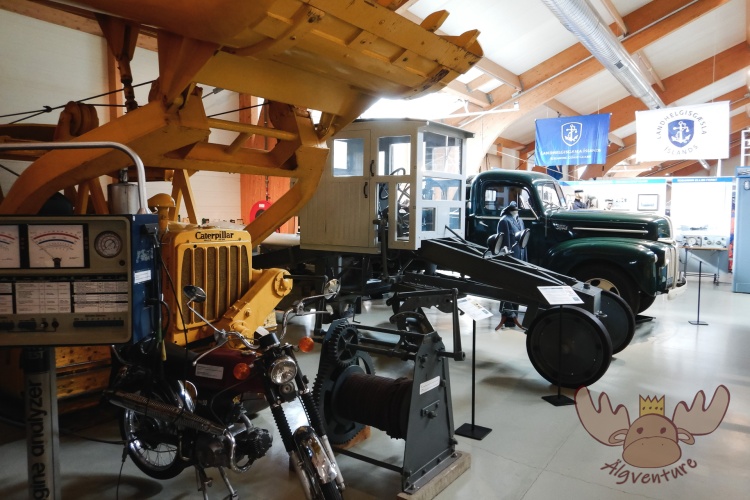
Skógar Museum | Die ausgestellten Straßenbaumaschinen ermöglichten es Island zu erschließen. – The road construction machines on display made it possible to develop Iceland. 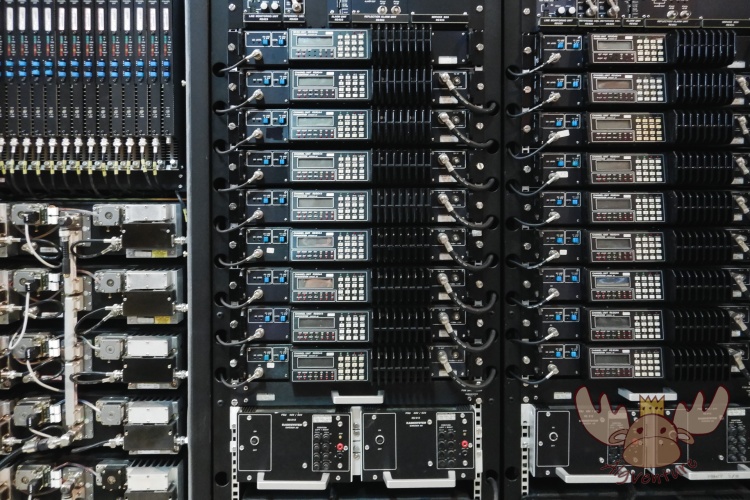
Skógar Museum | Ein Teil der Ausstellung ist der Telekommunikation und der Verbindung Islands mit dem Rest der Welt gewidmet. – Part of the exhibition is dedicated to telecommunications and Iceland’s connection to the rest of the world.
Useful information
Guided tours are available for groups of 10 or more by prior reservation in English, German and of course Icelandic. Depending on availability, tours are also available in French, Spanish, Norwegian and Danish.
Guided tour times are available within opening hours up to and including one hour before closing time. Please inquire about this on the official homepage.
There is a spacious parking lot right next to the museum and there is also a campsite with sanitary facilities nearby. The museum is within walking distance from the parking lot of the famous Skógafoss. In addition, right behind the museum is the not so well-known but still very worth seeing Kvernufoss
How to get there?
The Skogar Museum is located 1 minute from Skógafoss, just off the ring road, 30 km west of Vík and 150 km east of Reykjavík.
Due to its convenient location on the ring road, the nearby Skógafoss is often visited by day tourists. This makes the place relatively easy, at least by Icelandic standards, to reach from the capital in about three hours by public transport, and some travel providers offer day tours there from Reykjavik.
Conclusion:
This museum gives visitors an insight into times long past.


The South of the North – A travel report
It was that time again – we were embarking on a new adventure. After our stay with the Queen in London a few weeks earlier, we were drawn out into the world again to explore it. Many blank spots on our travel map are just waiting to be discovered by us. The general direction of…


Sunset on the Dachstein – Dinner in the Austrian Alps
The Dachstein: The jewel of the Alps attracts nature lovers and adventure seekers alike. Experience the breathtaking beauty of the Alpine landscape, from rugged rock faces to glittering glaciers. Whether you are an experienced mountaineer or a leisurely hiker – the Dachstein has something for everyone. Via ferratas, summit tours or leisurely hikes: everyone will…
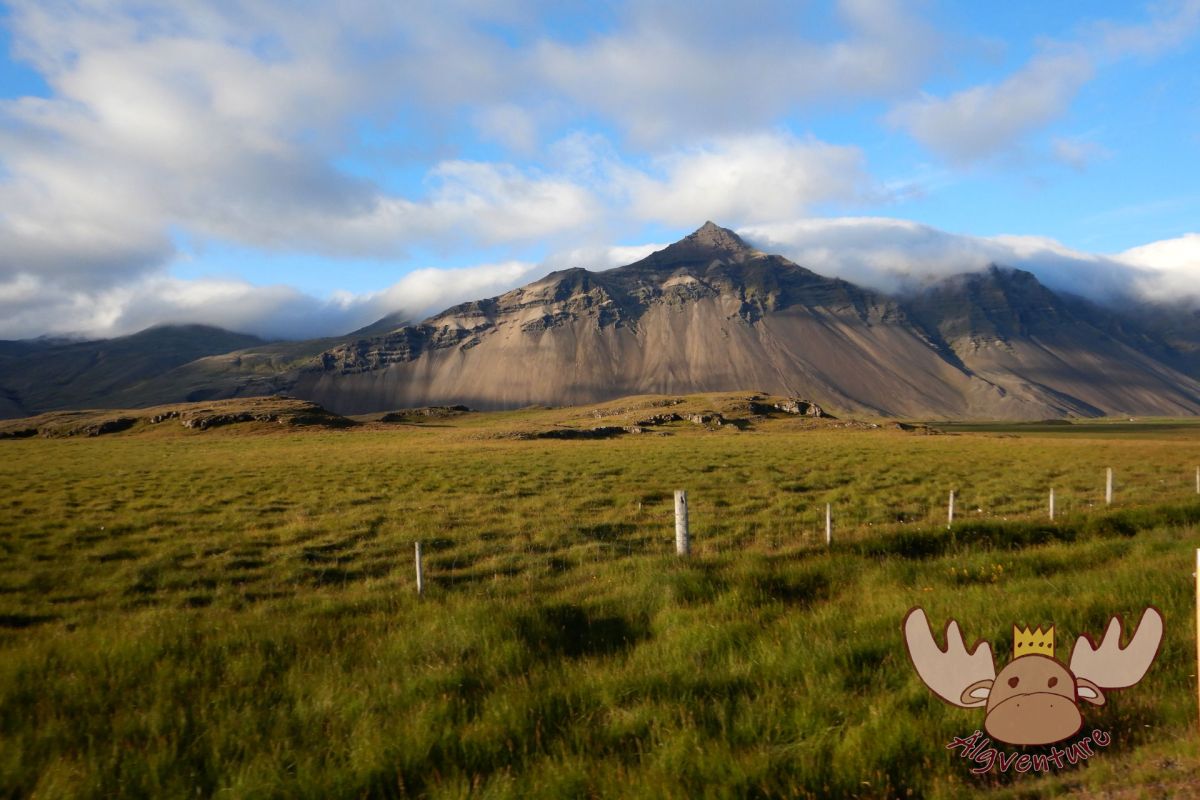
In search of elves and banana plantations – A trip to Iceland
Imagine standing on the edge of a gurgling geyser while steam fogs up your glasses. Or hiking through a lunar landscape of black sand, framed by snow-capped peaks. Sound like an adventure? Iceland is just that and much more!
Join me on my adventure to Denmark, Iceland and the Faroe Islands.
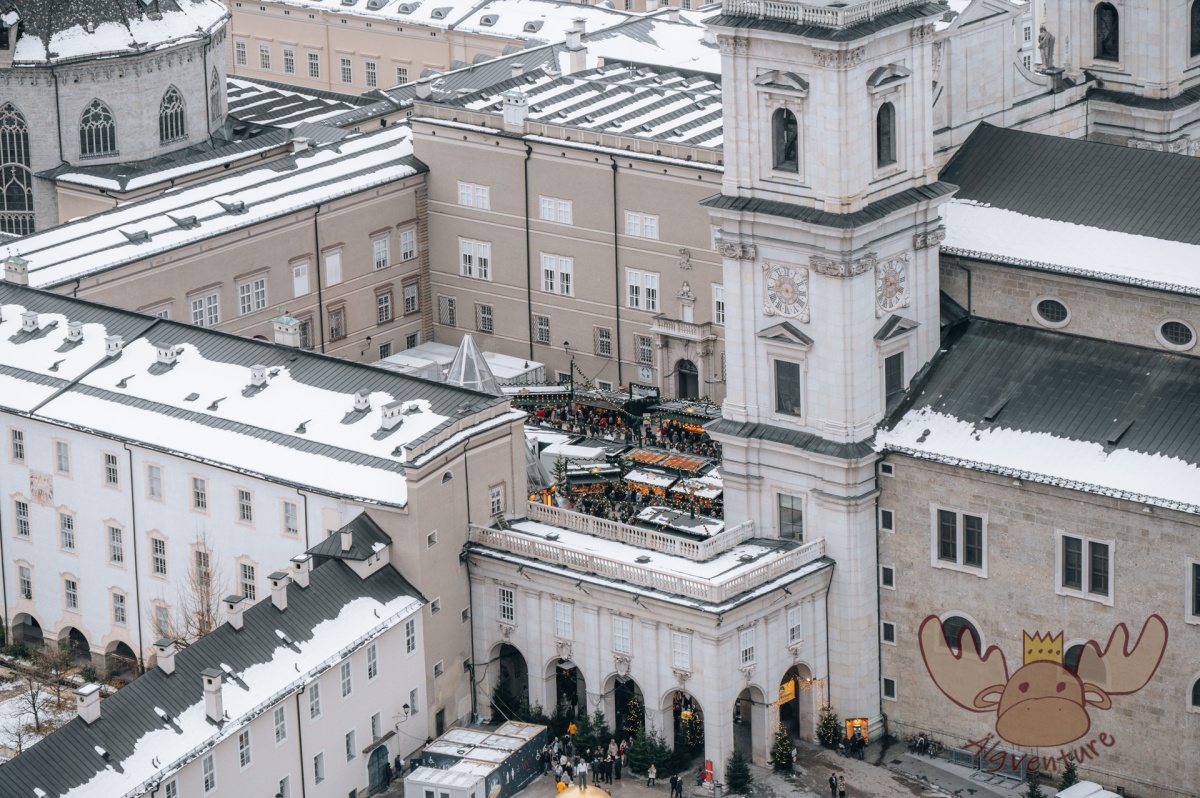
One weekend, four different Christmas markets – an exploration tour through the Austrian Christmas market tradition
The Christmas season is just around the corner and the various Advent markets want to get visitors into the Christmas spirit with their offerings. We’ll take you on our exploration tour to the most diverse representatives of Austrian Christmas market culture.
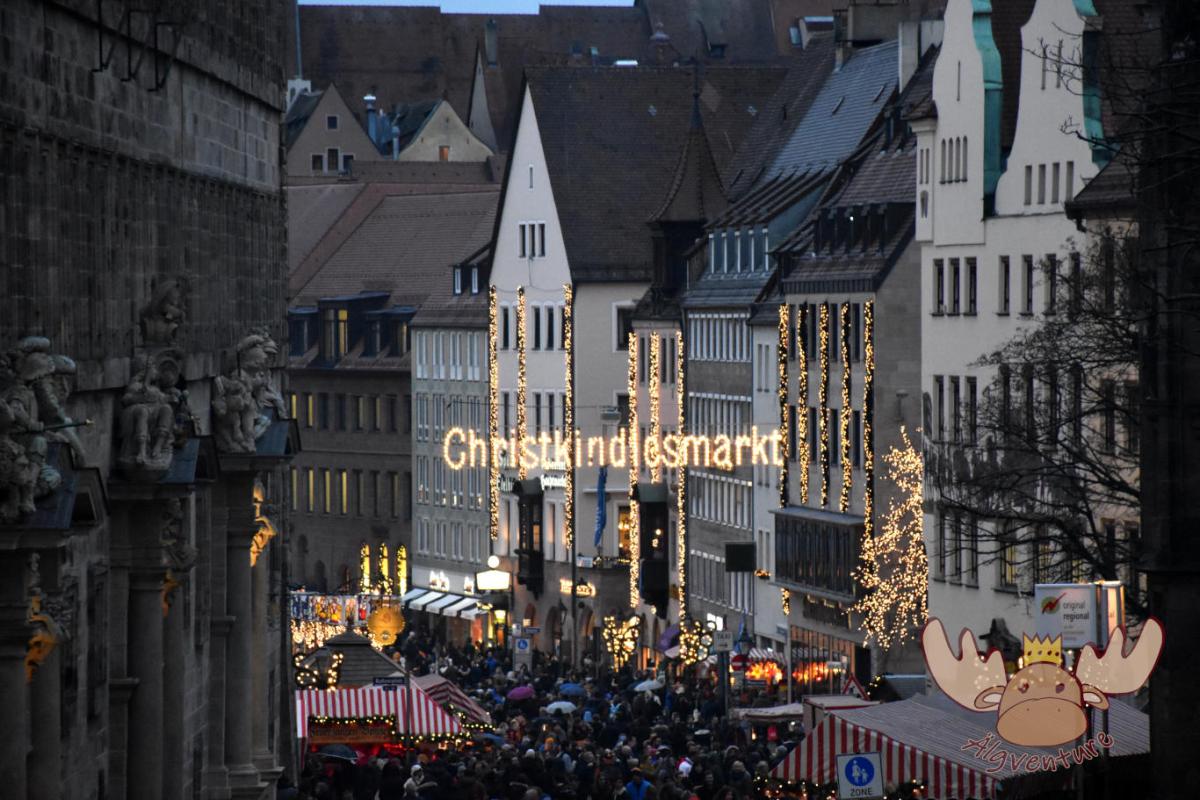
Christkindlesmarkt Nuremberg
Almost everyone has heard of him and many have seen him too. The Nuremberg Christmas market is one of the largest in Germany and we tell you about our visit.
Etwas ist schiefgegangen. Bitte aktualisiere die Seite und/oder versuche es erneut.
 Älgventure