
The idea of a small group of people brought suffering and ruin to many.
Älgbert Elgson
Dieser Artikel ist auch in Deutsch verfügbar.
The buildings still preserved are silent witnesses of the most inglorious times in Nuremberg.
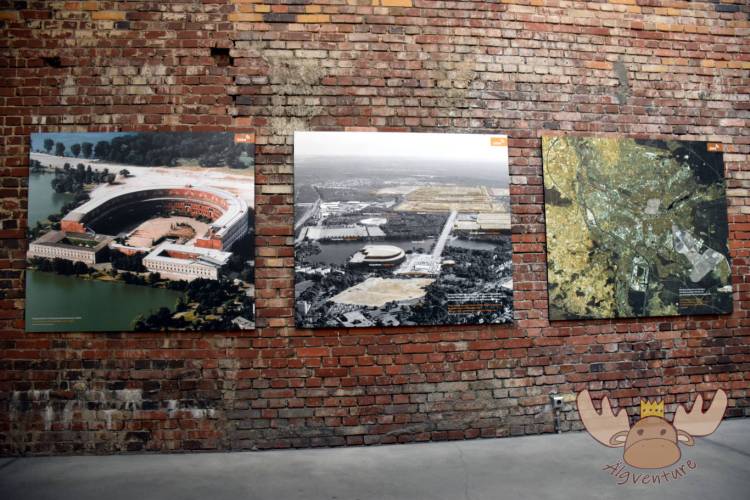
The NSDAP began holding its party congresses in Nuremberg very early on. This was to draw a continuous historical line from the emperors of the Middle Ages to the Führer. Another expression of this deliberate falsification and control of history were the many gigantic building projects that had to be built by thousands upon thousands of forced laborers under unimaginable circumstances throughout the so-called Third Reich. A huge area was therefore planned in Nuremberg for future Nazi party rallies and other political events. Due to the war, many of the construction projects were either never started or were no longer completed.
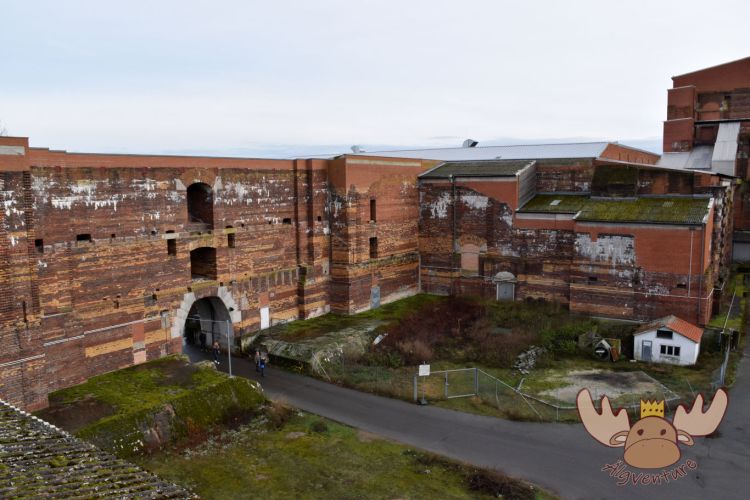
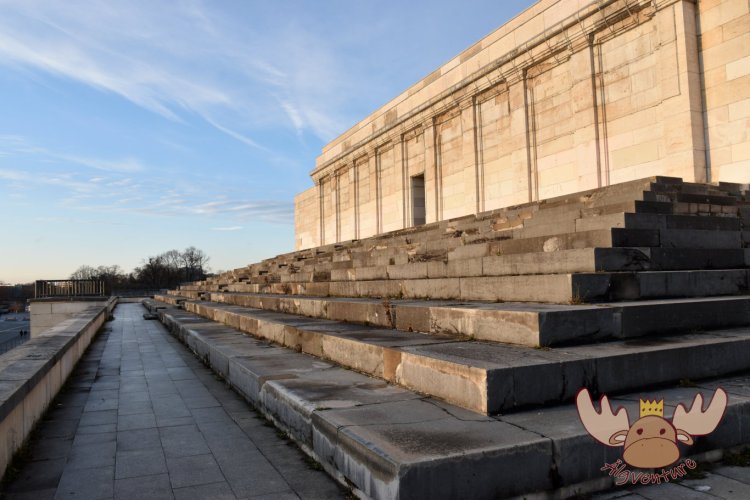
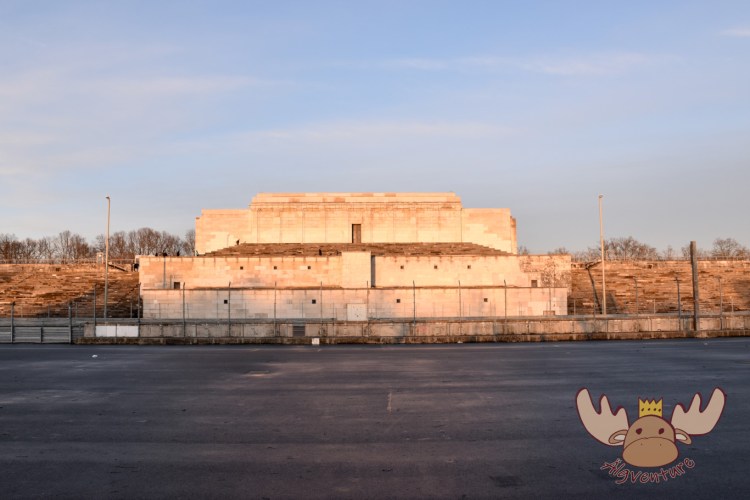
Today the unfinished construction of the congress hall with the attached museum „Dokumentationszentrum Reichsparteitagsgelände“, as well as the grandstand at the zeppelin field is still standing.

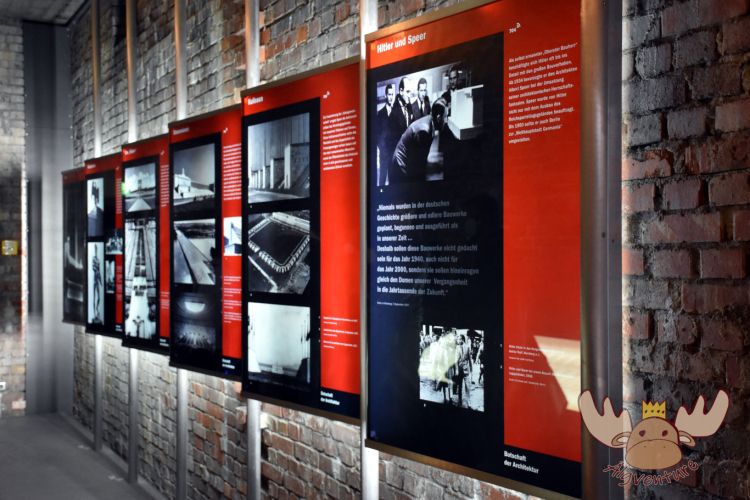
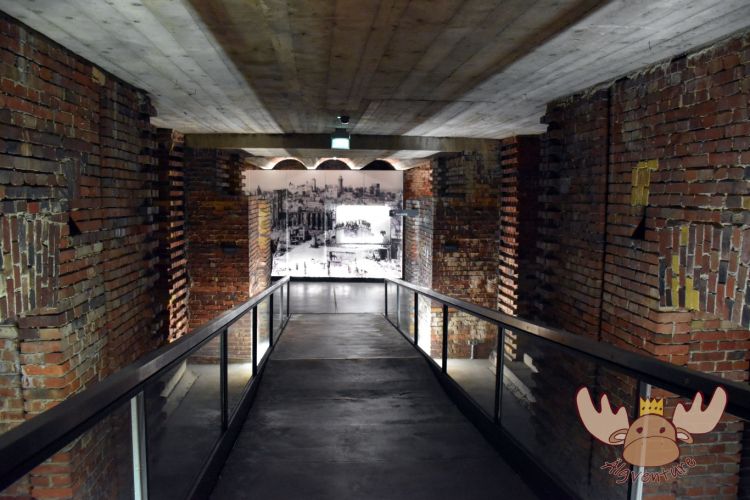
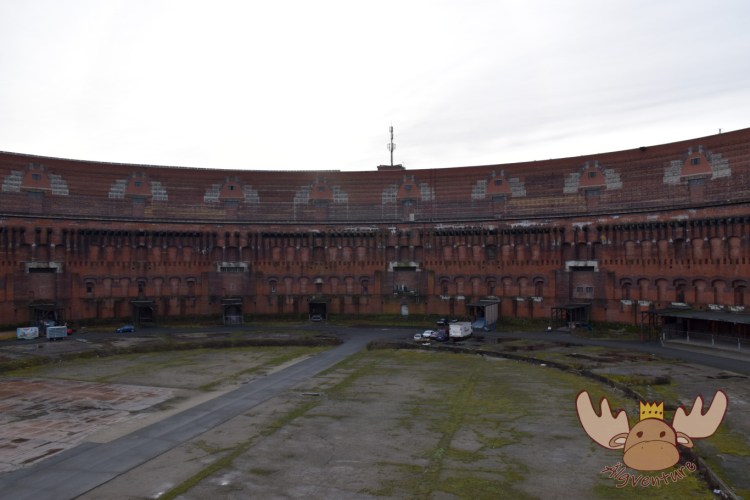
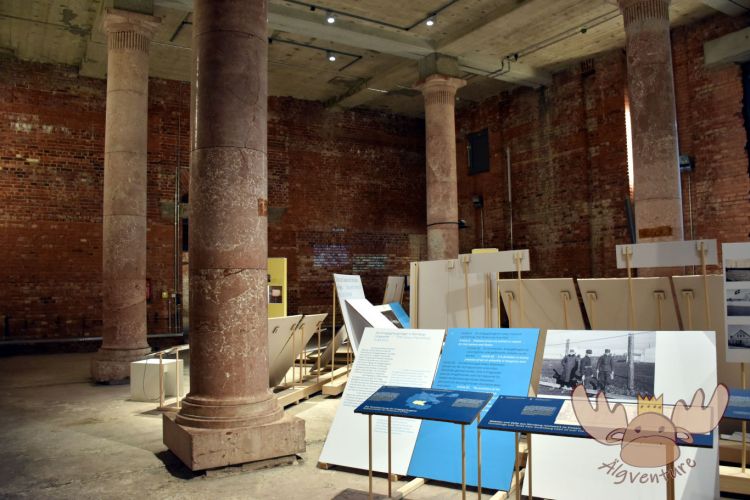
The congress hall, the second largest surviving structure of the National Socialist monumental building, was planned as a congress center for the NSDAP with space for over 50,000 people. Due to the war, the originally planned 70 meter building was only completed up to a height of 39 meters. Today, most of the congress hall is used as a warehouse, and the inner courtyard is used as a large storage area, for example for the Nuremberg Christmas market. The „Dokumentationszentrum Reichsparteitagsgelände“ museum is located in a small part of the huge building, in which the history of Nuremberg and its significance for National Socialism from the time of the Weimar Republic to the post-war period is presented. With the help of audio guides, numerous information signs and films with interviews with contemporary witnesses, the visitor is brought closer to this dark chapter in German history in an exciting way.
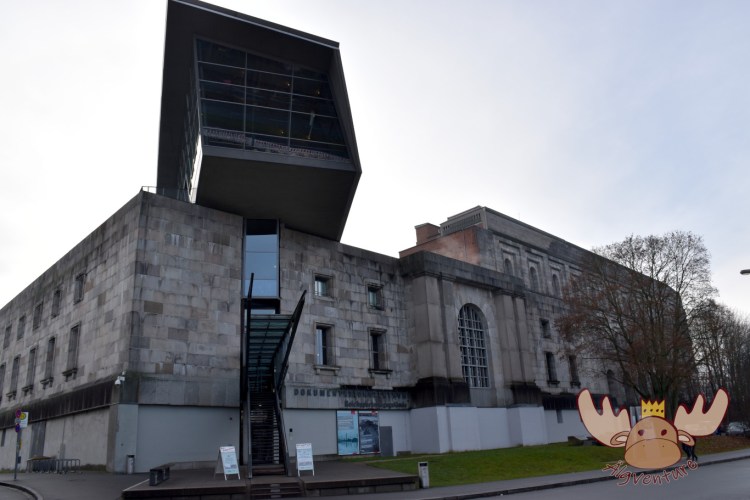
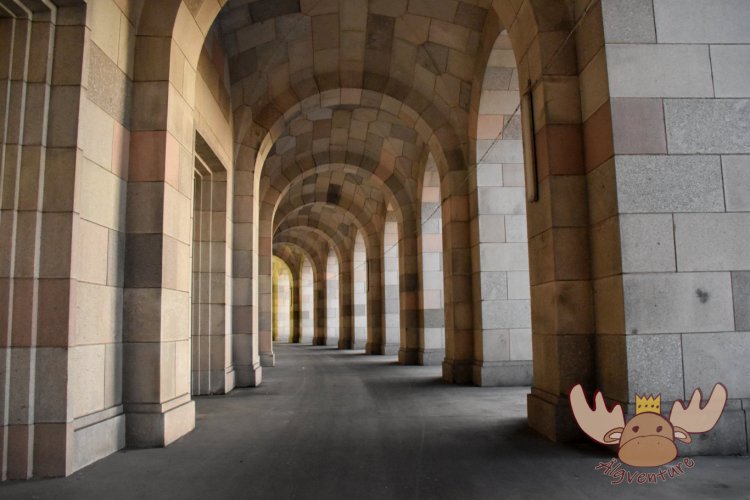




The inner courtyard should actually be roofed over to be able to accommodate the many people in it, protected from wind and weather. However, due to the course of the Second World War, this did not happen.
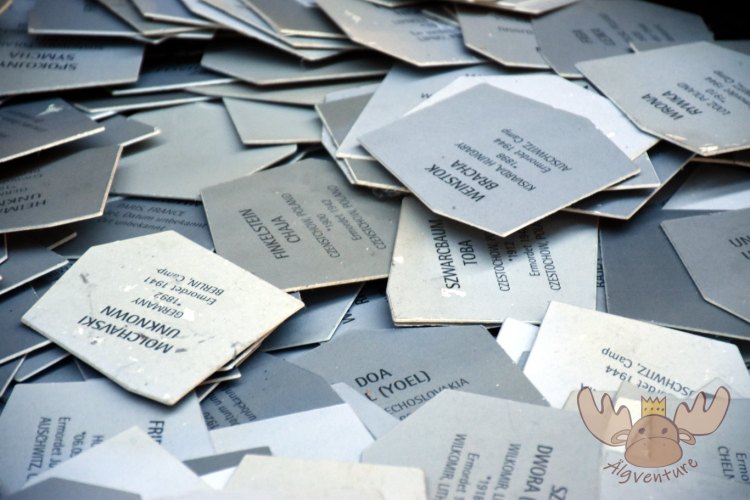
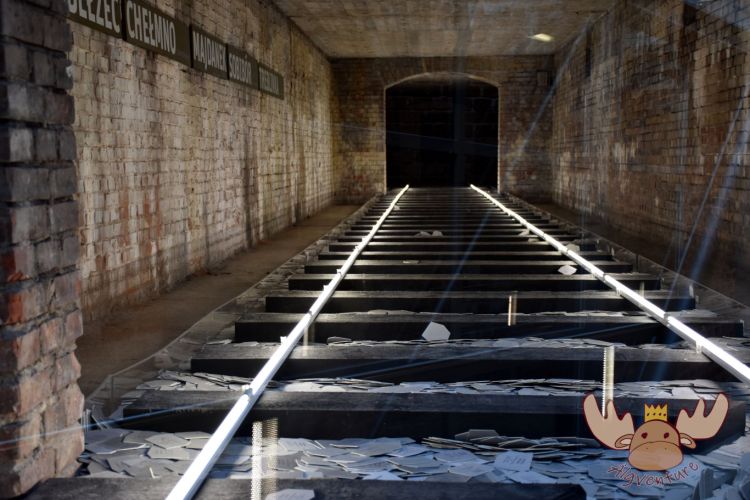
In the basement, an attempt is also made to process this time artistically with an exhibition.



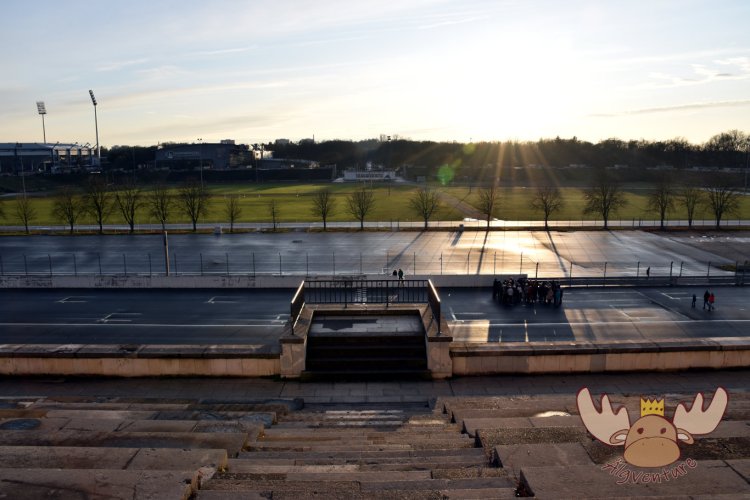
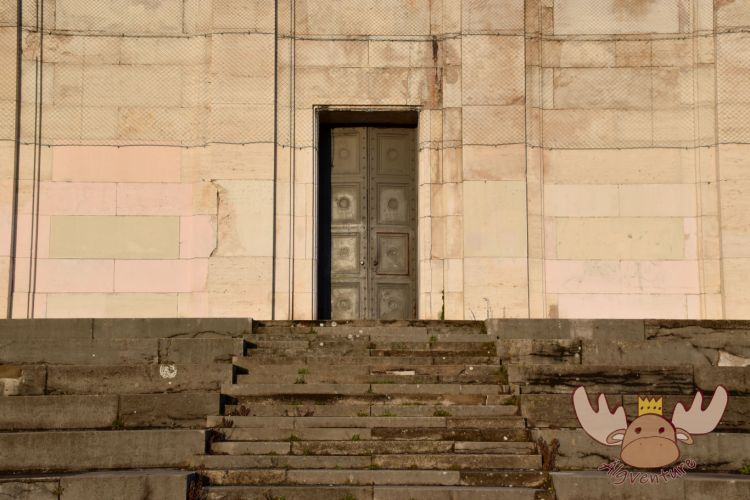
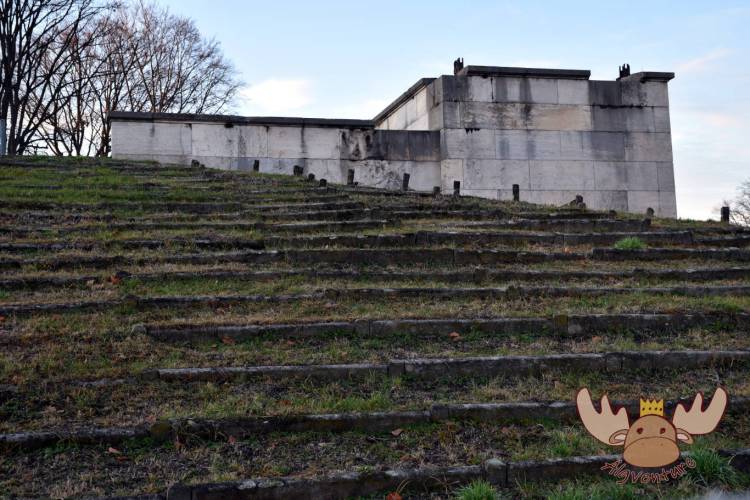
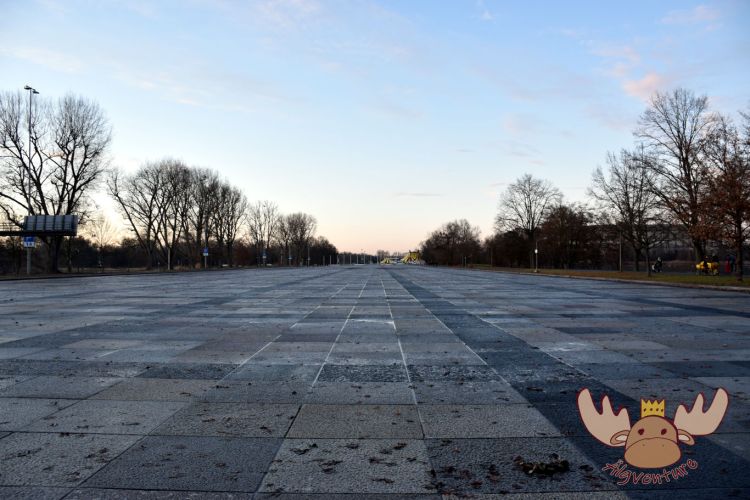
The huge area of the former Nazi party rally grounds in Nuremberg also includes the zeppelin field on which a large grandstand for spectators was also built. From 1933, parades of the Wehrmacht were held on the large open space. In the years 1935 to 1937 the Zeppelinwiese was redesigned into a parade ground, enclosed in grandstands, whereby the Zeppelin main grandstand stood out as a monumental building. As with the Luitpoldarena, the central element was the speaker’s pulpit, from which Adolf Hitler held the parades. The entire system is geared towards this point. Around the area the size of 12 football fields, 34 towers were built on which flagpoles and powerful FLAK spotlights were mounted. With these, the so-called „light dome“ was impressively created by shining around 150 spotlights vertically into the sky. The Zeppelin grandstand is the only completed structure of the entire planned gigantic building project on the Nazi party rally grounds.




You can find more information about the Nazi Party Rally Grounds, in particular opening times and traveling exhibitions in the Documentation Center Nazi Party Rally Grounds, on the official homepage of the Nuremberg museums.
How to get there?
Nuremberg is very easy to get to by train. Within the city, a bus or tram always drives very closely to the Nazi party rally grounds. Since the Nuremberg Exhibition Center is also directly connected, there are numerous parking spaces in the immediate vicinity.
Conclusion:
The exhibition is very well structured and the eyewitness interviews give a better insight into this time. Those who are not too interested in the subject will find the sheer amount of information and signs in the museum overwhelming. You could easily spend a whole day in the museum and still haven’t absorbed all of the information. The outdoor area can either be explored on a guided bus tour or simply on foot. The entire area is very well signposted and equipped with many information steles. Only with the accompanying original photos one can really put oneself in the place of this scenery.


The South of the North – A travel report
It was that time again – we were embarking on a new adventure. After our stay with the Queen in London a few weeks earlier, we were drawn out into the world again to explore it. Many blank spots on our travel map are just waiting to be discovered by us. The general direction of…

Sunset on the Dachstein – Dinner in the Austrian Alps
The Dachstein: The jewel of the Alps attracts nature lovers and adventure seekers alike. Experience the breathtaking beauty of the Alpine landscape, from rugged rock faces to glittering glaciers. Whether you are an experienced mountaineer or a leisurely hiker – the Dachstein has something for everyone. Via ferratas, summit tours or leisurely hikes: everyone will…

In search of elves and banana plantations – A trip to Iceland
Imagine standing on the edge of a gurgling geyser while steam fogs up your glasses. Or hiking through a lunar landscape of black sand, framed by snow-capped peaks. Sound like an adventure? Iceland is just that and much more!
Join me on my adventure to Denmark, Iceland and the Faroe Islands.
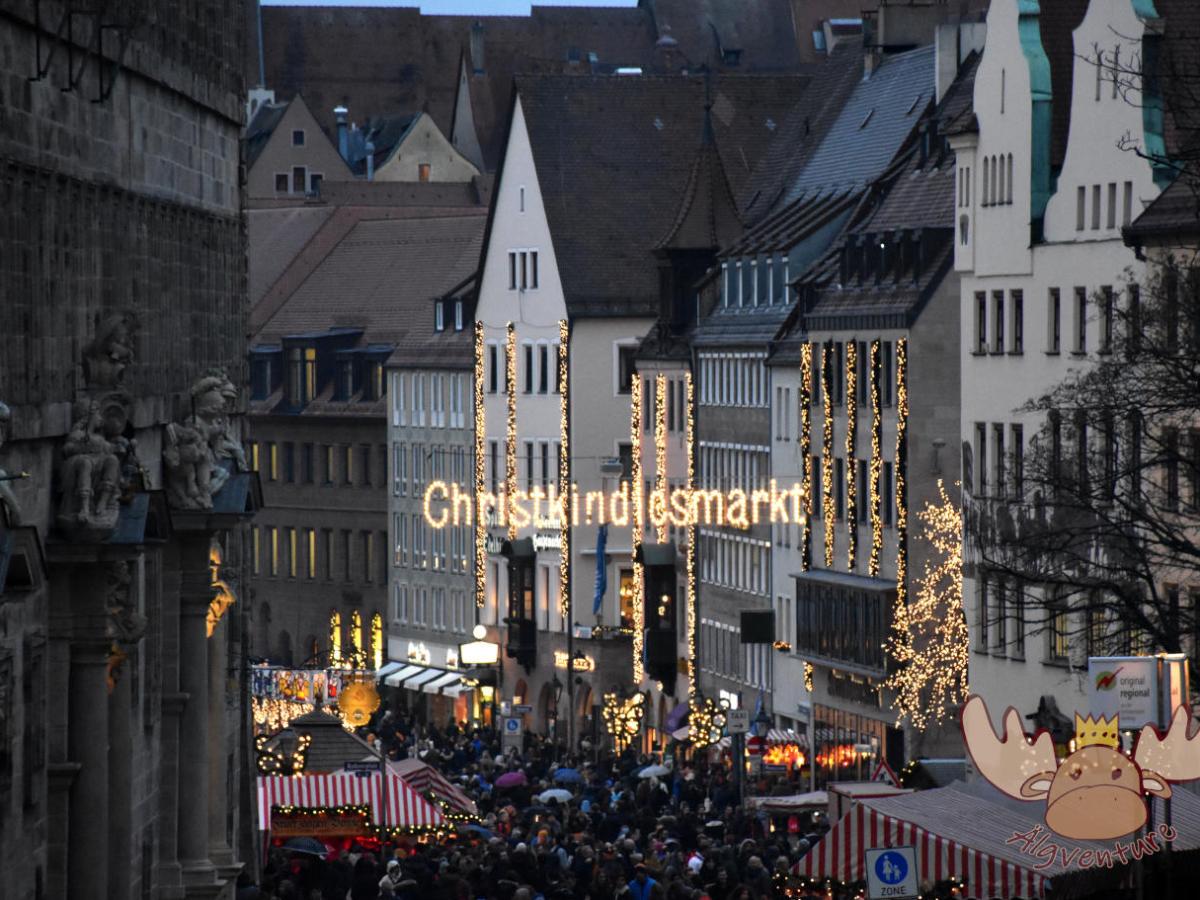
Christkindlesmarkt Nuremberg
Almost everyone has heard of him and many have seen him too. The Nuremberg Christmas market is one of the largest in Germany and we tell you about our visit.
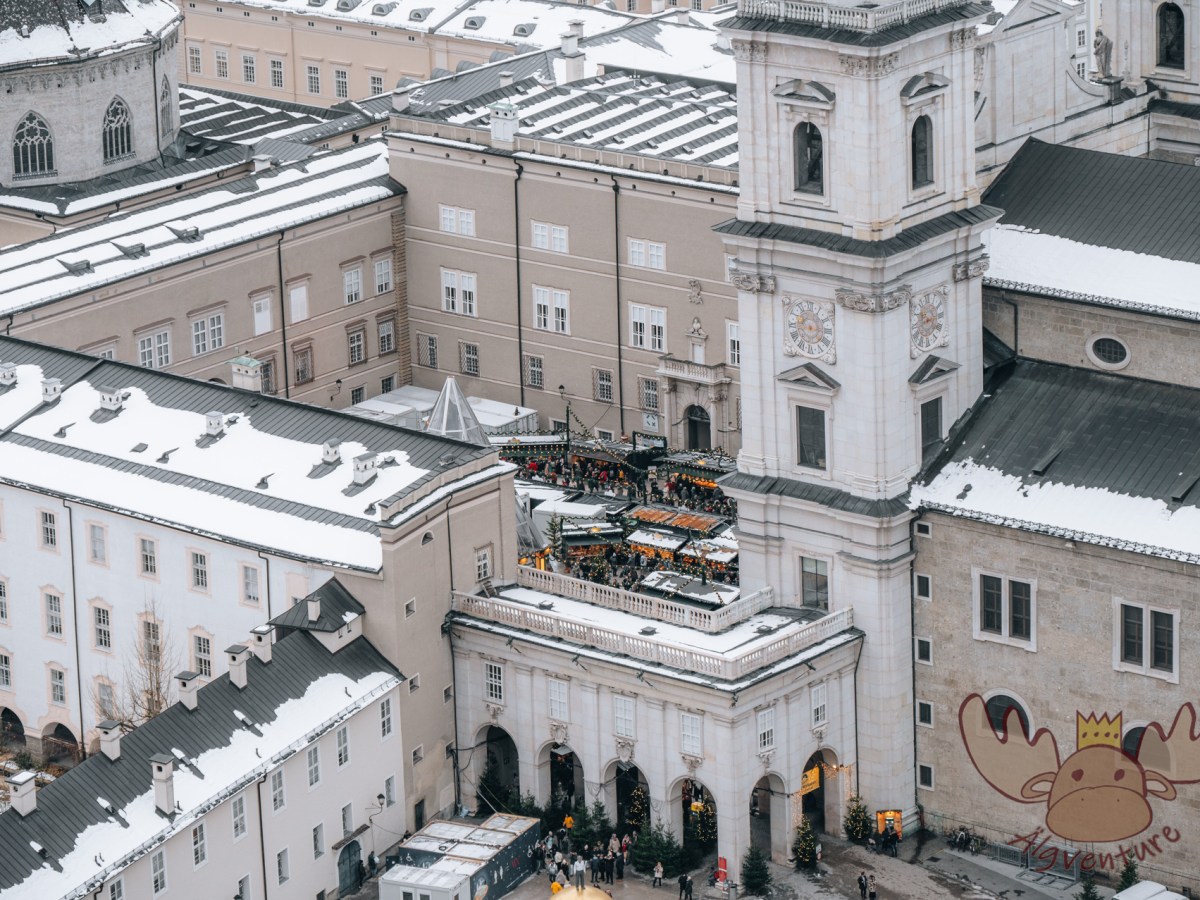
One weekend, four different Christmas markets – an exploration tour through the Austrian Christmas market tradition
The Christmas season is just around the corner and the various Advent markets want to get visitors into the Christmas spirit with their offerings. We’ll take you on our exploration tour to the most diverse representatives of Austrian Christmas market culture.
 Älgventure