
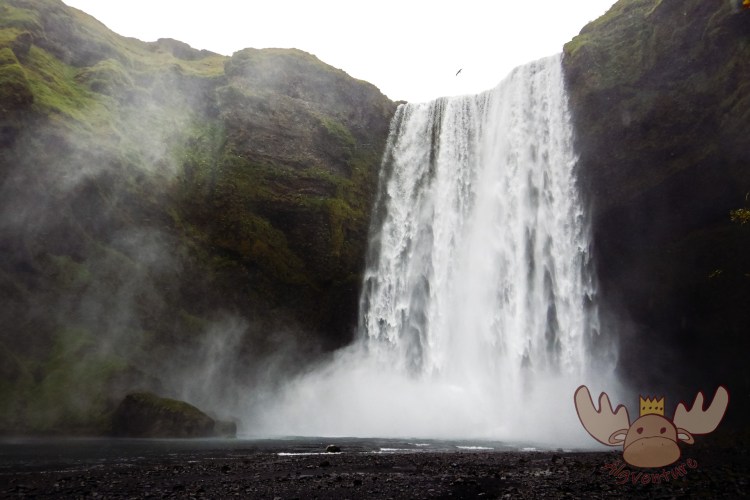
Roaring streams of water fall impressively downwards.
Älgbert Elgson
Dieser Artikel ist auch in Deutsch verfügbar.
The Skógafoss is located in the south of Iceland in the Suðurland region, right next to the ring road and forms the culmination of the Skógá River before it flows into the sea. The water that feeds it rises on the highland pass Fimmvörðuháls between the two glaciers Eyjafjallajökull and Mýrdalsjökull.
Along its course, the river flows over around 20 larger and smaller waterfalls, with Skógafoss being the largest of them, measuring around 25 meters wide and 60 meters high.

Skógafoss | Der Wanderweg startet direkt beim Parkplatz und führt zuerst über viele Stufen den steilen Hang hinauf. – The hiking trail starts directly at the parking lot and first leads up the steep slope over many steps. 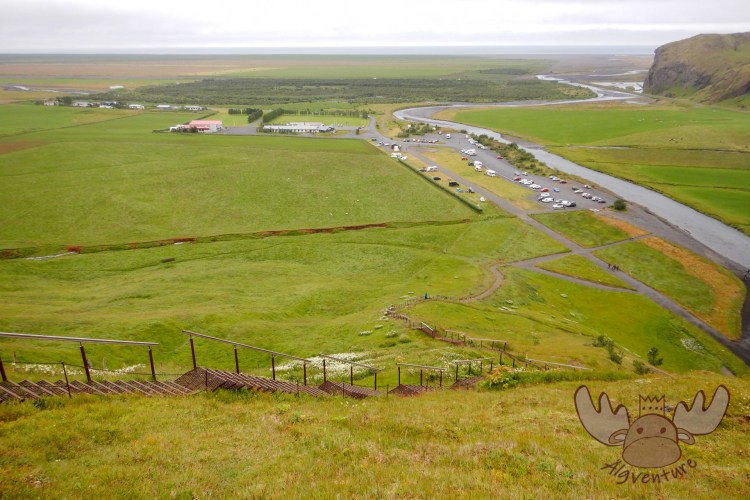
Skógafoss | Der Parkplatz am Fuße des Wasserfalles ist großzügig ausgelegt. – The parking lot at the foot of the waterfall is spacious. 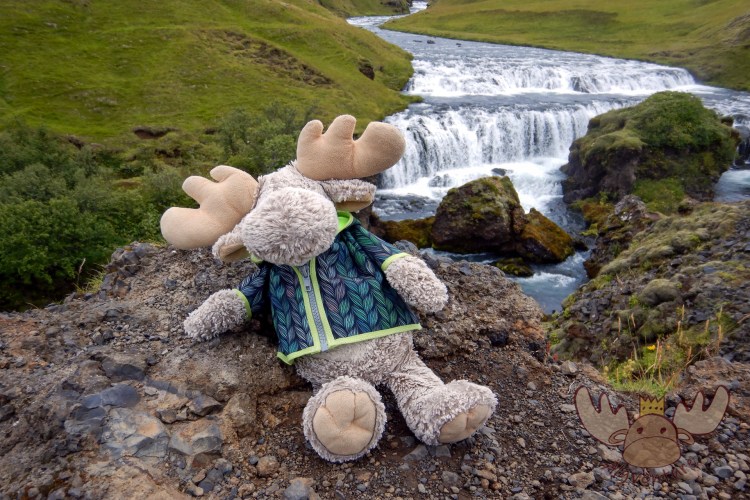
Skógafoss | Älgbert macht es sich nach dem Aufstieg über die vielen Stufen erstmal gemütlich. – Älgbert makes himself comfortable after climbing the many steps. 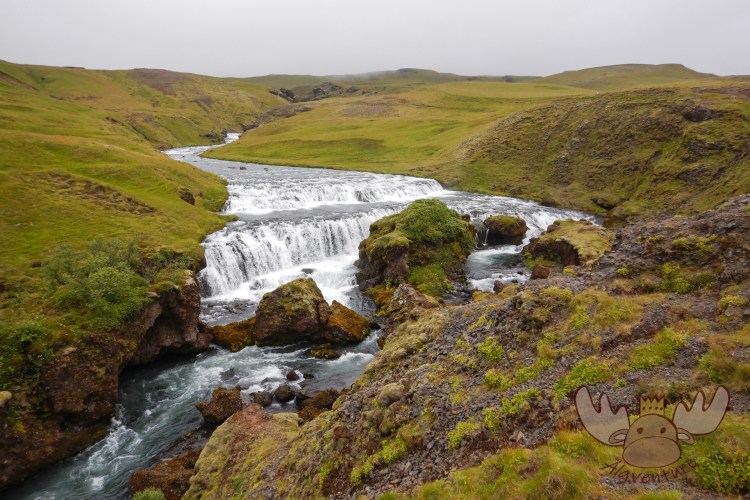
Skógafoss | Der Fluss fließt über etwa 20 größere und kleinere Wasserfälle, wobei der Skógafoss am Ende seiner Reise kurz vor dem Meer der größte von ihnen ist. – The river flows over about 20 larger and smaller waterfalls, with Skógafoss being the largest of them at the end of its journey just before the sea.
The Laugavegur hiking trail begins in Skógar, at an altitude of just four meters above sea level, and leads over the Fimmvörðuháls and over Þórsmörk to Landmannalaugar. The total length is about 54 kilometers and at its highest point at Hrafntinnusker is 1050 m above sea level. The hike takes four days in one direction and is well signposted. Along the way there are huts with fully equipped kitchens after certain distances, but these are usually fully booked in the high season. You have to bring your own food, but you can use the kitchen in the huts. It is possible to spend the night in tents at the huts and is only permitted there.
If you don’t want to hike that far, you can tackle a „small Skógafoss loop“ and just follow the river to skalabrekkufoss. This route can be completed in just over an hour one way from the parking lot and you can already enjoy many beautiful waterfalls in an impressive landscape.
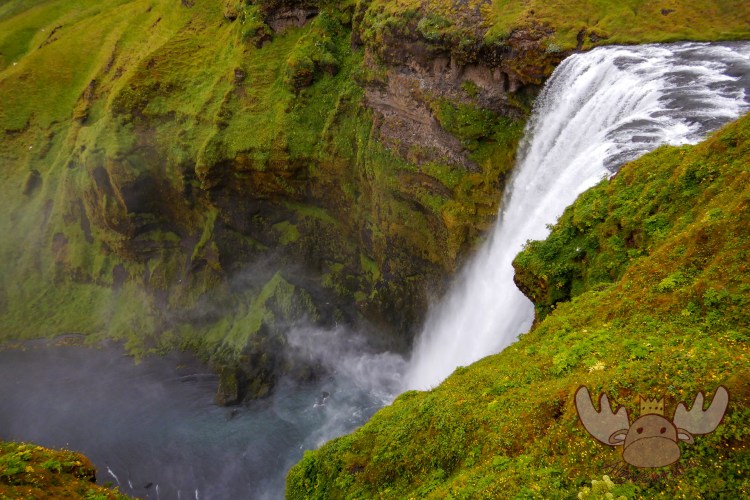
Skógafoss | Das Wasser das den Wasserfall speist entspringt auf dem Hochlandpass Fimmvörðuháls zwischen den beiden Gletschern Eyjafjallajökull und Mýrdalsjökull. – The water that feeds the waterfall originates on the highland pass Fimmvörðuháls between the two glaciers Eyjafjallajökull and Mýrdalsjökull. 
Skógafoss | Wer sich dem Wasserfall nähern möchte, muss damit rechnen dabei nass zu werden. – If you want to approach the waterfall, you have to expect to get wet.
According to an old Icelandic saga, one of the first immigrants named ‚Þrasi‘ once hid a chest of gold behind the waterfall. Years later, an Icelandic boy discovered the chest, but was only able to grab the handle before the box disappeared. The treasure chest ring is now kept in the Museum Skógasafn (Byggðasafnið í Skógum).
Directly behind the museum is the lesser known but no less worth seeing Kvernufoss.
The trail of history
Skógafoss waterfall, like many other waterfalls in the country, was created after the end of the Ice Age. As the glaciers melted, the land began to rise slowly over many years as the weight of the large load of ice no longer pushed the land mass down. The south coast of Iceland rose in places by more than 50m and a cliff was created over which rivers cascade down.
The name of the waterfall and the location indicate that the area was probably forested in earlier times.
Useful information
There is a spacious parking lot and a campsite with toilet facilities right next to the waterfall.
The path to the upper part of the waterfall is strenuous. However, the view makes up for all the effort and the climb should definitely be tackled.
If you still have some time left, we recommend paying a visit to the nearby Skogar Museum. There you will find period-style peat farms and other buildings, mostly from the 19th century, a church and a small school. There is also a transport museum with a large hall full of cars, boats and small aircraft, as well as a larger museum building with everyday objects, handicrafts and works of art.
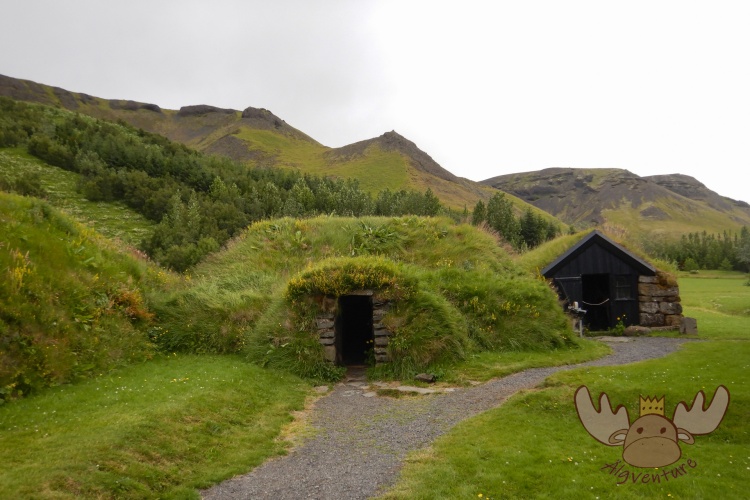
Skógar Museum | Ein Beispiel eines typischen Torfbæir (dt. Torfhof) der lange Zeit das soziale und kulturelle Zentrum vieler ländlichen Regionen in Island bildete. – An example of a typical Torfbæir that has long been the social and cultural center of many rural areas in Iceland. 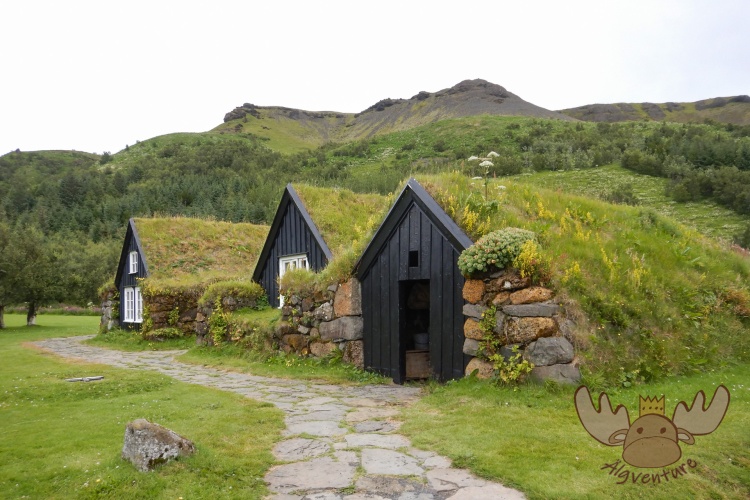
Skógar Museum | Viele solcher Torfbæir waren über ganz Island verstreut und wurden als Selbstversorgerhöfe betrieben. – Many such Torfbæir were scattered all over Iceland and operated as self-sufficient farms. 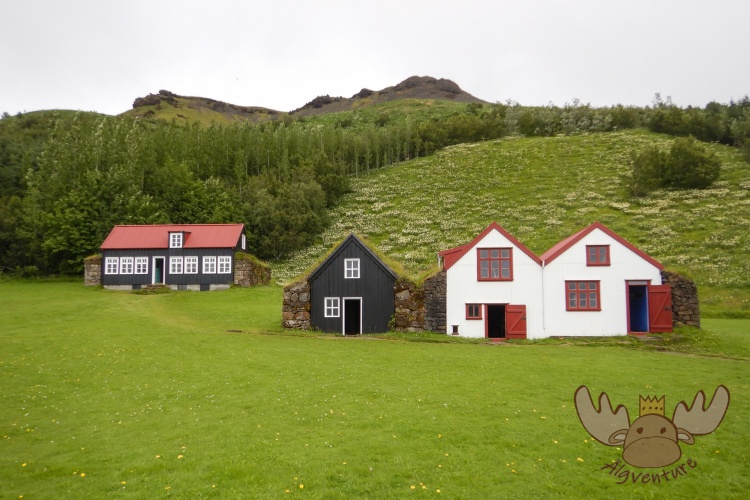
Skógar Museum | Im Außenbereich stehen verschiedene originale Häuser, die Stück für Stück vom originalen Standort abgebaut und im Museum wieder zusammengesetzt wurden. – Outside there are various original houses that were dismantled piece by piece from their original location and reassembled in the museum. 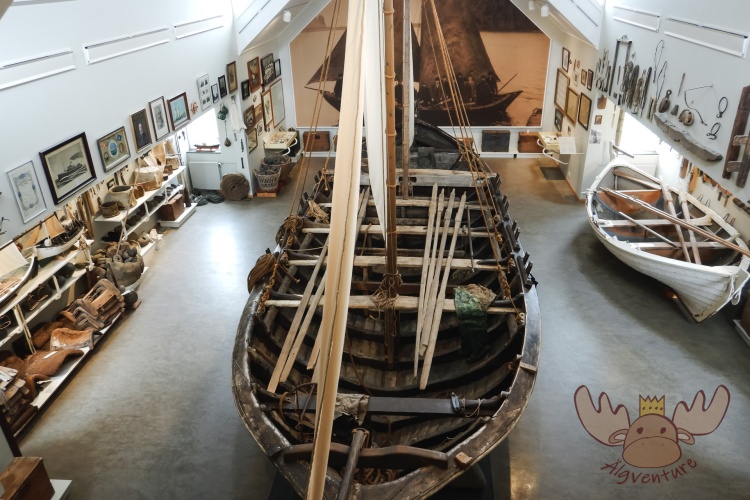
Skógar Museum | Das 1855 gebaute Segelschiff Pétursey bildet das Herzstück der Ausstellung. – The sailing ship Pétursey, built in 1855, is the centerpiece of the exhibition. 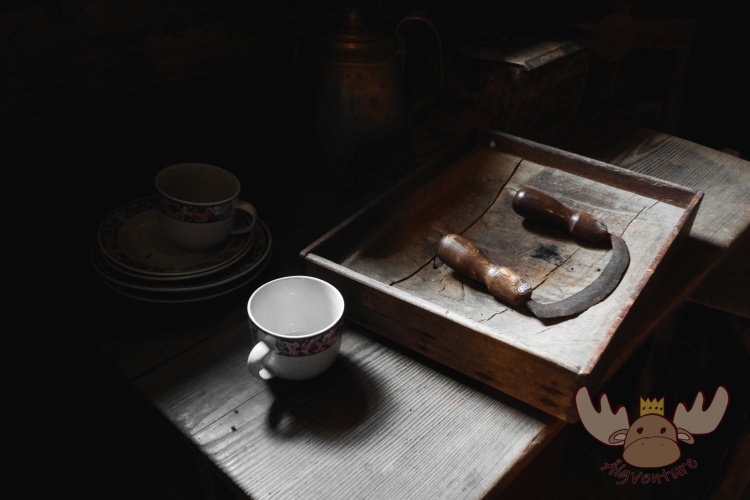
Skógar Museum | Das Museum umfasst über 15.000 Gegenstände aus dem täglichen Leben der Isländer. – The museum contains over 15,000 objects from everyday Icelandic life.
How to get there?
Skógar is 154 kilometers by road from Reykjavík and lies between the glacial volcanoes Eyjafjallajökull and Mýrdalsjökull. Due to its convenient location on the ring road, Skógafoss is often visited by day tourists. The place is also relatively easy, at least by Icelandic standards, to reach from the capital in about three hours by public transport, and some tour operators offer day tours there from Reykjavik.
Conclusion:
We think that Skógafoss is more beautiful than Seljalandsfoss. But as we all know, beauty lies in the eye of the beholder.
In any case, there are not that many tourists at Skógafoss and we can only recommend the hike to the smaller waterfalls nearby.


The South of the North – A travel report
It was that time again – we were embarking on a new adventure. After our stay with the Queen in London a few weeks earlier, we were drawn out into the world again to explore it. Many blank spots on our travel map are just waiting to be discovered by us. The general direction of…


Sunset on the Dachstein – Dinner in the Austrian Alps
The Dachstein: The jewel of the Alps attracts nature lovers and adventure seekers alike. Experience the breathtaking beauty of the Alpine landscape, from rugged rock faces to glittering glaciers. Whether you are an experienced mountaineer or a leisurely hiker – the Dachstein has something for everyone. Via ferratas, summit tours or leisurely hikes: everyone will…
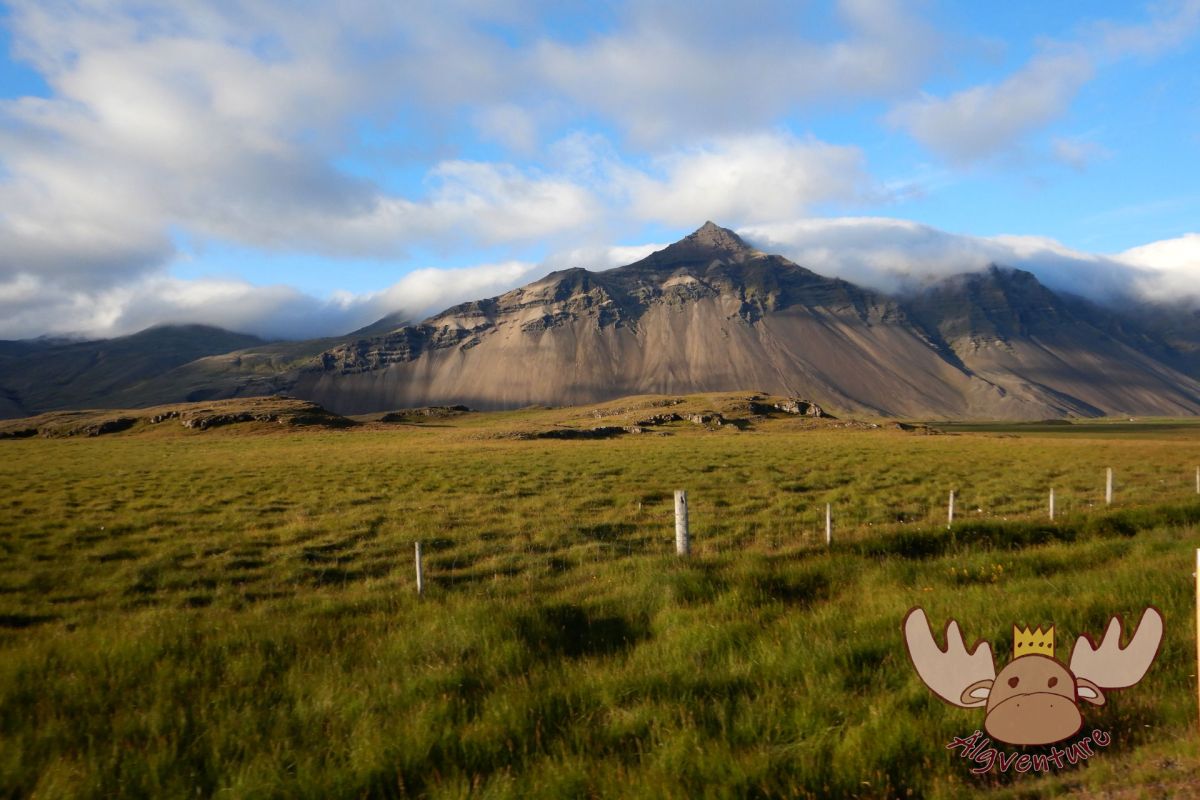
In search of elves and banana plantations – A trip to Iceland
Imagine standing on the edge of a gurgling geyser while steam fogs up your glasses. Or hiking through a lunar landscape of black sand, framed by snow-capped peaks. Sound like an adventure? Iceland is just that and much more!
Join me on my adventure to Denmark, Iceland and the Faroe Islands.
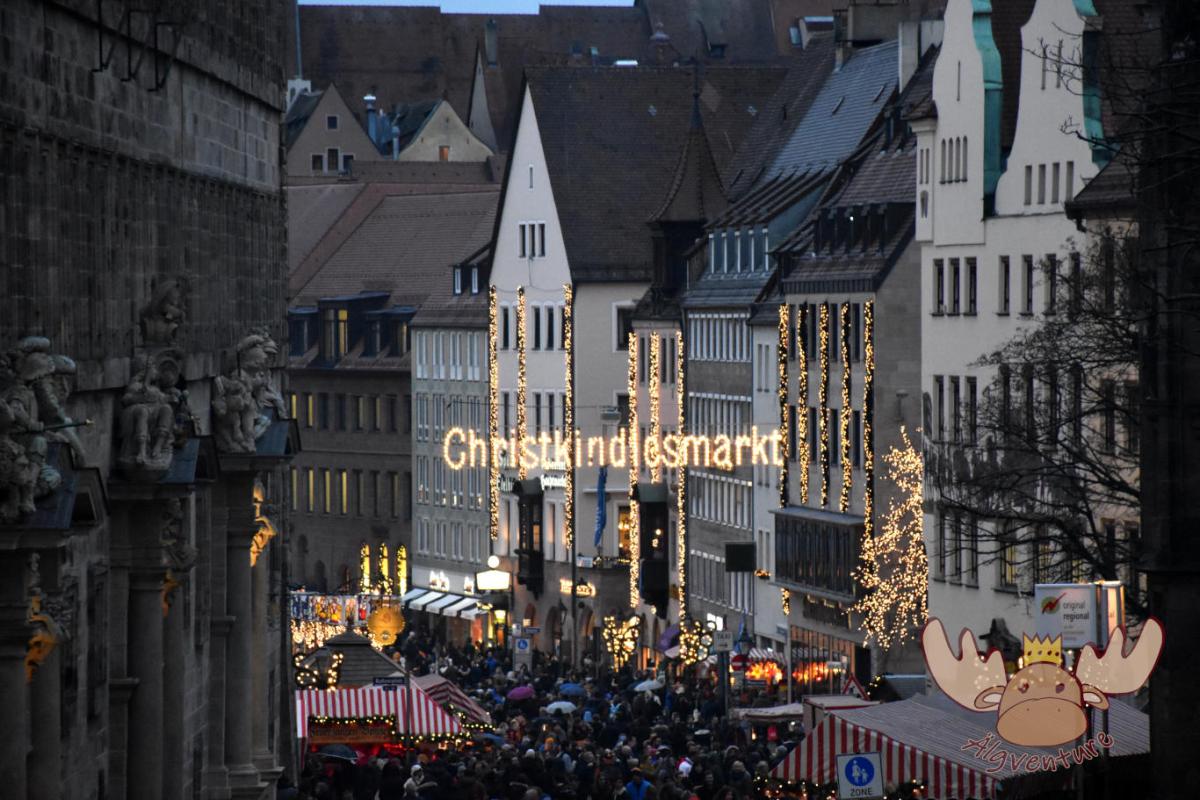
Christkindlesmarkt Nuremberg
Almost everyone has heard of him and many have seen him too. The Nuremberg Christmas market is one of the largest in Germany and we tell you about our visit.
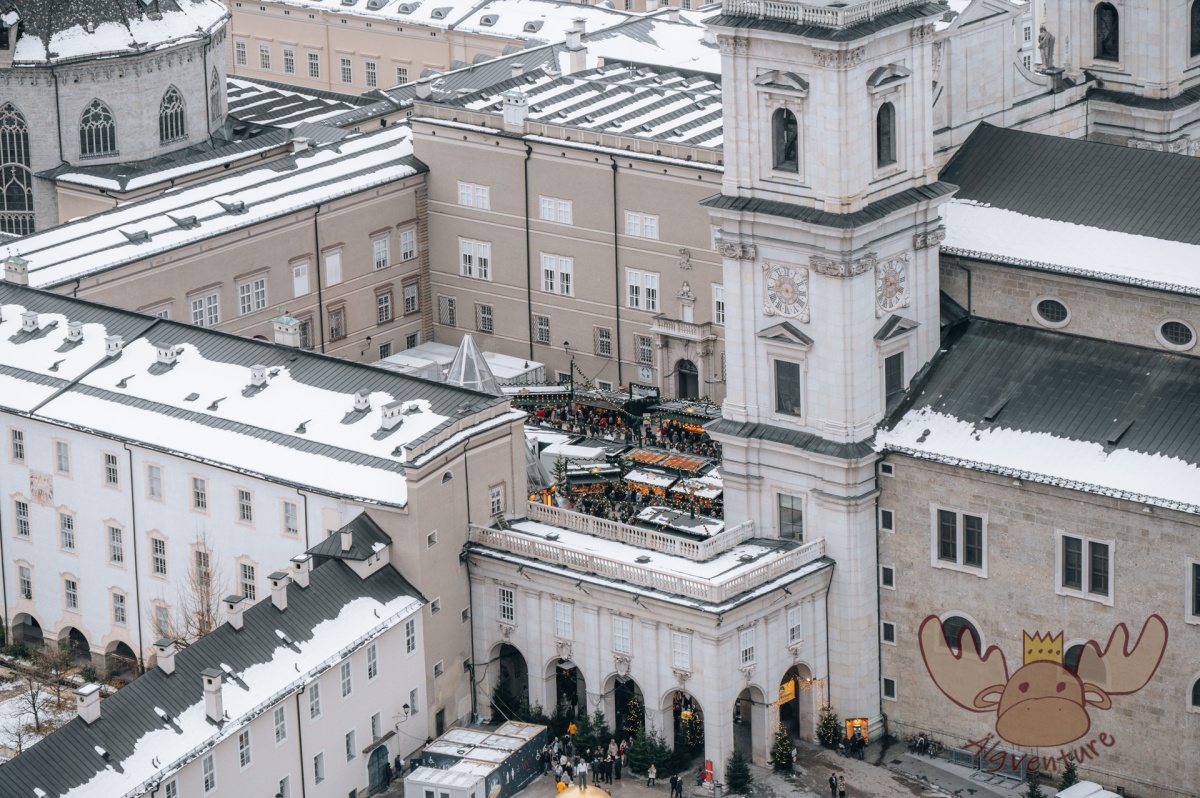
One weekend, four different Christmas markets – an exploration tour through the Austrian Christmas market tradition
The Christmas season is just around the corner and the various Advent markets want to get visitors into the Christmas spirit with their offerings. We’ll take you on our exploration tour to the most diverse representatives of Austrian Christmas market culture.
Etwas ist schiefgegangen. Bitte aktualisiere die Seite und/oder versuche es erneut.
 Älgventure