
Blooming dead land, as if you were on another world.
Älgbert Elgson
Dieser Artikel ist auch in Deutsch verfügbar.
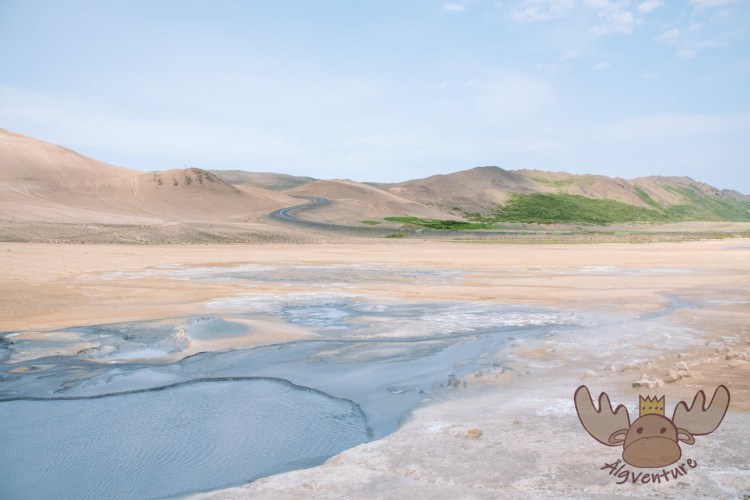
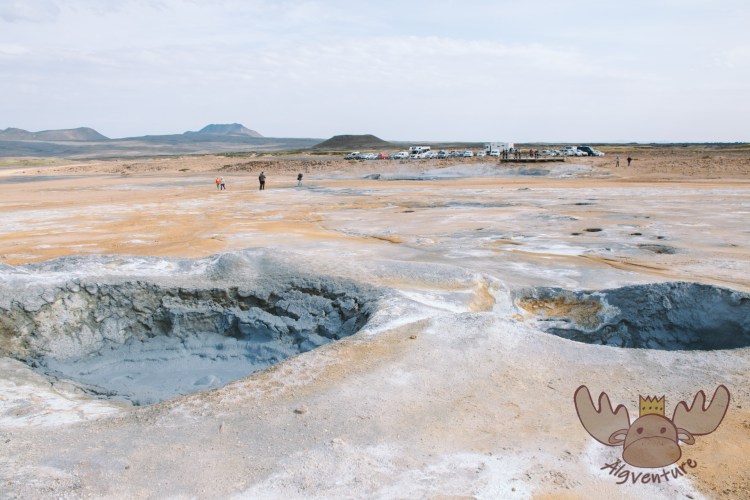
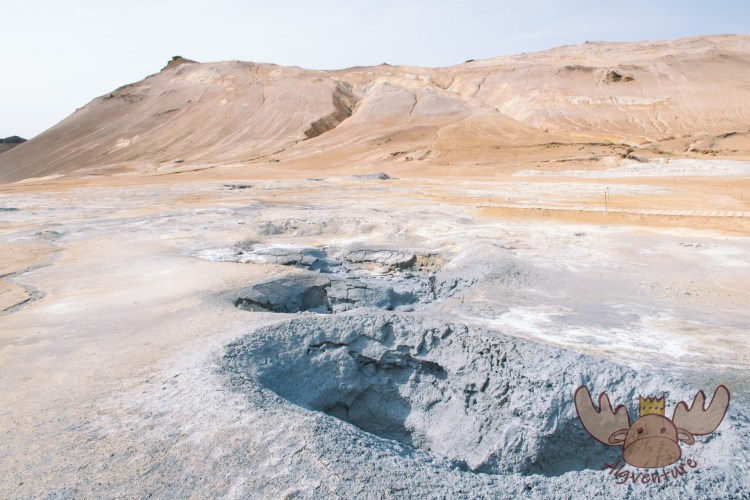
Námafjall is a mountain near Mývatn in north-eastern Iceland. The mountain is close to the Krafla volcano and in the middle of a geothermal area. Here you will find a collection of steam fumaroles, some bubbling mud pots and many interesting colours – Hverarönd.
The trail of history
The sulphur emitted by the fumaroles was mined from the Middle Ages until the 19th century for the production of gunpowder and exported via the port in Húsavík.
In 1969, Iceland’s first geothermal power plant was built west of the Námafjall area. The plant currently produces 3 MW of energy. Concerns have been raised about current plans to expand the plant to 90 MW. In particular, there were doubts about the impact of the plant on the sensitive ecosystem of Lake Mývatn.


Useful Information
Around the area, a small hiking trail leads up to Námaskarð Pass and Námafjall Mountain, returning to the ring road and back to the car park.
There is very little vegetation around the bubbling mud pots. This is caused by the strong soil acidification from the geothermal processes. The sulphur gives the area a greenish-yellow colour and a strong smell of rotten eggs.
On the other side of Mount Namafjall is a small version of the Blue Lagoon. At Jarðböðin við Mývatn you can relax and unwind amidst the incredible scenery. More information can be found on the official website.




How to get there?
Námafjall Hverir is located right next to the ring road near the village of Reykjahlíð in the Norðurland eystra region. It is about 90 kilometres from Akureyri, 475 kilometres from Reykjavík and 190 kilometres from Seyðisfjörður.
Immediately after leaving the ring road, there is a car park from which several hiking trails also lead away.
Conclusion
You would think you were in an extraterrestrial world if it weren’t all the other tourists there with their cameras to admire the strange landscape. When the tourist buses bring their cargo to Hverarönd at the same time, it can even get a bit crowded on the paths between the fumaroles.
If you want to have the sulphur-smelling steaming holes in the earth to yourself, you should either get up very early or come in the evening.
At dusk, the colours and vapours come out even better in photos.


The South of the North – A travel report
It was that time again – we were embarking on a new adventure. After our stay with the Queen in London a few weeks earlier, we were drawn out into the world again to explore it. Many blank spots on our travel map are just waiting to be discovered by us. The general direction of…


Sunset on the Dachstein – Dinner in the Austrian Alps
The Dachstein: The jewel of the Alps attracts nature lovers and adventure seekers alike. Experience the breathtaking beauty of the Alpine landscape, from rugged rock faces to glittering glaciers. Whether you are an experienced mountaineer or a leisurely hiker – the Dachstein has something for everyone. Via ferratas, summit tours or leisurely hikes: everyone will…
In search of elves and banana plantations – A trip to Iceland
Imagine standing on the edge of a gurgling geyser while steam fogs up your glasses. Or hiking through a lunar landscape of black sand, framed by snow-capped peaks. Sound like an adventure? Iceland is just that and much more!
Join me on my adventure to Denmark, Iceland and the Faroe Islands.
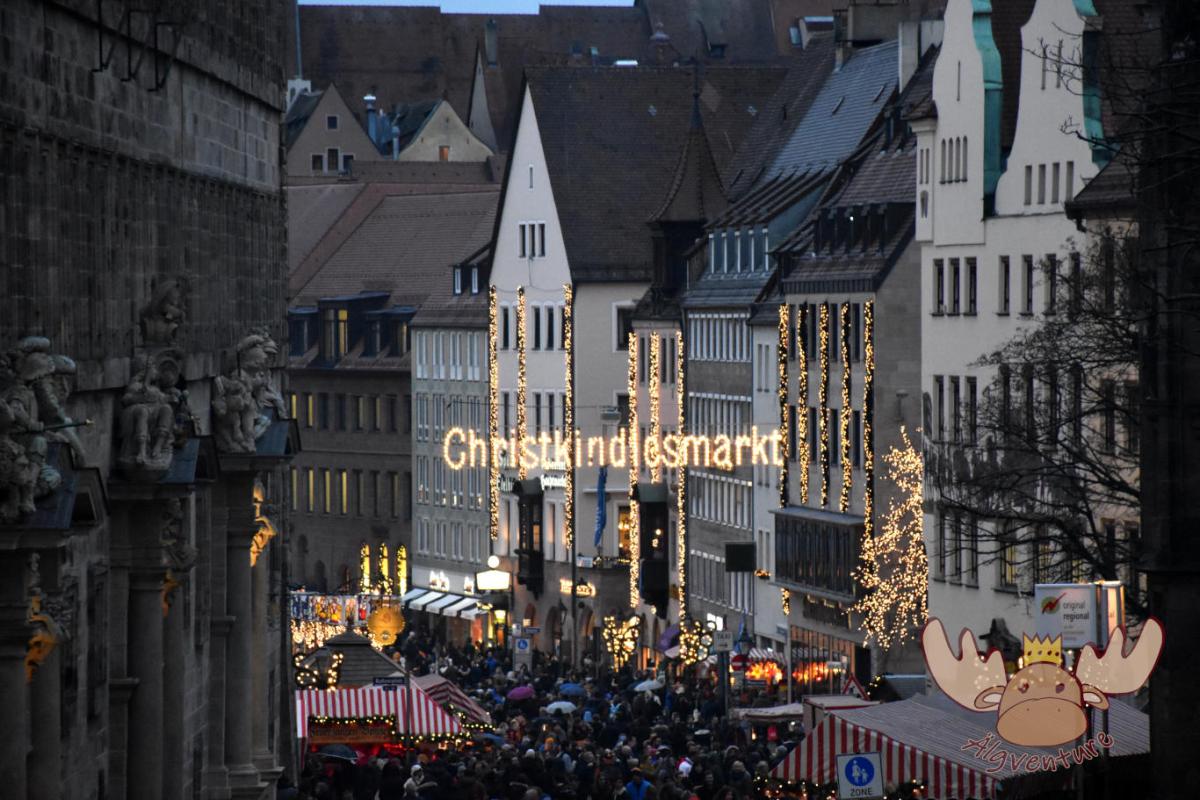
Christkindlesmarkt Nuremberg
Almost everyone has heard of him and many have seen him too. The Nuremberg Christmas market is one of the largest in Germany and we tell you about our visit.
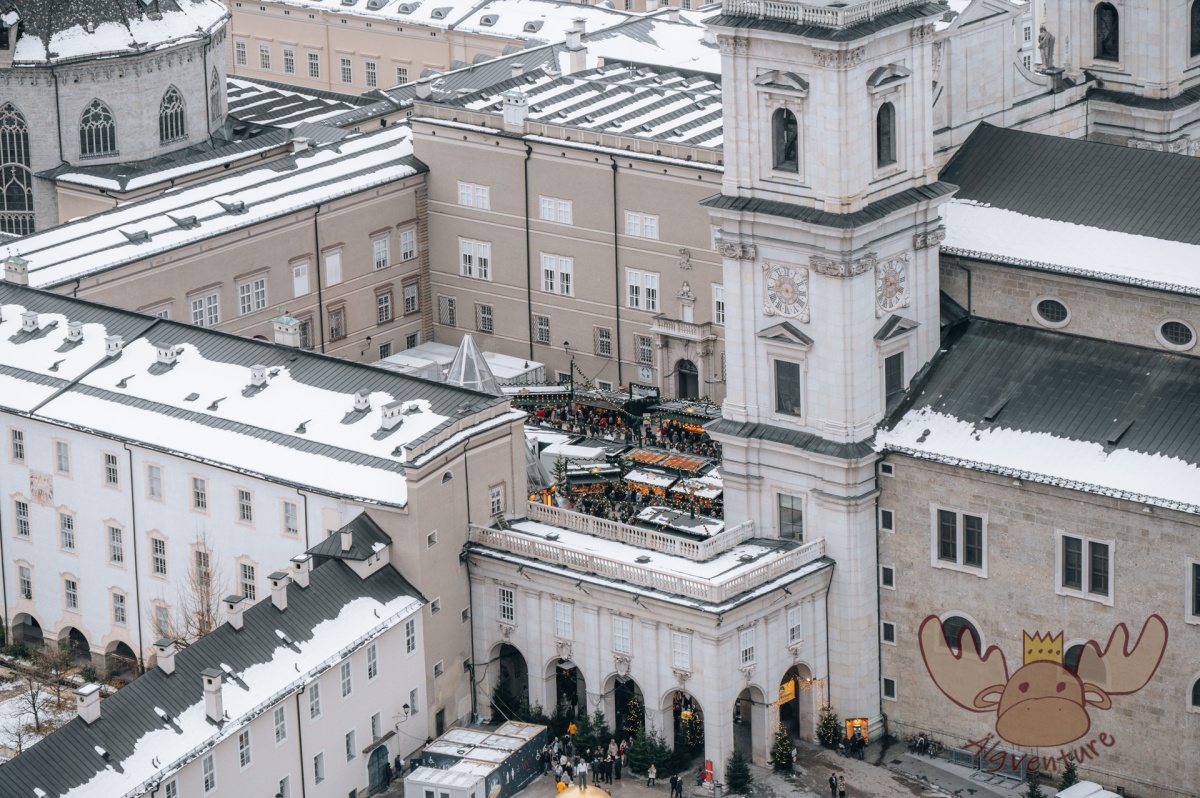
One weekend, four different Christmas markets – an exploration tour through the Austrian Christmas market tradition
The Christmas season is just around the corner and the various Advent markets want to get visitors into the Christmas spirit with their offerings. We’ll take you on our exploration tour to the most diverse representatives of Austrian Christmas market culture.
Etwas ist schiefgegangen. Bitte aktualisiere die Seite und/oder versuche es erneut.
 Älgventure