
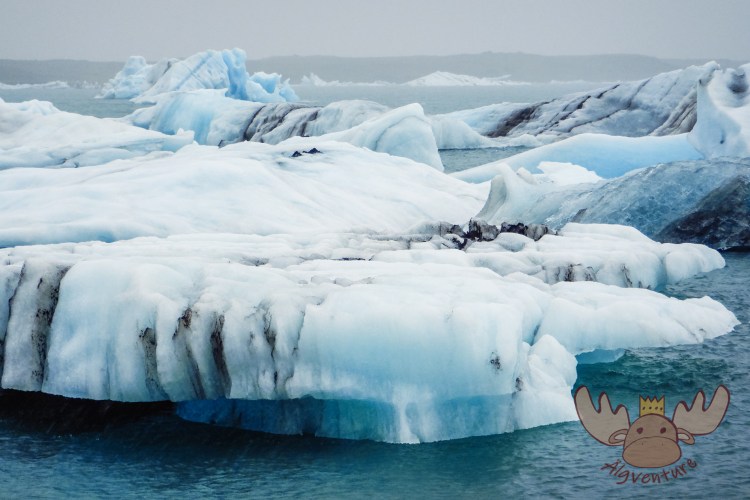
Icebergs of all shapes and sizes are almost within reach.
Älgbert Elgson
Dieser Artikel ist auch in Deutsch verfügbar.
The Jökulsárlón glacial river lagoon is Iceland’s most famous glacial lake and lies on the southern edge of Vatnajökull, the country’s largest glacier with an area of around 8,100 km², i.e. around 8% of the country. The lake itself is around 18 km² in size and, at 284 meters, is the deepest lake in Iceland. The icebergs that float on it and are washed up by the sea along the coast, on Diamond Beach, are particularly impressive.
The trail of history
The lake was formed naturally between 1934 and 1935 when meltwater from the Vatnajökull glacier began to collect on the site. A few years later, in 1975, the glacial lake reached a size of 7.9 km². Since the Icelandic glaciers are melting more and more due to global warming and large blocks of ice are breaking off from the shrinking glacier, the lake is still growing today and is therefore already over 18 km² in size.
Until 2017, the glacial lake and the surrounding land were privately owned, but then the beautiful piece of land was put up for sale and the Icelandic state used its right of first refusal and at the same time placed the area under nature conservation through a merger with Vatnajökull National Park. This national park has since covered almost 14,400 km², has since been considered the largest in Iceland and the second largest in Europe and was declared a world natural heritage site by UNESCO in 2019.
Useful information
The lagoon is located very close to the sea and is connected to the North Atlantic Ocean. The falling chunks of ice first fall into the lagoon, where they slowly melt and float out to sea. There, the salt water ensures that the icebergs, which are up to 15 meters high, melt relatively quickly, but at the same time the rough North Atlantic washes the glacier ice back to the black volcanic beach, where the many small and sometimes large pieces of ice lie like diamonds on the shore, causing this piece of coastline also known as “Diamond Beach”.
Because they look so impressive, Diamond Beach and the Jökulsárlón Glacier Lagoon are one of the country’s most popular film locations. The location served as a backdrop for films such as “Tomb Raider” and “James Bond” and some commercials and music videos were also filmed there.
Since it is said that there are always people who step on the icebergs, it should be added at this point that the visible ice is only the tips of the icebergs and in reality they are much larger. Visitors cannot see how large and stable each individual iceberg actually is and can lead to dangerous situations. Entering the icebergs endangers the animals living there, nature and people themselves. If you would like to get closer to the icebergs, you should book one of the boat tours offered there.
There are also several hiking trails along the lagoon, and in summer visitors can look for large arctic skuas that build their nests near the glacial lake. If you are attentive, you can also see many smaller birds and seals.
Jökulsárlón – Die schwarzen Linien im Eis sind eingeschlossene Ascheschichten von vergangenen Vulkanausbrüchen | The black lines in the ice are trapped layers of ash from past volcanic eruptions 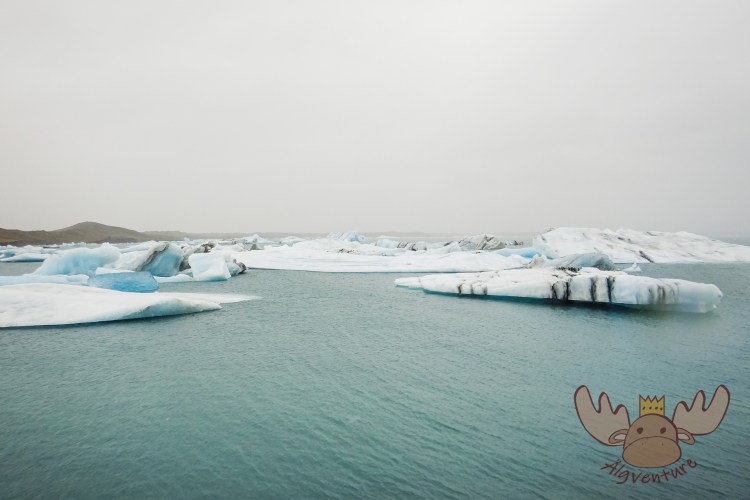
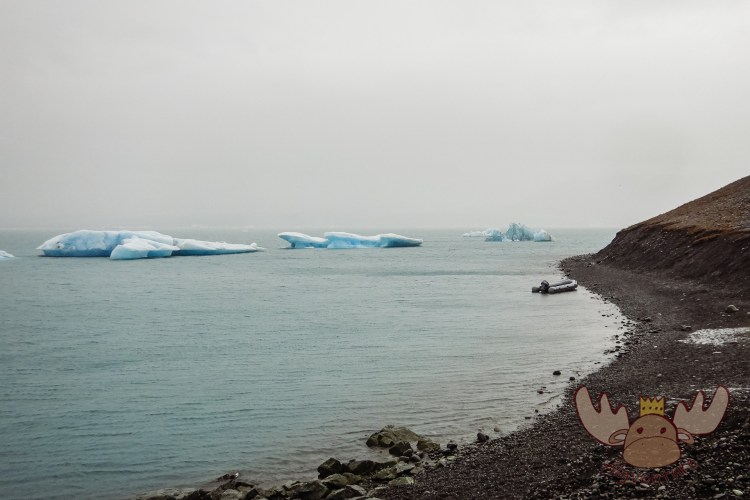
Jökulsárlón – Die Eisschollen treiben eine Zeit lang in einem See an der Küste bevor sie auf das offene Meer gespült werden. | The ice floes float in a coastal lake for a while before being washed out to sea. 
Jökulsárlón – Das schön blau schimmernde Eis ist mehrere Tausend Jahre alt. | The beautifully blue shimmering ice is several thousand years old.
How to get there?
The lagoon and Diamond Beach are best visited as part of a booked tour or with your own car. If you have some time (and you definitely should when traveling to Iceland) you can make further stops along the 380 kilometer route from Reykjavík to Jökulsárlón, enjoy the beautiful landscape and visit some of the sights along the way. Parking spaces are available, as are toilets and a small shop.
Conclusion:
Unfortunately, at the time of our visit the weather was pretty bad, so we weren’t able to visit this place as we would have liked. We can’t judge the boat tours offered there, but Jökulsárlón is beautiful to look at with its huge white-blue-grey shimmering icebergs. We also saw seals and would definitely go there again if we had the opportunity again.


The South of the North – A travel report
It was that time again – we were embarking on a new adventure. After our stay with the Queen in London a few weeks earlier, we were drawn out into the world again to explore it. Many blank spots on our travel map are just waiting to be discovered by us. The general direction of…


Sunset on the Dachstein – Dinner in the Austrian Alps
The Dachstein: The jewel of the Alps attracts nature lovers and adventure seekers alike. Experience the breathtaking beauty of the Alpine landscape, from rugged rock faces to glittering glaciers. Whether you are an experienced mountaineer or a leisurely hiker – the Dachstein has something for everyone. Via ferratas, summit tours or leisurely hikes: everyone will…
In search of elves and banana plantations – A trip to Iceland
Imagine standing on the edge of a gurgling geyser while steam fogs up your glasses. Or hiking through a lunar landscape of black sand, framed by snow-capped peaks. Sound like an adventure? Iceland is just that and much more!
Join me on my adventure to Denmark, Iceland and the Faroe Islands.
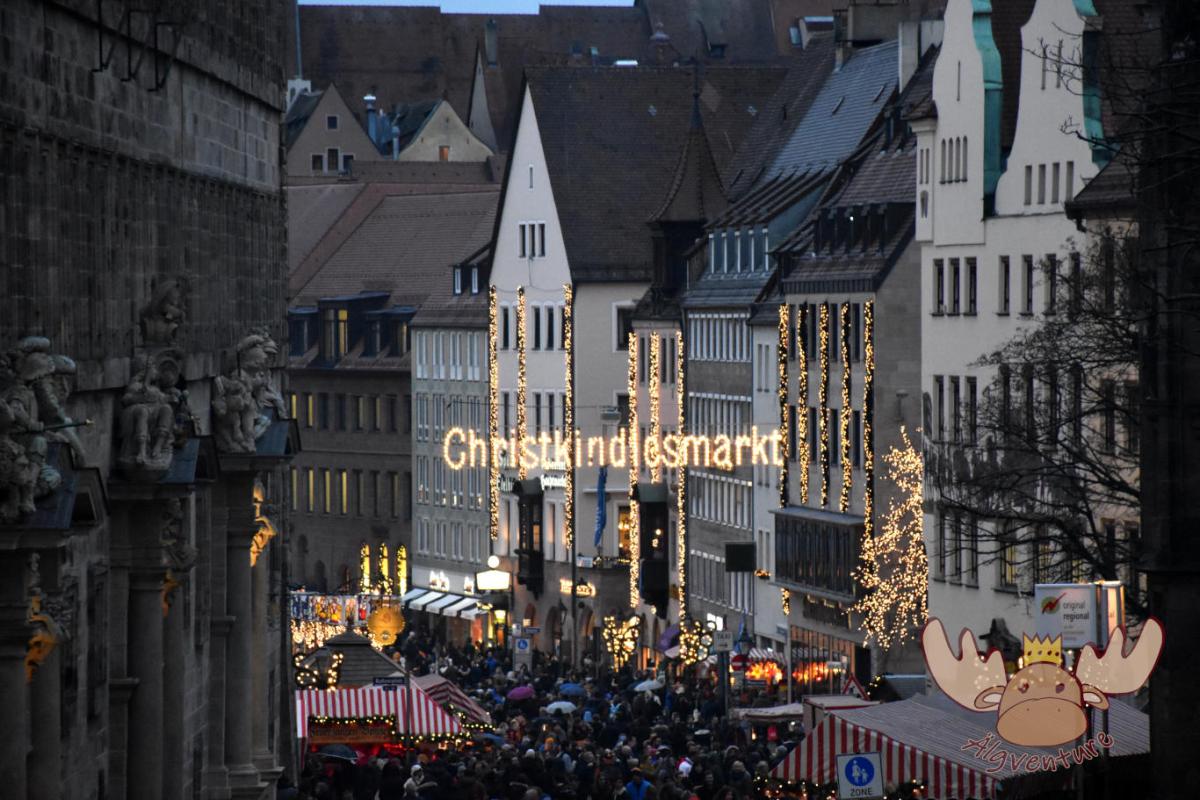
Christkindlesmarkt Nuremberg
Almost everyone has heard of him and many have seen him too. The Nuremberg Christmas market is one of the largest in Germany and we tell you about our visit.
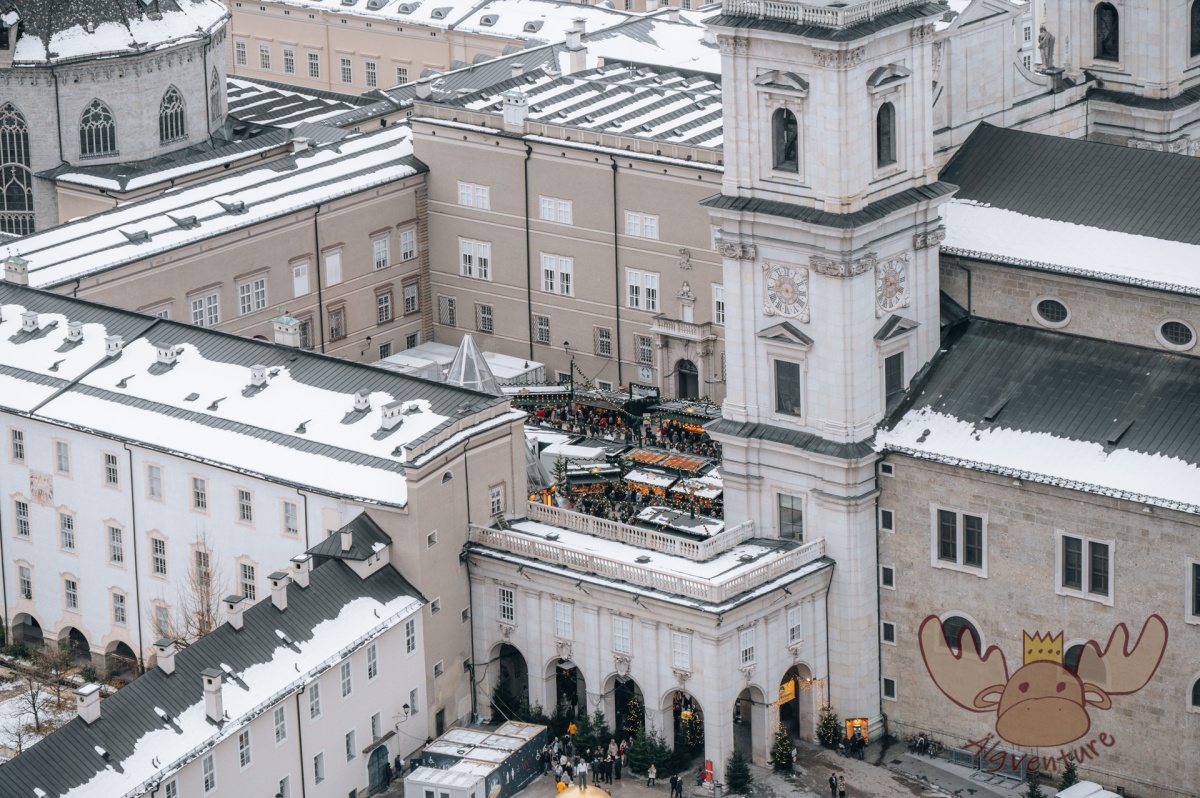
One weekend, four different Christmas markets – an exploration tour through the Austrian Christmas market tradition
The Christmas season is just around the corner and the various Advent markets want to get visitors into the Christmas spirit with their offerings. We’ll take you on our exploration tour to the most diverse representatives of Austrian Christmas market culture.
Etwas ist schiefgegangen. Bitte aktualisiere die Seite und/oder versuche es erneut.
 Älgventure